




Blog
Is caffeine listed per serving or per container on a drink?

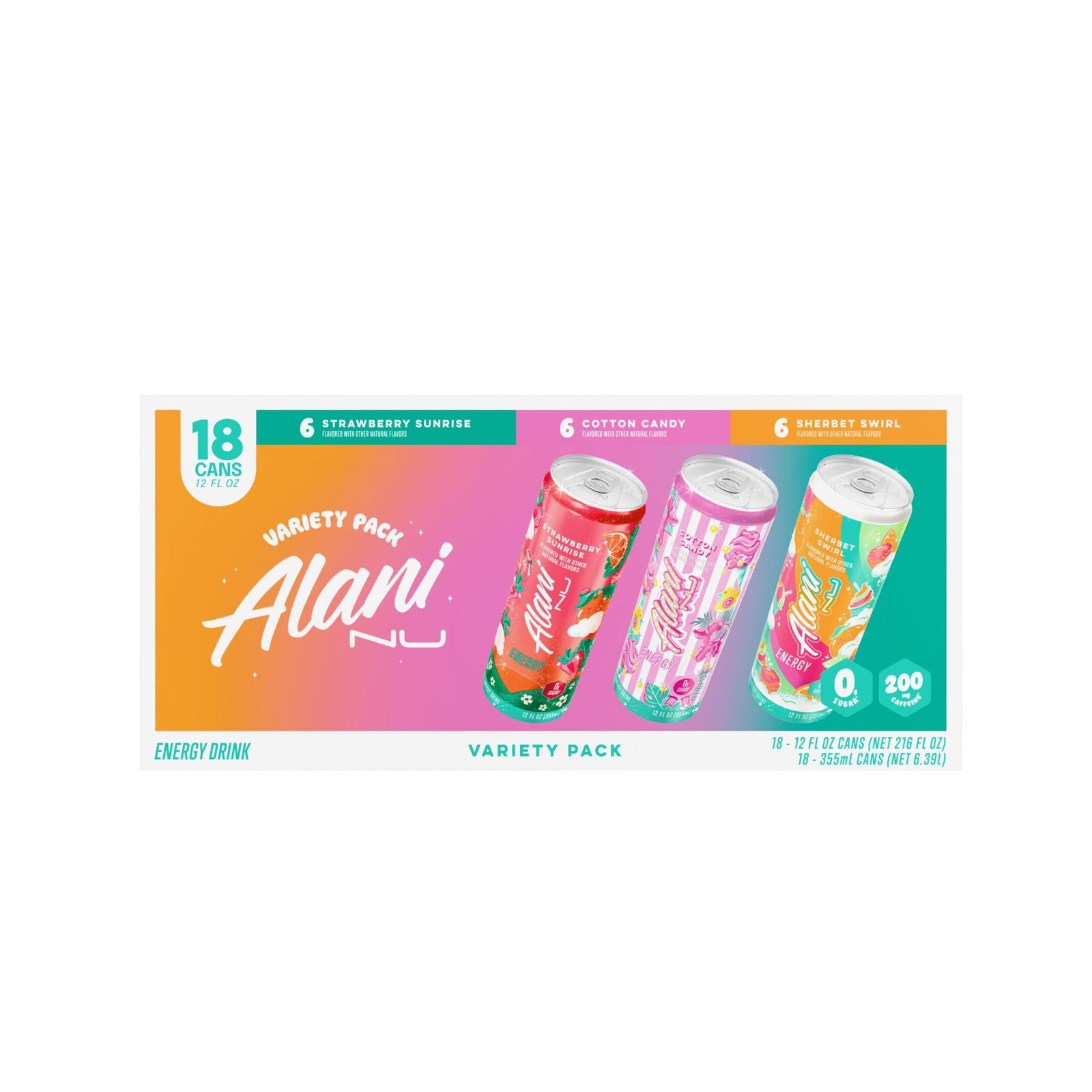
Caffeine may be described per serving, per complete container, or per specified volume. The correct basis is the one stated on the exact drink you are reading. Do not assume that a can equals one labeled serving, and do not treat a case count as a serving count. Read the words attached to the milligram figure before calculating anything.
This guide helps you interpret the declaration on energy drinks, distinguish retail packaging from individual containers, and resolve unclear information. The examples use invented numbers to explain the process. They do not describe the pictured brands, recommend an intake, or establish a personal caffeine limit.
Read the declaration as a complete sentence
A useful caffeine statement has three parts: the amount, its unit, and the quantity of product to which it applies. For example, the hypothetical phrase 75 milligrams per serving is incomplete for a whole-bottle comparison until the serving size and number of servings are also known. The number alone cannot answer every purchasing question.
Look immediately around the statement for a qualification such as per can, per bottle, per serving, or per 100 milliliters. Include asterisks and any associated explanation when you make a note. A cropped product photograph may omit the exact wording that makes the difference between two interpretations.
If the product page repeats only a number, treat that as a reason to seek the full package declaration. Do not silently supply the missing basis from a different product in the same range. A clear source should identify both the version being discussed and the quantity represented by its caffeine amount.
Distinguish four different quantities
Retail listings can mention a pack, a container, a serving, and a prepared drink in the same description. Each serves a different purpose. The pack is what you buy; the container holds a particular quantity; a labeled serving is the specified amount used for a declaration; a prepared drink may depend on mixing instructions.
For ready-to-drink products, the individual can or bottle is the container. For powders, the retail box may hold individually wrapped packets, with separate preparation directions. Do not transfer the meaning of container from a canned-drink listing to a box of powder simply because both appear in an energy category.
Write each quantity separately before comparing products. This prevents a twelve-count case from being mistaken for twelve servings in one bottle. It also helps when a listing title uses abbreviated wording that identifies the order quantity but leaves the individual label details to the package images.
| Quantity | What it identifies | Question to answer |
|---|---|---|
| Retail pack | The collection offered for purchase | How many units are included? |
| Individual container | One can, bottle, or other specified package | What volume does it hold? |
| Labeled serving | The basis named by the declaration | How much product is one serving? |
| Prepared portion | Product made according to stated directions | What quantity of the original product is used? |
| Caffeine declaration | The stated milligram amount and its basis | Which of these quantities does it describe? |
Find the serving information without guessing
Read the serving-size and servings-per-container information where provided. Keep that information beside the caffeine statement rather than assuming that every nearby number uses the same basis. If a separate caffeine declaration explicitly says per container, its own wording matters even when another panel supplies per-serving nutrition information.
The FDA’s serving-size guide explains that nutrition information is tied to the labeled serving and shows how two servings change the corresponding amounts. Use that as general label-reading context. For caffeine, still confirm the particular basis stated with the caffeine figure itself.
When a label gives an approximate serving count, preserve that wording. If an exact complete-container declaration is also available, record it separately rather than presenting a multiplication of rounded figures as a laboratory measurement. Your worksheet should reflect the precision of the information you actually have.
When multiplication is appropriate
Multiply a per-serving caffeine amount by servings per container only when both inputs refer to the same product and the same serving definition. For an invented example, a bottle with 75 milligrams per serving and two servings per bottle would correspond to 150 milligrams for the complete bottle using those declared inputs.
Write the operation out: 75 mg per serving × 2 servings per bottle = 150 mg per bottle. Including the units helps expose errors. If the units do not cancel in the way you expect, check whether you have confused milliliters, milligrams, servings, or the number of bottles in a retail pack.
Do not multiply a complete-container amount by the serving count again. That would repeat a conversion already included in the declaration. A hypothetical bottle marked 150 milligrams per bottle remains 150 milligrams per bottle, regardless of whether another part of its label describes two nutrition servings.
Recognize a volume-based declaration
Some information is expressed for a fixed volume, such as 100 milliliters. That is a concentration basis, not automatically a serving or the entire container. To calculate the amount associated with a can, you also need the can’s stated volume in compatible units.
For a hypothetical 300-milliliter container declaring 25 milligrams per 100 milliliters, the arithmetic is 25 × 300 ÷ 100 = 75 milligrams per container. The example illustrates a unit conversion. It should not be copied into a product comparison unless those exact inputs are confirmed for the actual item.
If the package provides an equivalent milliliter volume, use it directly. Avoid introducing an unnecessary conversion from fluid ounces when a compatible printed quantity is already available. When only incompatible or unclear volume information is available, resolve that first instead of combining numbers that look convenient.
| Hypothetical declaration | Additional information | Correct interpretation | Common mistake |
|---|---|---|---|
| 75 mg per serving | Two servings in the bottle | 150 mg per bottle from these inputs | Calling 75 mg the whole-bottle amount |
| 150 mg per bottle | Bottle identified | Already a complete-container statement | Multiplying by two again |
| 25 mg per 100 mL | Container is 300 mL | 75 mg per container | Treating 25 mg as the whole amount |
| 90 mg with no basis | None | Incomplete information | Assuming per can |
| Caffeine listed as an ingredient | No quantity declared | No quantified amount established | Estimating milligrams from ingredient order |
Powders need a different identification step
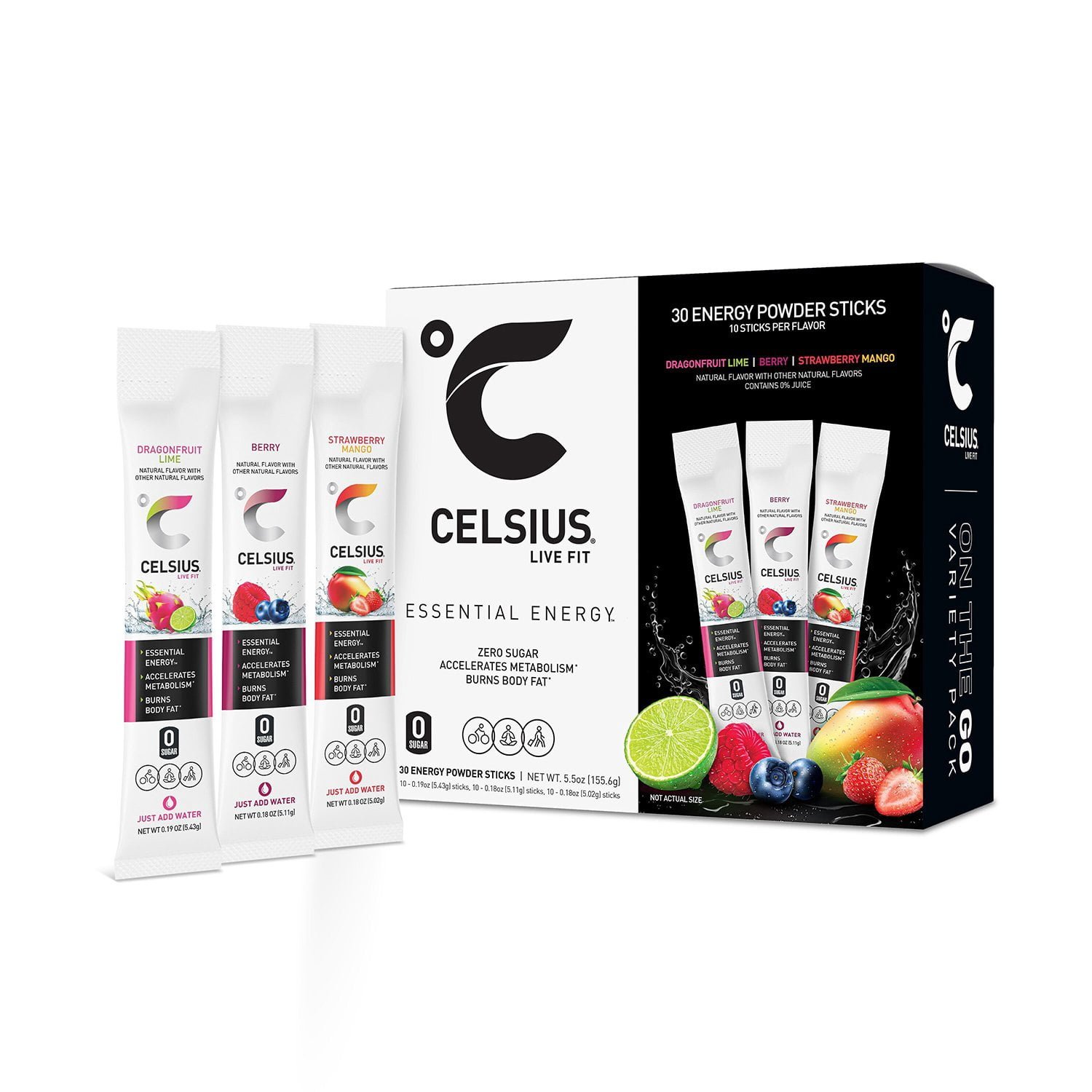
A powder packet is not a canned beverage. Start with the stated serving amount and preparation directions for that exact product. Record how much powder the declaration describes and whether the caffeine statement refers to a packet, scoop, or another quantity. Do not assume a retail box is the relevant container for a single drink.
Adding water changes the prepared volume. It does not supply additional information about how much caffeine was in the measured powder. If the label states an amount for one specified packet, changing the water quantity does not justify inventing a different caffeine total for the same packet. Follow the product’s own directions rather than deriving new mixing instructions here.
Keep ready-to-drink and powder comparisons in clearly labeled rows. A price per packet and a price per can can be useful purchasing facts, but they do not establish identical serving definitions. Any comparison of stated caffeine amounts needs the original product quantity as well as the final format.
Do not confuse nutrition-panel columns with a separate statement
A package may present more than one information column or place a caffeine statement outside the main nutrition panel. Read the headings of each column before using a number. A value under a per-serving heading and a value under a per-container heading are not interchangeable merely because they appear side by side.
When you transcribe information, copy the relevant heading with the value. A worksheet cell that says only 120 mg loses an essential part of the evidence. A cell saying 120 mg per complete 355-milliliter can is more useful, provided every part comes from the exact declaration being reviewed.
If different parts of a package appear inconsistent, do not resolve the conflict by averaging the figures or choosing the larger one. Save the product identification and both statements, then ask the manufacturer which declaration applies to the selected version. A numerical discrepancy needs an explanation, not a new invented calculation.
Confirm whether an amount is a total
A product can list caffeine alongside ingredients that may also contain caffeine. Do not add an explicitly stated total to unquantified ingredient names. Nor should you assume that a partial or ambiguous statement covers every source. Ask whether the number is the total from all sources for the specified serving or container.
The FDA’s caffeine overview notes variation among products and directs consumers to manufacturers when an amount is unclear. That is a useful next step when a photographed label or short retail description cannot establish the complete declaration. General category names cannot replace product-specific confirmation.
A precise request includes the full name, flavor, can or bottle volume, and the wording you cannot interpret. Ask for milligrams and the basis of the response. If the manufacturer answers only per serving, also request the serving quantity and the number of servings in the individual container.
Keep a small evidence record
| Field | What to save | Why it helps later |
|---|---|---|
| Product identity | Full name, flavor, format, and size | Separates similar versions |
| Original wording | Amount, unit, and declaration basis | Preserves the meaning of the number |
| Conversion inputs | Serving count or container volume | Makes arithmetic reproducible |
| Source | Current label or official response | Distinguishes confirmation from assumption |
| Date checked | When the information was reviewed | Signals when a later recheck may be needed |
| Open question | Any missing or conflicting detail | Prevents uncertainty from disappearing |
Avoid four comparison errors
First, do not compare a per-serving figure from one drink directly with a per-container figure from another. Convert them to the same basis using confirmed inputs, or leave the comparison incomplete. The existence of two numbers does not mean they answer the same question.
Second, do not treat a smaller printed number as evidence of a smaller whole-container amount. The container may hold more servings, or the declaration may describe only a fixed volume. Third, do not use the quantity of cans in a case to convert a single-can declaration into a serving figure.
Fourth, do not treat a successful arithmetic result as a product recommendation. A worksheet can explain the declared amount and reveal missing information. It cannot determine an individual’s needs or make different formulas interchangeable. Keep the purpose of the comparison limited to the question the supporting label can answer.
Frequently asked questions
Does one can always mean one serving?
No assumption is needed: read the exact label and the caffeine statement’s own wording. If the information explicitly states an amount per can, preserve that declaration. If it states an amount per serving, establish how the serving relates to the container before calculating a whole-can figure.
Should I multiply when the label already says per container?
No additional serving multiplication is needed to interpret an explicitly stated complete-container amount. Multiplication is useful when you are converting a per-serving declaration using a confirmed serving count. Doing the same conversion twice would misrepresent what the original declaration says.
What if the front and back seem to give different figures?
Check the units, serving basis, and any qualifications first. Two figures can describe different quantities. If those checks do not resolve the discrepancy, keep both statements and ask the manufacturer about the exact product version. Do not publish a confident per-container claim while the evidence remains contradictory.
Can a variety pack use one caffeine figure for every flavor?
Only apply a shared statement within the scope actually confirmed by the package or manufacturer. If the included products have different formulas or sizes, make separate rows. A package photograph showing several flavors does not, by itself, establish that all of their declarations are identical.
Is an undisclosed amount the same as zero?
No. Missing quantified information leaves the amount unconfirmed. It does not establish the absence of caffeine. Ingredient wording may identify a source without giving enough information to calculate milligrams. Request a product-specific total rather than substituting zero as a convenient worksheet entry.
Should a comparison use servings or containers?
Choose the basis that matches your question and label it clearly. A whole-can purchasing comparison often uses milligrams per can; a concentration comparison can use milligrams per fixed volume. Retain the original declaration in either case so that the result remains traceable and easy to check.
A reliable final check
Before saving the comparison, read the original wording again and follow each unit through the calculation. Confirm that the product, version, serving count, and container size all match. A defensible answer states the basis plainly and leaves unresolved details visible instead of turning a partial label into a complete claim.