




Blog
How do I compare energy drinks by caffeine per can?

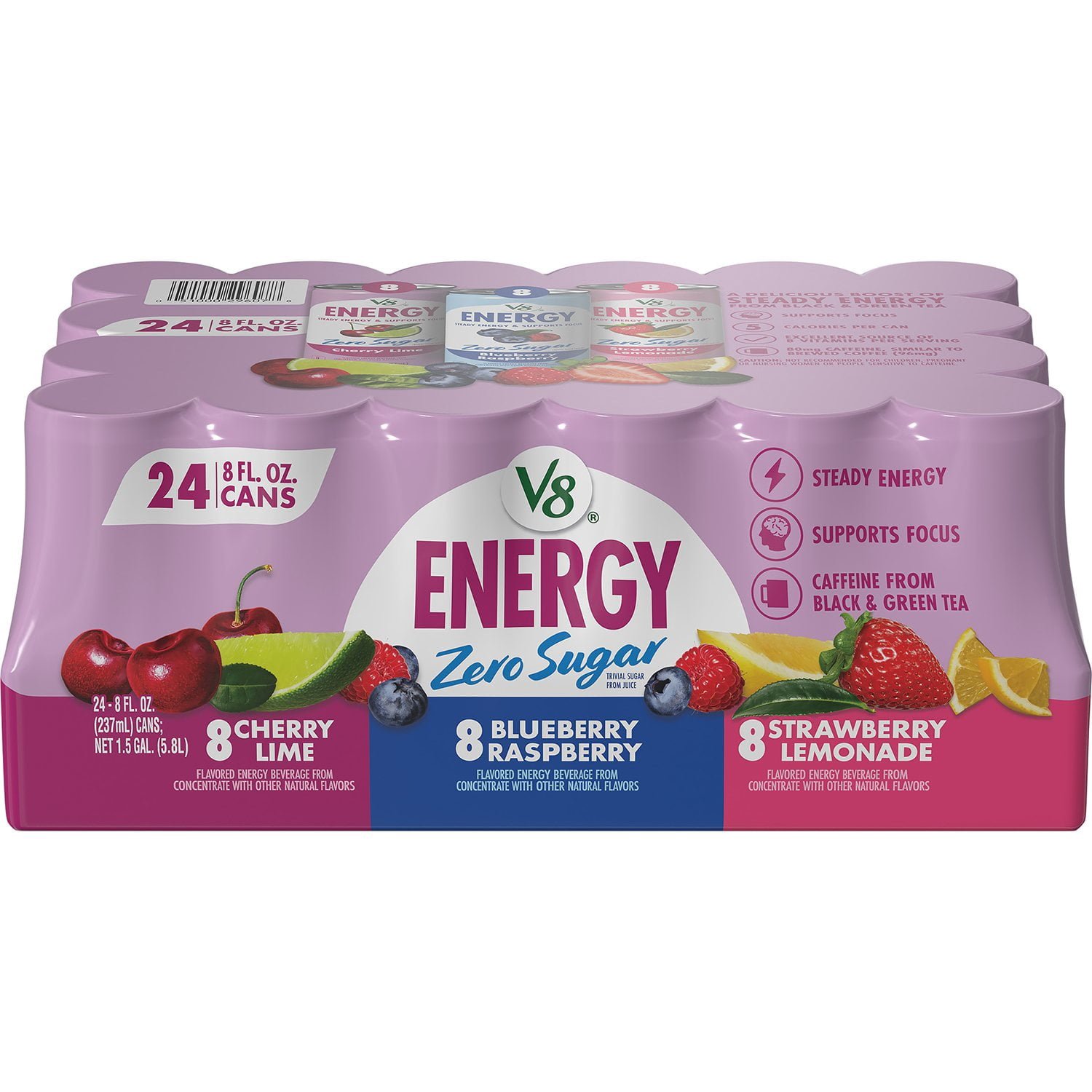
Compare energy drinks by the caffeine stated for one complete can, after checking the exact product, flavor, size, and label basis. A number printed prominently on a package is useful only when you know whether it describes one serving, the whole container, or a specified volume. Convert matching figures before comparing them, and leave an unknown amount marked unknown.
This guide explains how to compare energy drinks using a repeatable label worksheet. It includes hypothetical calculations, comparison tables, purchasing questions, and checks for variety packs. These examples explain label arithmetic; they are not recommendations about how much caffeine someone should consume or claims about the caffeine in the pictured products.
Start with the exact can
Write down the complete product name, flavor, can volume, and market shown on the label. A brand name alone is insufficient identification. A company may sell different formulas, smaller containers, larger containers, powders, and products with similar packaging. Do not transfer a caffeine figure from one item to another because the colors or brand logo look familiar.
Use the selected product listing to identify the item, then look for a readable current package label or an official manufacturer statement for that exact version. If a listing photograph and written description disagree, pause the numerical comparison until the difference is resolved. Choosing whichever number seems more plausible creates an unsupported result.
The comparison should also distinguish a can from a case. An eighteen-can package is a purchasing quantity, while caffeine per can describes each individual container. Multiplying by the case count may describe inventory, but it does not help identify the amount in one can. Keep those two questions in separate columns.
Where should you look for the caffeine amount?
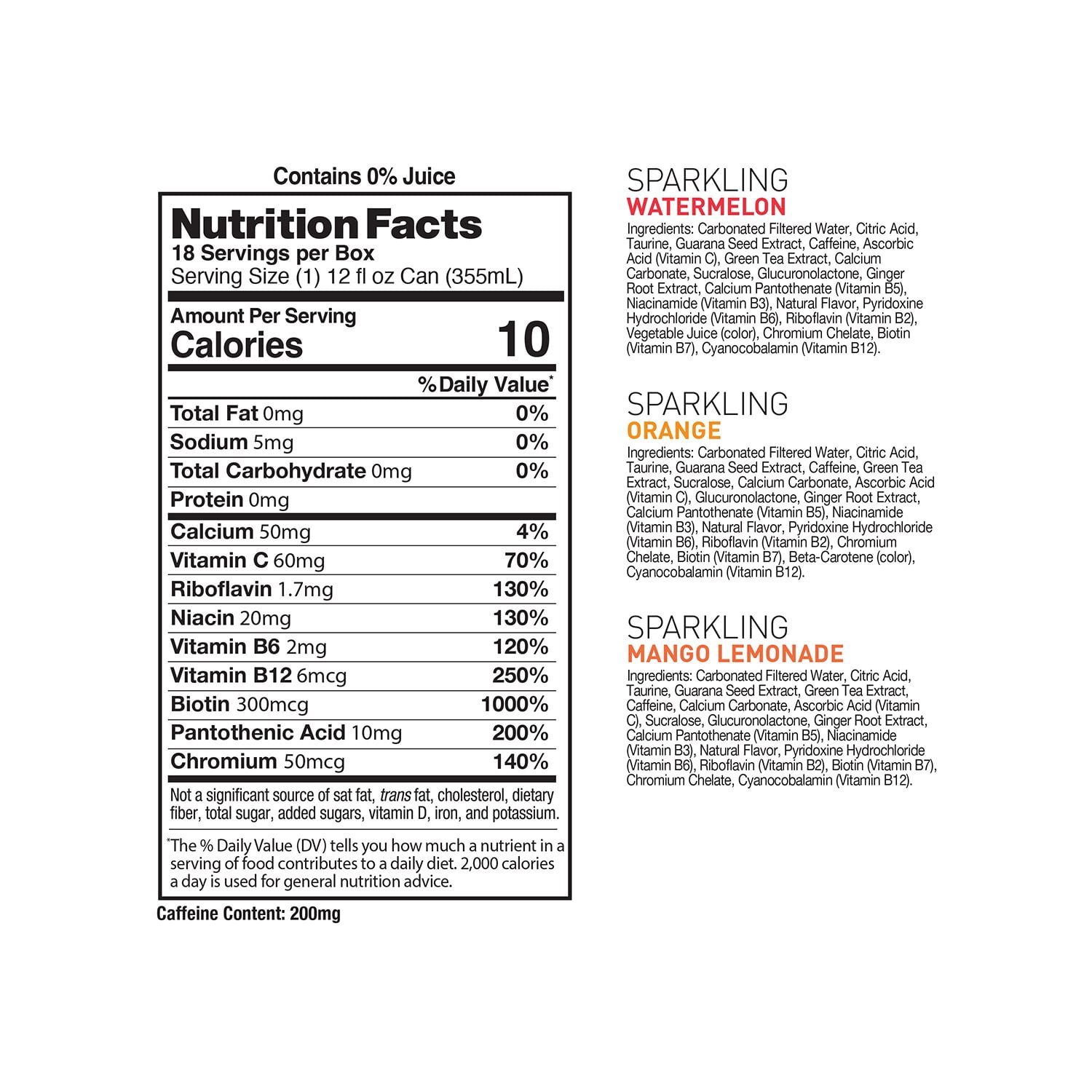
Check the package information around the ingredients, nutrition information, and any separate caffeine statement. Read the wording attached to the number, including units and qualifications. A front label can be a useful starting point, but a complete comparison needs the basis of the declaration as well as the amount.
The FDA’s caffeine information explains that products and container sizes vary and suggests asking the manufacturer when an amount is unclear. Use that source for general context and the exact manufacturer’s current product information for the actual number you record. A general guide cannot verify every flavor or shipment.
Do not estimate caffeine from sweetness, flavor strength, the word energy, or the order of familiar ingredients. The presence of coffee, tea, or guarana does not give you an exact milligram value. Without a quantified total for the relevant basis, a precise per-can calculation would be a guess.
| Information to record | Why it matters | If it is missing |
|---|---|---|
| Exact formula and flavor | Similar names can identify different items | Confirm the selected version |
| Container volume | Needed for volume-based conversions | Read the can or ask the manufacturer |
| Caffeine amount and unit | Establishes the numerical input | Mark the amount unconfirmed |
| Declaration basis | Separates serving, container, and volume figures | Request the wording in full |
| Servings per container | Needed when the amount is per serving | Do not assume one serving per can |
| Source and date checked | Helps track later label changes | Save the current supporting information |
Calculate caffeine per can from a serving declaration
When the label states caffeine per serving, multiply that amount by the confirmed number of servings in one can. The calculation is caffeine per serving multiplied by servings per container. Both inputs must describe the same product and the same serving definition. Do not combine a figure from one flavor with a serving count from another.
For a hypothetical example, a label that declares 80 milligrams per serving and two servings per can gives 160 milligrams per complete can. Write the calculation as 80 mg × 2 = 160 mg per can. This is invented arithmetic for illustration, not a statement about a product sold on Sprinkles Menu.
If the number of servings is described as approximate, retain that qualification in your worksheet. Do not silently turn an approximate label quantity into an exact measurement. Where the declaration supplies a complete-container amount directly, use that figure and record its wording rather than unnecessarily reconstructing it from rounded serving values.
Convert a per-100-milliliter declaration carefully
For caffeine stated per 100 milliliters, multiply the declared amount by the can’s volume in milliliters and divide by 100. Use the volume printed for the actual can. A familiar-looking container is not evidence that it holds the same volume as another product in your comparison.
A hypothetical declaration of 32 milligrams per 100 milliliters on a 500-milliliter can produces 32 × 500 ÷ 100 = 160 milligrams per can. The calculation establishes a comparable basis only because the amount and volume refer to the same hypothetical item. It does not establish any real brand’s formula.
Keep milliliters, fluid ounces, and milligrams clearly separated. Milligrams describe the caffeine amount; milliliters and fluid ounces describe drink volume. If a conversion is necessary, prefer the manufacturer’s printed equivalent volume so that your worksheet does not introduce a second source of rounding or a mistaken unit convention.
Compare complete-container amounts on one worksheet
Once each amount is expressed per can, place the results side by side. Preserve the original declaration in another column so that the calculation can be checked. A tidy final figure should not hide a missing input or a conversion assumption. Another reader should be able to reproduce the result from the information you saved.
The following table uses invented products and values. It demonstrates how different label bases can lead to the same per-can amount. It is not a product ranking, a current stock list, or an instruction to choose the largest or smallest number. Product suitability involves questions that this numerical worksheet cannot answer.
| Hypothetical item | Original declaration | Calculation | Result per can |
|---|---|---|---|
| Example A | 80 mg per serving; 2 servings | 80 × 2 | 160 mg |
| Example B | 160 mg per container | No serving conversion needed | 160 mg |
| Example C | 32 mg per 100 mL; 500 mL can | 32 × 500 ÷ 100 | 160 mg |
| Example D | Caffeine amount not quantified | Insufficient information | Unconfirmed |
| Example E | 60 mg per serving; serving count unclear | Missing container basis | Unconfirmed |
Per can and per volume answer different questions
Caffeine per can describes the amount associated with the complete container. Caffeine per 100 milliliters describes concentration on a shared volume basis. Both can be useful, but they should occupy separate columns. Comparing one product’s concentration against another product’s whole-can amount mixes two different measurements.
Imagine a hypothetical 250-milliliter can containing 80 milligrams and a 500-milliliter can containing 160 milligrams. The complete-container amounts differ, while both work out to 32 milligrams per 100 milliliters. The larger container does not need a stronger concentration to contain a larger total amount.
Conversely, cans of equal volume can have different declared caffeine amounts. Record what the labels actually state instead of treating container size as a substitute for formula information. The most useful comparison describes both the container and its stated amount, leaving personal consumption decisions outside the arithmetic.
Keep different caffeine statements from being counted twice
Read whether a statement describes total caffeine or a particular listed component. Do not automatically add a prominently displayed total to every caffeine-containing ingredient named in the ingredient list. That can count the same contribution more than once. Equally, do not assume a partially described amount includes everything without supporting wording.
If the relationship between statements is unclear, ask a precise question: does this declared figure represent total caffeine from all sources in one complete can? Include the exact product and can size in the request. A clear question is more useful than asking generally whether a brand contains a lot of caffeine.
Keep the manufacturer’s answer with the worksheet. If the response does not resolve the serving basis or total, retain the uncertainty. An honest unconfirmed entry is more useful than a confident number assembled from unrelated fragments. Do not invent a sum from ingredient names that have no quantified caffeine contribution.
Check each flavor in a variety pack
A variety pack can combine several flavors under one package name. Confirm whether a single caffeine declaration applies to every included item or whether individual versions have their own information. The package count and pictured flavor range do not, by themselves, establish identical formulas or exact flavor allocation.
Make a separate worksheet row when the formula, can size, or caffeine declaration differs. If the manufacturer explicitly confirms a shared amount for the included versions, record that statement and its scope. Do not extend it to other products that merely share the brand or use a similar package design.
This also matters when comparing a single-flavor case against a mixed-flavor case. First establish what is included, then compare each relevant container. If a listing permits substitutions, check the stated terms and ask how the information applies to substituted items. A numerical comparison is only as specific as the actual contents being purchased.
Price comparisons need their own units
When price matters, calculate price per can from the current price of the selected pack divided by its confirmed can count. Record the currency, date, selected pack, and whether delivery or other charges are included. Do not compare one offer’s delivered total against another offer’s item price without identifying the difference.
Price per can and caffeine per can are separate facts. A lower item price does not establish better quality, and a higher caffeine number does not establish better value for someone’s needs. Keep practical considerations such as flavor selection, storage space, package quantity, and the clarity of product information visible alongside the numbers.
For an invented example, a 12-can pack priced at 24 currency units works out to 2 units per can before any additional charges. That calculation says nothing about current Sprinkles Menu pricing or availability. Always replace illustrative inputs with the live selected offer before using a worksheet to plan an order.
Questions to resolve before ordering
| Question | Useful evidence | What to avoid assuming |
|---|---|---|
| Is this the same can size I compared? | Exact selected volume | All sizes share one total |
| Is the amount per serving or container? | Complete declaration wording | Every can is one serving |
| Does the figure cover all sources? | Explicit manufacturer confirmation | Ingredient names supply exact amounts |
| Do all included flavors match? | Scope of the package declaration | Variety means identical formulas |
| Is the package quantity confirmed? | Current selected listing | Pictures establish the count |
| Is the information current? | Current label or dated response | An older image covers every version |
Frequently asked questions
Is the biggest printed caffeine number always per can?
No. Read the associated wording and units before placing it in a per-can column. A figure can refer to a serving, a container, or a fixed volume. If the image cuts off the qualification, obtain a clearer source rather than treating the visible number as complete information.
Can two different can sizes have the same caffeine concentration?
Yes, mathematically they can. The hypothetical 250-milliliter and 500-milliliter examples above share a concentration while containing different complete-container amounts. Actual products still require their own declarations. Similar concentration cannot be inferred merely from matching branding or a shared flavor name.
Should I calculate caffeine from guarana or tea in the ingredient list?
An ingredient name alone does not provide the exact caffeine contribution needed for this calculation. Look for an explicit total and its basis. Where that is unavailable, ask the manufacturer about the exact version and mark the amount unconfirmed until the information supports a numerical result.
Does a higher per-can amount make a drink better?
This guide does not use caffeine quantity as a quality score. It describes what the label declares for a complete container. Taste, format, package size, ingredient preferences, and individual circumstances are different questions. Keep the numerical comparison descriptive rather than turning it into a recommendation to increase intake.
Can I use an old product photograph?
An older photograph may help identify what was previously offered, but it may not resolve the current formula or package. Check the current selected listing and manufacturer information. If the delivered package differs, read that label before relying on a calculation prepared for a different version.
What should I do if the caffeine amount is not disclosed clearly?
Record the product identification and the missing information, then request the amount in milligrams for one complete can, including its size and all caffeine sources. Keep the comparison pending if the answer remains unclear. There is no need to fill every worksheet cell with an estimated value.
Save a comparison you can check again
Keep the product name, can size, original declaration, calculation, source, and date together. Recheck the inputs when you change flavors, formats, or package sizes. This small record makes the comparison easier to update and helps distinguish a confirmed per-can figure from an assumption that still needs an answer.