





Explore the Antioxidants category through a focused look at alpha lipoic acid capsules, package information and practical label comparisons. This guide explains what the category name means, how to distinguish ingredient identity from marketing language, and which questions to resolve before choosing a supplement. Product details and suitability should be checked on the current product label.

▼ Click here to read the full Antioxidants guide — comparison tables and FAQs
What are antioxidant supplements, and what does this category contain?
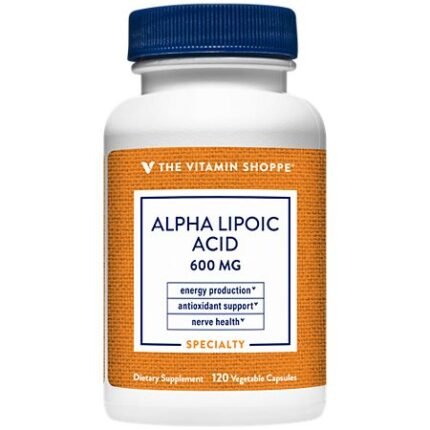
Antioxidants is a broad shopping category rather than the name of one nutrient, one formulation or one expected result. A shopper searching for antioxidant capsules may arrive with very different intentions from someone looking for a particular ingredient recommended during an appointment. Starting with the ingredient name helps turn that broad search into a more precise comparison. On this page, the reviewed product is Alpha Lipoic Acid — 600 MG, 120 Vegetable Capsules. That is the relevant catalog example throughout this guide. It should not be mistaken for evidence that every type of antioxidant supplement is represented here.
The words on a category page can help organize choices, but they cannot establish a medical need. A category can group products by a shared theme even when their ingredients, amounts and intended users differ. For that reason, the useful questions are specific: what ingredient is named, what amount appears on the Supplement Facts panel, how many capsules constitute a serving, and what other ingredients are present? Those questions produce a clearer decision than looking for the strongest sounding antioxidant claim or choosing the longest product title.
Is alpha lipoic acid the same as every other antioxidant?
No. A product identified as alpha lipoic acid should be compared as that ingredient, rather than treated as interchangeable with a multivitamin, vitamin C formula or botanical blend. Similar category placement does not mean that products share the same composition. Even two alpha lipoic acid listings would require a closer look at the exact formulation before being treated as equivalents. This page does not establish a comparison between stocked alternatives because the reviewed category example is one product.
The NCCIH overview of antioxidant supplements explains that different antioxidants have different properties and that larger amounts are not automatically beneficial. It also distinguishes findings about antioxidant-rich foods from findings about isolated supplements. Those are useful boundaries for shopping: the category name is not a reason to assume disease prevention, and a concentrated capsule is not a replacement for the varied components of food.
What can you learn from the alpha lipoic acid product title?
The title provides three clear starting points: alpha lipoic acid is the named ingredient, 600 MG is the displayed strength wording, and 120 vegetable capsules is the package-count wording. These details are useful for locating the product and comparing the listing with its label. They do not independently answer every question about a serving. In particular, the complete Supplement Facts panel should establish whether the displayed ingredient amount is per capsule or per serving and how many capsules make up that serving.
Vegetable capsules describes the wording used for the capsule format. It should not be expanded into unverified statements about every ingredient, manufacturing process or dietary certification. Someone avoiding a particular ingredient should read the full other-ingredients section and any allergen statement. A capsule-shell description does not establish the absence of all possible animal-derived ingredients elsewhere in a formula, and this guide does not assign a vegan certification to the item.
| Title detail | What it helps identify | What still needs checking |
|---|---|---|
| Alpha lipoic acid | The named ingredient | Exact form and complete formula |
| 600 MG | Displayed strength wording | Amount per labeled serving |
| 120 vegetable capsules | Package count and capsule wording | Capsules per serving and other ingredients |
| Antioxidants category | The browsing theme | Individual suitability and evidence |
A reliable comparison starts by separating what is printed from what is inferred. The number of capsules is a count of pieces in the container, not a clinical recommendation and not automatically the number of days the bottle should last. Similarly, a large number in milligrams is a quantity, not a ranking of product quality. Keeping those distinctions clear makes the product page easier to interpret without turning a short title into a set of unsupported promises.
How should you read the Supplement Facts panel?
Begin with serving size. Then read the ingredient amount attached to that serving and check how many servings are supplied in the package. When the available title and a photographed label appear inconsistent, stop the comparison and ask for clarification rather than choosing the version that seems most attractive. Label designs can change, and abbreviated store titles are not a substitute for a legible current panel. The aim is to know exactly what the product represents before deciding whether it belongs in your routine.
Next, read the other-ingredients section. This is where capsule materials, fillers and additional formulation ingredients may be listed. A shopper may be comfortable with the main ingredient and still need to avoid a secondary ingredient. Do not rely on the category thumbnail to answer that question; a bottle image may show only the front panel. If an ingredient list cannot be read, request a clearer label image or verified text instead of assuming that an unmentioned ingredient is absent.
Finally, review directions and warnings together. Directions describe the manufacturer's intended use of that particular product, while warnings help identify circumstances requiring additional care. Neither section should be replaced by advice borrowed from a different brand, a different strength or a social-media routine. This guide does not supply a personal dose. It explains how to collect the product information needed for a meaningful discussion with a qualified professional when that discussion is appropriate.
| Label area | Shopping question | Useful comparison note |
|---|---|---|
| Serving size | How many capsules form one serving? | Write the number beside the package count |
| Ingredient amount | What amount belongs to that serving? | Keep units and serving basis together |
| Other ingredients | What else is in the capsule? | Check personal ingredient restrictions |
| Directions and warnings | What does this exact label say? | Do not borrow instructions from another product |
| Manufacturer details | Who can answer a formula question? | Use the contact information printed on the package |
Does a higher milligram number mean a better antioxidant supplement?
A milligram number cannot answer that question by itself. It describes an amount associated with an ingredient or serving, while a good purchasing decision also depends on the reason for considering the supplement, the complete formulation and any individual concerns. Comparing two numbers without checking their serving basis can create a false impression. A product with a larger number might use more capsules per serving, a different ingredient form, or a combination formula that is not directly comparable.
For the reviewed 600 MG alpha lipoic acid listing, the practical step is to confirm the label rather than invent a lower or higher alternative. This category guide does not suggest taking additional capsules to reach an arbitrary target, nor does it suggest combining products to make the number larger. If a clinician has discussed a particular ingredient or formulation with you, use that precise information as the comparison point. Similar wording in a store search result is not enough to establish a match.
Price comparisons need the same discipline. The price of a bottle, the price per capsule and the price per labeled serving are different measures. A bottle with more capsules may be attractive for someone who has already established that the product is appropriate, but it can be poor value if the formulation is unsuitable or the serving count was misunderstood. Cost should help compare acceptable options; it should not be used to decide that an unnecessary supplement becomes necessary because it is available in a larger container.
How can you compare package value without guessing?
Use actual current prices from the product page and confirmed quantities from the label. Divide the bottle price by the capsule count to calculate a price per capsule. If you want price per serving, divide by the confirmed number of labeled servings instead. Keep these calculations clearly labeled, because they answer different questions. There is no current price reproduced in this guide, and any arithmetic example below is a method rather than a quote or a promise about the product.
For example, if a hypothetical bottle held 120 capsules and the label defined two capsules as a serving, that hypothetical bottle would contain 60 servings. This example demonstrates the calculation only; it does not state that the listed alpha lipoic acid product uses a two-capsule serving. The same method works with any confirmed serving size. Writing down the calculation prevents an easy mistake: dividing by the number of capsules while calling the result a cost per serving.
| Comparison measure | Calculation | Why it matters |
|---|---|---|
| Price per capsule | Current price divided by capsule count | Compares individual pieces |
| Price per labeled serving | Current price divided by confirmed servings | Compares the label's serving unit |
| Package suitability | Check formula before calculating value | An unsuitable formula is not a saving |
| Likely purchase quantity | Consider your actual plan and storage | A larger bottle is not automatically useful |
Value also includes information quality. A readable label, an identifiable product and a clear answer to an ingredient question can matter more than a small difference in price. If the information needed to make a safe decision is unavailable, the sensible next step is clarification. A category page can organize a purchase, but it should never encourage guessing about what is inside the container or how it should be used.
What do antioxidant marketing terms actually tell you?
Words such as advanced, support, complex and high potency appear throughout supplement shopping. They may describe a manufacturer's positioning, but they do not provide a complete technical specification. Read them alongside the ingredient panel rather than in place of it. A phrase associated with general wellness does not establish treatment of a diagnosed condition, and an appealing product name does not establish that a formula has been tested for the outcome a shopper has in mind.
Scientific language also needs context. A statement about an ingredient's laboratory properties is different from a clinical finding about a finished product in people. A study involving one formulation does not automatically apply to every bottle with the same category label. When evaluating a claim, ask which ingredient was studied, how it was formulated, who participated and what outcome was actually measured. If those details are missing, the claim is not a useful basis for comparing the product on this page.
The strongest sounding advertisement may also be the least specific. Claims about complete protection, reversing aging or eliminating oxidative stress oversimplify complicated biology and should not be treated as purchase guarantees. A helpful product description explains identity, format and label information without promising an outcome for everyone. That is why this guide concentrates on the reviewed capsule listing, practical comparisons and clear questions rather than attaching broad health promises to the Antioxidants heading.
How does an antioxidant capsule fit alongside food and other supplements?
Consider the whole routine before considering another bottle. Some shoppers already use a multivitamin, a sports formula or several single-ingredient supplements. Make a written list of those products and their ingredient panels. The purpose is not to create a larger stack. It is to see what is already present and identify questions that would otherwise be hidden across several labels. Products purchased for different reasons can still contain overlapping ingredients.
Food choices and a capsule purchase are separate decisions. A capsule has a defined formula and serving unit, while a meal contains a broader combination of ingredients and nutrients. Buying a supplement does not resolve questions about meal balance, food preferences or access to suitable foods. If your main goal is to improve an everyday eating pattern, discuss that goal directly rather than assuming the Antioxidants category provides a shortcut. The right question may concern meals rather than a new supplement.
When prescribed medicines, ongoing treatment or a medical condition are involved, bring the exact label to the relevant health professional. A vague description such as “an antioxidant” leaves out the details needed to review the proposal. The FDA's dietary supplement questions and answers explains the regulatory distinction between supplements and drugs. Shopping language should preserve that distinction: a supplement listing is not approval to treat a disease or to change a prescribed treatment plan.
Which questions should you resolve before ordering alpha lipoic acid capsules?
Start with your reason for looking. Are you trying to identify a product previously discussed with a professional, comparing a label you already own, or exploring a category you have not used? Each situation calls for different information. Someone matching a previous bottle needs exact formulation and package details. Someone exploring for the first time needs to establish whether there is a reason to use the ingredient at all before deciding which package offers better value.
Then identify your nonnegotiable requirements. These may include avoiding a particular capsule ingredient, being able to swallow the format, keeping a clear record of all supplements, or obtaining advice about compatibility with an existing routine. These requirements are practical filters. They are more useful than assuming a product is right because it appears in a relevant search result. A product can be accurately described and still be a poor fit for an individual shopper.
| Question to resolve | Information to collect | Where to look first |
|---|---|---|
| Is this the exact ingredient I intended? | Full ingredient identity | Product title and Supplement Facts |
| Does the serving match my understanding? | Capsules and amount per serving | Current label |
| Are there ingredients I avoid? | Complete ingredient list | Other-ingredients and allergen information |
| Does it fit my existing routine? | All medicines and supplements | Personal list and professional review |
| Is the purchase clear? | Item, quantity and current price | Product page and checkout |
Keep unanswered questions visible rather than silently filling in the gaps. If the title says 600 MG but the available image is unreadable, the answer is not to assume a common serving size from another site. If the capsule-shell wording matters to you, obtain the complete ingredient information. A careful pause before purchase is more useful than receiving a bottle that cannot meet the reason you were shopping.
How should you handle the product after it arrives?
Match the received item to the order before adding it to your routine. Check the ingredient name, displayed strength, package count and any variant information. Inspect the packaging and follow the manufacturer's storage directions on the actual bottle. This guide does not prescribe a universal storage temperature or claim a particular seal design for the reviewed product. Those details belong to the package supplied and should be checked there.
Keep the original container so the ingredient panel, lot information and manufacturer contact remain available. If you use a separate organizer, retain the bottle rather than discarding the only reliable identification record. This is particularly helpful when several products have similar-looking capsules. A routine that is easy to identify is easier to discuss accurately during an appointment or when asking a pharmacist a product-specific question.
If the received product differs from the listing or an important label question remains unresolved, contact the store before treating it as the item you intended to buy. Do not solve a mismatch by changing the amount yourself. The appropriate resolution depends on the actual discrepancy and the store's applicable policies, which are not reproduced here. Clear order records and photographs of the received label can help explain the issue without relying on memory.
Frequently asked questions about antioxidant capsules
What antioxidant product is described on this page?
The reviewed example is Alpha Lipoic Acid — 600 MG, 120 Vegetable Capsules. The guide uses that listing to explain ingredient identity, serving-size checks and package comparisons. It does not claim that this page currently carries every antioxidant ingredient or that the item is available at a particular price. Open the product page for the current purchase information and confirm the complete label before deciding.
Does 120 capsules mean a four-month supply?
Not automatically. A supply estimate depends on the labeled serving size and the use appropriate for the individual. A count of 120 describes the number of capsules in the title. It does not establish a one-capsule daily direction. Use the actual label and any individualized professional advice; do not turn a package count into a dosing instruction or a promised duration.
Is alpha lipoic acid the same as alpha linolenic acid?
Similar initials can cause confusion, so use the full ingredient name when shopping or discussing the product. The listing reviewed here explicitly says alpha lipoic acid. If another product uses the abbreviation ALA, do not assume the abbreviation identifies the same ingredient without checking the full label. Searching by the complete name is a simple way to reduce the risk of ordering a different product than intended.
Can I choose antioxidant capsules to treat symptoms?
A category guide cannot diagnose symptoms or establish a treatment. If symptoms or a diagnosed condition are the reason for your search, discuss that reason with an appropriate health professional and provide the exact product label. The store category name should not be treated as evidence that a capsule is suitable for self-treatment, and a purchase should not delay an assessment that you otherwise need.
Do vegetable capsules establish every dietary claim?
No. The title describes a capsule format, while a complete dietary assessment depends on the entire formula and any specific certification you require. Check all ingredients and any verified claims on the actual package. This guide does not infer allergen absence, vegan certification or manufacturing standards from the words vegetable capsules alone. Ask for clarification if a particular requirement determines whether you can use the item.
Where can I browse related products without confusing the categories?
Use the broader Vitamins & Supplements department when you want to compare the store's departments, then return to the precise ingredient page for a purchase decision. Related category placement can make browsing easier, but it does not establish that different products are substitutes. Keep the complete ingredient name and label information at the center of any comparison.
A practical way to finish your antioxidant comparison
Before checking out, you should be able to explain the proposed purchase in one clear sentence: the exact ingredient, the product format, the confirmed serving information and the package quantity. If part of that sentence is missing, return to the label or ask a focused question. This approach avoids choosing a product solely because the category sounds relevant and makes any later professional discussion much more precise.
The most useful antioxidant shopping decision is a well-defined one. Establish why you are considering the ingredient, confirm what the product contains, compare costs on the correct basis and retain the information that identifies the bottle. Those steps support an informed purchase without making the category heading carry promises it cannot justify. Read the current alpha lipoic acid product page for item-specific details and use this guide as a framework for the questions that matter to you.
What should a final comparison record contain?
| Record entry | Example of the detail to retain | Reason to keep it |
|---|---|---|
| Product identity | Full alpha lipoic acid listing name | Avoids abbreviation confusion |
| Label reference | Readable current panel | Preserves serving information |
| Purchase record | Ordered quantity and actual price | Supports a clear order check |
| Open questions | Any unresolved ingredient concern | Prevents assumptions during checkout |
A short written record is especially helpful if you are comparing products over several days. Search results, saved photographs and shopping-cart entries can become mixed together. Keeping the product link beside the relevant label information allows you to return to the same item and understand what you actually compared. It also makes it easier to distinguish a newly updated package from an older photograph rather than assuming that both represent identical information.