





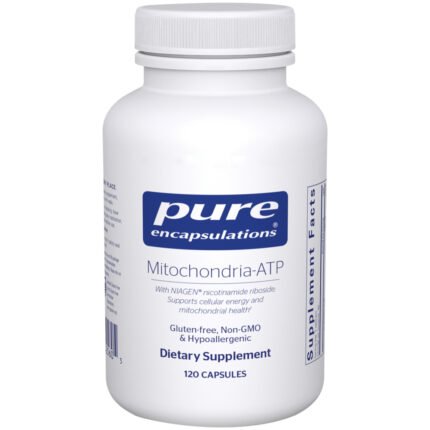
Explore the NAD+ / NMN category at Sprinkles Menu with a clear distinction between category terminology and the product actually listed. The current example is Mitochondria-ATP with Niagen, a 120-capsule formula. This guide explains the vocabulary, how to assess research and what to compare before buying. The category name does not mean that every type of NAD-related ingredient is currently offered.
▼ Click here to read the full NAD+ / NMN guide — comparison tables and FAQs
What does the NAD+ / NMN category describe?
This category uses terms associated with a broad area of supplement research and marketing. NAD+, NMN and nicotinamide riboside are related vocabulary, but they are not interchangeable product names. A useful shopping comparison begins by separating the biological terms from the ingredient named on the actual package. Without that step, two products can appear equivalent because their descriptions discuss the same cellular topic even though their formulas differ.
The current listed example is Mitochondria-ATP with Niagen, 120 capsules. That is the concrete item to investigate here. Do not read the category title as confirmation of a standalone NMN product, an NAD+ infusion, or a wide selection of equivalent formulas. The archive provides a browsing route; the product label supplies the identity of the item being considered.
What are NAD+, NR and NMN?
NAD+ is short for nicotinamide adenine dinucleotide. It is a molecule involved in cellular processes, including energy-related chemistry. NR stands for nicotinamide riboside, while NMN stands for nicotinamide mononucleotide. These names appear frequently in discussions of NAD metabolism, but their relationship in biology does not make them identical ingredients in a supplement bottle. The exact substance used in a study matters when interpreting its findings.
For a shopper, the most practical rule is to keep the ingredient name intact. A study involving NR should be described as an NR study rather than casually relabeled as proof for every NAD-related product. A formula name containing ATP similarly does not establish that all of its ingredients or effects are understood from the name. Read the complete ingredient panel before drawing conclusions about what the capsules supply.
| Term | What it identifies | Shopping implication |
|---|---|---|
| NAD+ | Nicotinamide adenine dinucleotide, a biological molecule | A research topic does not identify every formula sold under it |
| NR | Nicotinamide riboside | Compare research and labels that specify this ingredient |
| NMN | Nicotinamide mononucleotide | Do not assume it is present because the archive title mentions it |
| Niagen | A branded ingredient name associated with nicotinamide riboside | Confirm the exact ingredient and amount on the product label |
| Mitochondria-ATP | Wording in the listed formula's name | The complete formula needs its own assessment |
What does the currently listed product tell me?
The title establishes a formula name, a reference to Niagen and a capsule count of 120. Those details are helpful for finding the correct page and comparing packaging. They do not establish the amount of every ingredient, the directed serving, the number of days in a bottle or a personal health outcome. Each of those questions requires information beyond the title.
A 120-capsule bottle is not automatically a 120-day supply. The serving directions might use more than one capsule, and the appropriate use for an individual cannot be inferred from container size. Before treating this as a recurring purchase, read the label, check any cautions and discuss the full formula with a healthcare professional if you take medicines, have a medical condition or are considering it for a specific symptom.
Is an NAD-related supplement an energy drink or a stimulant?
The language of cellular energy can create confusion with products intended to provide a noticeable stimulant sensation. A discussion of a molecule's biological role is not the same as a promise that taking a supplement will make someone feel more alert. Likewise, the words mitochondria or ATP in a name do not establish that a product contains caffeine, produces an immediate effect or suits an afternoon energy routine.
If your question is about persistent fatigue, describe that symptom to a healthcare professional rather than assuming a cellular-energy product is the answer. For shopping, separate the desired experience from the scientific terminology. Ask what the product actually contains, what has been studied and whether the outcome you care about was measured. This makes the comparison more useful than relying on an energizing-sounding formula name.
What has human NR research measured?
A randomized trial published in 2019 investigated oral nicotinamide riboside chloride over eight weeks in healthy overweight adults, including NAD-related measurements and safety outcomes. This is an example of human research on a specified ingredient under a defined study design. It is not a trial of every product that mentions mitochondria, and it does not establish a universal daily plan for shoppers.
Another randomized crossover study in middle-aged and older adults examined NR supplementation and NAD metabolism over defined study periods. Such findings help explain why the ingredient is researched. They should still be distinguished from claims about lifespan, disease prevention or a guaranteed improvement in everyday functioning. The measured endpoint and the population studied are essential parts of any accurate explanation.
Why is a biomarker different from a health outcome?
A biomarker is a measurement used to study something happening in the body. A change in that measurement can be scientifically interesting without proving that a person will live longer, feel better or avoid a disease. Those broader outcomes require their own evidence. A product description that moves directly from a laboratory measurement to a sweeping personal promise is skipping an important step in the reasoning.
When reading an article, look for the actual result being described. Was the research measuring blood concentrations, a physical performance test, a symptom scale or a clinical event? These are different questions. If the result concerns one measurement, keep the conclusion tied to that measurement. This approach lets you appreciate a research finding while remaining realistic about what it does and does not say about a retail formula.
| Research question | Useful evidence detail | Conclusion to avoid assuming |
|---|---|---|
| Did a measured NAD-related value change? | The exact biomarker and testing method | That every aspect of health improved |
| Was the ingredient tolerated in the study? | Participants, duration and reported events | That it is risk-free for everyone indefinitely |
| Did physical function improve? | The actual functional test and result | That a biochemical change proves improved performance |
| Was the full retail formula tested? | Exact ingredients and study product | That one ingredient study validates the whole blend |
| Does a result apply to me? | How the study population compares with you | That all ages and medical circumstances are equivalent |
How do I read an NR study without overinterpreting it?
Start with the study question, then identify the participants, comparison group, duration and outcomes. A randomized study with a placebo group answers a different question from an uncontrolled report or an animal experiment. Sample size also matters when considering how much confidence to place in a result. These details are often more informative than a headline describing an ingredient as a breakthrough.
Next check whether the study used the same ingredient as the product you are evaluating. If the retail formula contains several components, a study of a single component cannot automatically establish the effect of the combination. Also consider who funded the work and whether the authors disclosed commercial relationships. Funding does not make a result meaningless, but transparency helps readers assess the evidence in context.
Do results from one population apply to everyone?
Not automatically. Research in a defined age group or health status may not answer the same question for younger adults, people taking particular medicines or those with a diagnosed condition. The duration of a study also limits what it can establish. A trial lasting several weeks cannot by itself settle questions about many years of use. Keep those boundaries visible when comparing a research claim with a proposed daily routine.
This is one reason to bring a focused question to a clinician. Instead of asking whether NAD supplements are good in general, explain the particular product, your reason for considering it and the outcome you hope to achieve. The discussion can then address whether the evidence is relevant to your circumstances rather than relying on a category-wide impression formed from headlines.
Is Niagen the same thing as the entire formula?
A branded ingredient reference identifies one part of a product's positioning, but it is not necessarily the full formula. The Mitochondria-ATP title should prompt you to read the complete label rather than assuming that every capsule contains only one ingredient. Other components, if present, need their own assessment for amounts, cautions and overlap with products already in your routine.
This distinction also affects research comparisons. An ingredient may have published studies while a specific combination has not been studied in the same way. To evaluate the retail product accurately, identify which claims concern an ingredient and which concern the full formula. Avoid treating a trademark as a blanket guarantee of effectiveness, independent certification or suitability for every individual. Those are separate claims requiring separate information.
How can I compare capsule count, servings and cost?
Begin with the confirmed number of capsules and the directed serving on the current label. Divide the bottle count by capsules per serving to understand the package's stated serving structure. That is a packaging calculation, not a recommendation about what you personally should take. If directions vary or the product page does not provide them clearly, resolve that uncertainty before calculating a daily cost.
Then use the current price of the exact listing. Price per bottle can be misleading when comparing products with different serving sizes or ingredient amounts. A larger bottle is not automatically a better value if its formula does not match the comparison you intended to make. Keep the assessment focused on the actual product, its complete ingredient information and the usefulness of the purchase to your informed decision.
| Package detail | What it tells you | What it does not tell you |
|---|---|---|
| 120 capsules | Number of capsules named in the listing | Number of days for every user |
| Capsules per serving | How the label defines a serving | A personalized plan for your circumstances |
| Ingredient amount per serving | The formula's stated quantity on that basis | That another ingredient or formula is equivalent |
| Price per bottle | Current cost of the listed container | Cost per comparable serving without further calculation |
| Branded ingredient wording | Identity of a named ingredient reference | Approval or certification of every claim |
What should I ask about combining products?
Create a full list of supplements and medicines before adding a new formula. Include products marketed for longevity, energy, multivitamin support or general wellness, because different names can conceal overlapping ingredients. The goal is to understand the combined routine rather than assessing each bottle in isolation. A pharmacist or clinician can help review that list in the context of your medical history.
Do not assume that two NAD-related products are useful together simply because they use different abbreviations. Combining ingredients raises a different question from evaluating one ingredient alone. Likewise, a formula positioned for cellular support should not automatically be added to a pre-workout, stimulant product or another blend. The complete ingredient lists and individual circumstances matter more than the marketing categories printed on the front.
What questions are useful if I am interested in healthy aging?
Be specific about what healthy aging means to you. Maintaining mobility, addressing a documented nutrient issue and managing a diagnosed condition are different goals. A broad wish to age well does not establish that a particular supplement is appropriate. It also makes it difficult to assess a claim, because almost any positive-sounding statement can appear relevant when the desired outcome is undefined.
Ask what human outcome has been demonstrated for the exact ingredient, how strong the evidence is and whether it applies to your situation. Continue to discuss established health priorities with your healthcare professional rather than letting a supplement name dominate the plan. This category can help identify a product for review, but it cannot turn preliminary research into a promise of longer life or protection from illness.
How is this category different from longevity or general vitamins?
A general vitamins category groups nutrients by a broad nutritional identity. A longevity category may group products by an intended shopping theme. This NAD+ / NMN archive uses a more specific scientific vocabulary, yet the practical task remains the same: identify the actual formula rather than assuming the category heading supplies the answer. A product can appear in more than one browsing category without changing its ingredients.
The broader Vitamins & Supplements department may help you compare different nutrient types. Use those categories to navigate, then return to the exact label for a meaningful comparison. Store taxonomy is useful for finding products, but it is not a clinical judgment that two items serve the same purpose or should be used together.
What should a credible product explanation include?
A useful explanation names the actual ingredient, distinguishes the formula from the ingredient's research and uses precise language about outcomes. It should not rely on a chain of impressive terms to imply a result that was never measured. Cellular, mitochondrial, ATP and longevity are words that require context. Their appearance together does not substitute for a complete formula or a relevant human study.
Credible information also makes uncertainty visible. It is reasonable to say that an ingredient has been investigated for a particular endpoint while acknowledging that broader questions remain unresolved. For a shopper, that clarity is valuable: it supports an informed discussion and avoids creating expectations based on claims that extend beyond the available evidence. A cautious interpretation can still recognize why a topic interests researchers.
| Claim wording you may encounter | Better question to ask | Information needed |
|---|---|---|
| Supports cellular energy | What outcome was actually measured? | Ingredient-specific human results |
| Promotes longevity | Was lifespan or a relevant clinical outcome studied? | Evidence matching the claimed outcome |
| Clinically studied ingredient | Was this exact formula tested? | Study product and complete retail formula |
| Advanced NAD support | Which ingredient and amount are included? | Current Supplement Facts and ingredient list |
| Premium or cutting-edge | What objective comparison supports that description? | Clear, relevant evidence rather than adjectives |
| Large capsule count | How many directed servings are provided? | Serving directions and container count |
Frequently asked questions about NAD+, NR and NMN products
Does this category currently show a standalone NMN product?
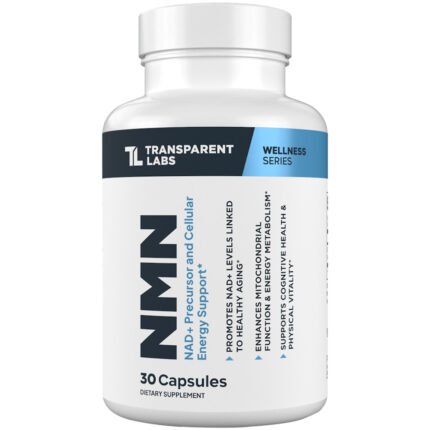
The current example used in this guide is Mitochondria-ATP with Niagen, 120 capsules. Do not assume a standalone NMN product is offered merely because NMN appears in the category heading. Read the products actually displayed and check their ingredient panels. Category terminology can be broader than a particular selection, so the label remains the reliable starting point for product identity.
Is NR another name for NMN?
No. Nicotinamide riboside and nicotinamide mononucleotide are different named compounds discussed in NAD-related research. Their relationship does not make their retail formulas or research results interchangeable. Keep the abbreviations distinct when reading a study, comparing a label or asking a healthcare professional a question. Precision about the ingredient prevents conclusions from drifting beyond the evidence actually being discussed.
Will a supplement make me feel more energetic immediately?
That outcome cannot be promised from this category name or the listed formula title. Biological energy terminology does not necessarily describe an immediate sensation, and individual experiences are not a substitute for an appropriate evaluation of ongoing fatigue. If a symptom is driving the purchase, discuss the symptom directly with a healthcare professional and bring the proposed product's full label to the conversation.
Does a higher NAD-related measurement prove longer life?
A biochemical measurement and lifespan are different outcomes. A study can report a meaningful change in one measure without establishing a benefit for all the outcomes a shopper might care about. Look for the exact endpoint in the research and keep the conclusion tied to it. Claims about longevity require evidence that actually addresses that question, rather than a general association with cellular processes.
Can I compare this product with an NAD infusion?
They are different product and administration formats. An oral capsule listing does not provide evidence that it is equivalent to an infusion, nor does a claim about an infusion validate the capsule formula. If you are considering a medical procedure or treatment, discuss that separately with an appropriately qualified clinician. Keep this archive focused on the actual oral product and the information relevant to that product.
Does 120 capsules mean four months of use?
Not without the directed serving information. Capsule count describes the contents named in the listing, while the label defines how many capsules make a serving. Calendar estimates depend on those directions and the individual plan, if any, reviewed with a professional. Do not build a value comparison or reorder schedule around a one-capsule assumption that the current label has not established.
Should I choose a supplement because a study says it was tolerated?
Tolerability in a particular study is useful information, but it is not a guarantee for every person, combination of medicines or duration of use. Read the study population and time frame, then consider the full retail formula. A professional review is especially helpful when your circumstances differ from those in the study or when you already use several products with overlapping ingredients.
How can I keep useful notes while comparing evidence?
Write the ingredient name at the top of your notes, then record the study population, duration and main measured result underneath it. Keep a separate line for the retail formula and its complete ingredients. This simple separation makes it easier to notice when a headline has shifted from one substance to another or when a result is being applied to a combination that was not actually tested.
Also record what would change your decision. You might need a readable label, an answer about an overlapping ingredient or a professional assessment of whether the research is relevant to your circumstances. A list of unanswered questions is often more practical than collecting increasingly enthusiastic marketing descriptions. It allows your next conversation to focus on specific information rather than a broad debate about whether an entire category is promising. Revisit those notes if the product formula changes, because a familiar name does not guarantee that every detail stays identical over time.
What should I confirm before buying the listed formula?
Begin with the exact product identity and a readable full label. Decide whether your question concerns the ingredient, the combination or an advertised outcome, and keep those questions separate. If you are comparing research, note which findings genuinely concern the same ingredient and which do not. This creates a much clearer foundation for a purchase decision than a general impression that all NAD-related products are similar.
| Before ordering | Your confirmation | Why it helps |
|---|---|---|
| Product identity | Mitochondria-ATP with Niagen, the correct listing | Keeps the comparison specific |
| Full formula | Ingredients and amounts on the current label | Distinguishes a blend from a single ingredient |
| Serving structure | Capsules per serving and package count | Makes quantity and price comparisons meaningful |
| Evidence relevance | Same ingredient, population and measured outcome | Prevents overreading research headlines |
| Personal context | Existing products, medicines and reason for use | Supports an informed professional discussion |
| Unanswered details | Seek clarification before committing | Avoids decisions based on an assumption |
Use the product page above to review current details and resolve anything the title cannot establish. A thoughtful comparison can recognize the scientific interest in NAD metabolism while remaining accurate about the available selection and the limits of what a supplement can promise.