





Explore Magnesium with a focused guide to magnesium glycinate gummies, serving information, mineral amounts and practical comparisons. The reviewed example is a fruit punch gummy listing with 50 gummies. Learn how to distinguish the mineral amount from the compound name, assess the gummy format and organize questions about your existing routine before choosing a product.

▼ Click here to read the full Magnesium guide — comparison tables and FAQs
What is magnesium, and what does this category help you compare?
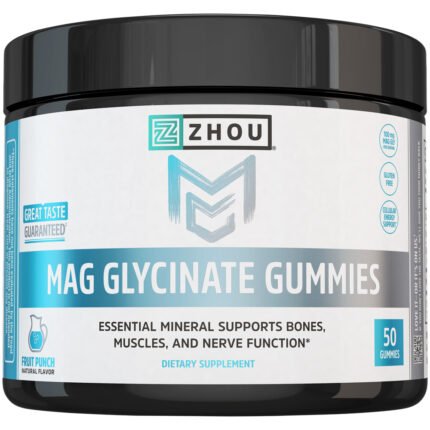
Magnesium is an essential mineral, and this shopping category helps you locate products identified with that ingredient. It does not establish that every visitor needs a magnesium supplement or that every magnesium formula has the same purpose. A useful comparison starts with the exact product and a clear reason for considering it. The reviewed example here is Mag Glycinate Gummies — Fruit Punch, 50 Gummies. This guide does not invent additional stocked powders, tablets or capsule alternatives.
The product title includes wording about bones, muscles and nerve function. That is part of the reviewed listing's description, not an individualized promise about symptoms or results. The NIH Office of Dietary Supplements magnesium fact sheet describes magnesium's normal roles in the body, food sources and supplement considerations. A nutrient having normal biological functions does not establish that taking more of it improves those functions for every person or resolves a particular complaint.
This distinction matters because magnesium searches often begin with a desired outcome rather than a confirmed need. Someone may search for magnesium gummies for sleep, magnesium for muscle cramps or magnesium glycinate for everyday use. Those phrases describe questions people bring to the category. They do not establish the answer. The store listing can tell you what product is being offered; an appropriate assessment is needed when the question concerns a symptom, deficiency or personal treatment plan.
What does magnesium glycinate mean on a product name?
The glycinate wording identifies the named magnesium form in the listing. It should be read alongside the full Supplement Facts panel, where the actual mineral amount and serving size can be confirmed. A compound name and an elemental mineral amount are different pieces of information. Do not compare a large compound-weight number on one advertisement with the declared magnesium amount on another label as though they necessarily describe the same thing.
The NIH magnesium technical fact sheet explains that the Supplement Facts panel declares elemental magnesium rather than the entire weight of the magnesium-containing compound. For shopping purposes, write down the declared magnesium amount, its unit and the number of gummies in the serving together. That creates a clear record without requiring you to estimate the mineral content from the chemical name or from an unrelated product's marketing.
The term glycinate does not establish that every product carrying it has identical ingredients, serving sizes or performance. Two gummies can share a form name while using different recipes or different labeled amounts. A comparison also needs the other ingredients, directions and any warnings. This page does not assign a superiority ranking to the reviewed item or claim that a specific form is universally best. Format and formulation need to be assessed for the actual person and purpose.
| Label concept | What it describes | What to avoid assuming |
|---|---|---|
| Magnesium | The named mineral | That supplementation is necessary for everyone |
| Glycinate | The form wording in the title | That all glycinate products are identical |
| Elemental magnesium amount | Mineral declared on Supplement Facts | That compound weight equals mineral amount |
| Serving size | Gummies associated with the declared amount | That one gummy is automatically one serving |
| 50 gummies | Displayed package count | That the bottle is a 50-day supply |
How should you read a magnesium gummy label?
Start by confirming the exact product name and flavor. Then find the serving size and the declared magnesium amount. Keep the unit attached to the number; a number without a unit and serving basis is incomplete information. If the front label uses a bold amount, check whether it matches the serving described on the panel. Front-panel design is intended to be readable at a glance, but the full label is what resolves the comparison.
Read the rest of the formula next. Gummies can include ingredients that contribute flavor, texture, sweetness and appearance. The reviewed fruit punch title does not tell you which sweeteners, colors, gelling agents or other ingredients are used. Those must be checked on the actual label. Someone avoiding an ingredient should not treat a pleasant flavor name or a mineral category heading as proof that the recipe meets that restriction.
Finally, read the directions and warnings for this exact item. The guide does not provide an individualized amount, a timing schedule or a rule that gummies should be taken with a particular meal. Those details should not be copied from a different brand's capsule or powder. If the product label is not legible on the page, request readable information before deciding rather than substituting an internet routine for the missing instructions.
What if the title and the label appear to disagree?
Treat a discrepancy as a question to resolve. An abbreviated title can omit information, while a photograph can be old or hard to read. Do not assume that the most attractive number is the correct one. Ask for confirmation of the current product, serving size and mineral amount, and retain the answer with your purchase record. That is particularly useful when the same brand offers several versions with similar names or packaging.
A clear label also helps avoid false comparisons across formats. A gummy may have a different serving unit from a capsule, and a powder may describe its serving by a scoop or weight. If you compare them elsewhere, convert only from confirmed label information. The format itself does not determine the correct amount. The reviewed category example remains the fruit punch gummy listing; other formats discussed here are general comparison concepts rather than claims about current inventory.
How many servings are in a bottle of 50 gummies?
The answer depends on the labeled serving size. Fifty gummies is a count of individual pieces, not automatically a count of servings or days. If a hypothetical label used two gummies per serving, a hypothetical 50-gummy bottle would contain 25 servings. If it used another serving size, the result would differ. This example teaches the arithmetic only; it does not assert that the reviewed product uses two gummies per serving.
The same distinction applies to price. A price per gummy can be calculated from the package count, but a price per serving requires the confirmed serving count. Calling one result by the other name can make a product seem better value than it is. If you are comparing only one available product with your budget, the calculation is still useful because it makes the purchase quantity easier to understand before checkout.
| Calculation | Information required | What the result means |
|---|---|---|
| Gummies per bottle | Confirmed package count | Number of individual pieces |
| Labeled servings per bottle | Package count divided by gummies per serving | Number of label-defined servings |
| Price per gummy | Current price divided by gummy count | Cost of one piece |
| Price per serving | Current price divided by confirmed servings | Cost of the label-defined unit |
| Estimated duration | An appropriate personal plan | Not established by package count alone |
Do not use value calculations to set a personal dose. Arithmetic can compare packages, but it cannot determine whether a person needs supplementation or which amount is appropriate. A low cost per gummy is not a reason to consume extra gummies, and a larger package is not necessarily useful if you have not established that the product fits your needs. Suitability comes before bargain hunting.
Are magnesium gummies the same as sweets?
A gummy format can look familiar and may be easier for some adults to consider than a large tablet, but it remains a supplement product. Fruit punch is a flavor identifier, not a reason to treat the contents as ordinary confectionery. Keep the product identifiable in its original container and follow its label. The format should make a routine understandable, not obscure that the gummies contain a declared mineral amount.
The recipe also deserves attention. Sweetness can come from different ingredients, and a product name does not establish whether it contains added sugars, sugar alcohols or any particular gelling material. Check the actual panel and ingredients if those features matter to you. This guide does not label the reviewed item sugar-free, vegan, allergen-free or suitable for children because those claims are not established by the sampled title.
Convenience is personal. A shopper who dislikes swallowing capsules may prefer to investigate gummies, while another person may prefer a different format for their own reasons. That preference does not answer every formulation question. Consider texture, flavor, portability, storage instructions and ingredient restrictions alongside the mineral amount. The best format for a comparison is one you can use as directed and identify clearly, provided the supplement itself is appropriate for you.
How does dietary magnesium differ from a supplement purchase?
Food and supplements are different ways in which magnesium may appear in a person's overall intake. The NIH consumer fact sheet lists foods such as legumes, nuts, seeds, whole grains and leafy vegetables as sources. A supplement purchase should not be treated as a substitute for considering the broader eating pattern. If your main question concerns food choices, ask that question directly rather than assuming a gummy is the first or only option.
A useful starting point is to describe an ordinary day of eating without trying to diagnose your own intake from a few examples. That record can support a discussion with a dietitian or other qualified professional when needed. It is more informative than deciding that a familiar symptom must indicate a magnesium problem. A store category cannot establish a deficiency, and a product title cannot tell you whether a person's diet supplies enough of a nutrient.
Someone already using a multivitamin, mineral blend or other product should collect those labels before adding another supplement. The goal is to identify overlapping ingredients and understand the whole routine. Products bought for separate reasons can still contribute the same mineral. A written list with serving sizes and amounts is much easier to review than a collection of category names such as sleep support, recovery and daily wellness.
What should you discuss if you use medicines or have a medical condition?
Bring the exact magnesium gummy label, a list of medicines and the labels of other supplements to a pharmacist or clinician when compatibility is a concern. Do not rely on the word magnesium alone; the complete formula and proposed use matter. Ask a focused question such as whether this particular product fits alongside your current routine. That is more useful than asking whether all gummies are safe or whether all mineral supplements behave alike.
The NIH fact sheet notes that supplemental magnesium can cause digestive side effects at excessive amounts and can interact with some medicines. It also distinguishes supplemental limits from magnesium naturally present in food. These are reasons to avoid self-directed increases and to obtain individualized advice where relevant. This page does not reproduce a universal maximum for every reader, because age, health status and circumstances affect how general information should be applied.
If symptoms are driving the search, describe the symptoms to the appropriate professional rather than choosing a product solely because a common search phrase links magnesium with that symptom. Muscle discomfort, poor sleep and tiredness can have different explanations. A shopping guide cannot determine the cause or decide that the reviewed gummy is the answer. Purchasing a supplement should not replace a needed assessment or become a reason to change a prescribed medicine.
| Situation | Information worth bringing | Question to ask |
|---|---|---|
| Existing supplement routine | All relevant ingredient panels | Are there overlapping mineral amounts? |
| Prescription medicines | Accurate medicine list | Does this exact formula need review? |
| A symptom prompted the search | Description and timing of the concern | What assessment is appropriate? |
| Difficulty with a format | The format you can manage | Is another suitable approach available? |
| Unclear label information | Product page and readable package image | What is the current serving information? |
Can magnesium gummies be marketed for sleep or muscle concerns?
You may encounter those phrases while shopping, but a search phrase is not evidence that every magnesium product produces that outcome. The reviewed title refers to normal mineral functions and identifies a glycinate gummy. It does not establish a personalized sleep plan, treatment for cramps or a guaranteed response. Keep the distinction between a nutrient's general role, a manufacturer's wording and a clinical conclusion about an individual person.
Testimonials are also limited comparison tools. One person's account may omit their diet, other products, diagnosis or changes in routine. Even a sincere account does not establish that the same product will have the same effect for someone else. If you want to evaluate an outcome claim, ask what research actually studied, which formulation was used and whether the participants resemble the situation you are asking about. Do not infer that evidence about one form or dose proves every gummy listing.
A realistic purchasing decision can be modest. You may decide to gather a readable label, discuss an existing recommendation or compare an ingredient restriction before deciding whether to order. Those are useful outcomes of reading the category page. The purpose is not to persuade every visitor to buy a mineral supplement, but to make the available product easier to understand and the unanswered questions easier to identify.
How do you compare magnesium without confusing it with other minerals?
The broader mineral department can contain products with different ingredients and combinations. A calcium-magnesium formula, for example, is a different comparison from a product identified only as magnesium glycinate in its title. Do not substitute one for the other based on the word mineral. Check each complete formula and keep the intended comparison narrow enough to be meaningful. Similar bottle sizes and flavors do not establish nutritional equivalence.
The Minerals category and the broader Vitamins & Supplements department can help with navigation. Return to the exact product page when you need serving information. Department browsing is useful for finding options, but it should not turn into a routine of adding one item from every category. A well-defined reason for a product is more valuable than a large collection of bottles.
Use a short comparison note when browsing. Record the ingredient, form, amount per serving, serving size, package count and any restriction that matters to you. If a field is missing, mark it unknown. This is better than filling in a standard-looking number from memory. The note can remain brief while still preventing the most common mistakes about gummy counts, mineral amounts and unsupported claims.
| Comparison field | Reviewed product starting point | Detail to confirm |
|---|---|---|
| Ingredient and form | Mag glycinate wording | Full Supplement Facts description |
| Flavor | Fruit punch | Exact selected variant |
| Package | 50 gummies | Received package count |
| Mineral amount | Not established by the sampled title | Elemental magnesium per serving |
| Recipe | Gummy format | Other ingredients and relevant declarations |
How should you check and store the product after delivery?
Match the product name, flavor and package count to the order. Read the actual label before use, even if you reviewed a photograph while shopping. Retain the container so directions, warnings, manufacturer information and identifying details remain available. If the received label differs from the listing in a meaningful way, ask for clarification rather than assuming the change does not matter.
Follow the storage instructions printed on the product. This guide does not assign a temperature, refrigeration requirement or shelf life to the reviewed gummies. Texture-sensitive formats can make correct handling particularly relevant, so avoid substituting assumptions from an unrelated product. Keep the supplement in a place where it remains identifiable and is not confused with ordinary snacks or other gummy products.
If you share a household, make clear which container is a supplement and who it is intended for. A fruit flavor and gummy appearance should not lead another person to use the product casually. This is especially relevant where children may see a familiar format. The title reviewed here does not establish a children's product, and this guide does not provide children's directions. Appropriate storage and individual suitability should be considered before the package becomes part of a household routine.
Frequently asked questions about magnesium glycinate gummies
Is one gummy a complete serving?
The sampled product title does not establish the serving size. Read the current Supplement Facts panel and directions to determine how many gummies the label defines as a serving. Keep that number beside the mineral amount so you do not confuse an individual piece with the unit used for the nutrient declaration. This guide does not assign a serving from the 50-gummy package count.
Does glycinate mean the product is best for everyone?
No universal ranking is established here. The form wording helps identify the product, but suitability also depends on the full formula, serving information, personal needs and any relevant professional advice. A shopper should not treat a familiar form name as proof that all other questions are answered. Check the exact label instead of relying on a general claim about a category.
Can I take several magnesium products together?
Do not decide that by counting category names. Collect the actual ingredient panels and review the combined routine with an appropriate professional when needed. A mineral may appear in more than one product, and the amount per serving matters. This page does not recommend combining products, increasing the serving or using several formats to reach an arbitrary number.
Are these gummies sugar-free or vegan?
Those claims are not established by the sampled title. Fruit punch describes the flavor, and gummies describes the format. The complete ingredient list and any verified package claims are needed to answer questions about sweeteners, gelling ingredients, dietary restrictions or certifications. If that information is not readable, obtain clarification before choosing the product for a specific requirement.
Should I use magnesium to diagnose a deficiency?
A store product cannot diagnose a deficiency. If you are concerned about intake, symptoms or a medical condition, discuss those concerns with a qualified professional and provide relevant information about your diet, medicines and supplements. A search result that links magnesium with a symptom is not enough to establish the cause or to determine a personal supplementation plan.
What is the simplest way to compare the reviewed gummy?
Confirm the exact fruit punch listing, read the serving size and elemental magnesium amount, check the other ingredients, and establish whether the product is appropriate for your circumstances. Then compare current price using a clearly labeled per-gummy or per-serving calculation. Keep unresolved questions visible. A clear comparison is more useful than a quick purchase based on flavor, package count or a broad wellness phrase.
What should you remember when returning to this category?
| Starting question | Useful next step | Outcome to aim for |
|---|---|---|
| I know the exact product | Match title, flavor and label | Confirmed product identity |
| I only know the ingredient | Establish the reason for considering it | A focused comparison |
| I am comparing a routine | Gather every relevant panel | Clear overlap information |
| I need an ingredient restriction | Read the complete recipe | An answer based on the actual formula |
A category visit does not have to end with an order to be useful. You may leave with a clearer question, a better understanding of serving arithmetic or a readable label to discuss at an appointment. If you do order, those same steps make the purchase more deliberate. The reviewed 50-gummy fruit punch item should be understood through its actual formulation and current label rather than through assumptions attached to the word magnesium.