





Compare Protein Powders at Sprinkles Menu with attention to protein source, preparation and package format. Current powder examples include marine and multi collagen formulas. Bottled protein drinks are listed separately under Protein Shakes & Meal Replacements. Use this guide to separate powders from ready-to-drink products, read serving information and find an option that fits your actual food and training routine.
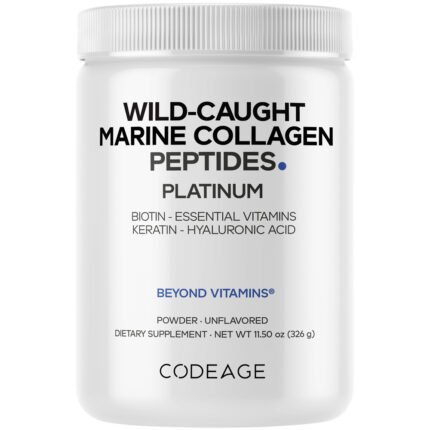
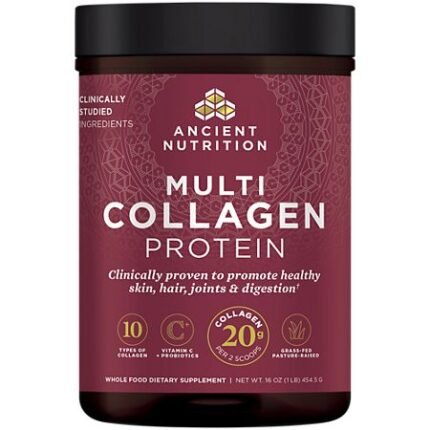
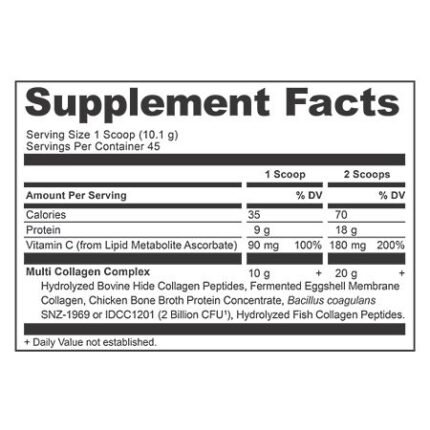
Multi Collagen Protein Powder – Unflavored (45 Servings)
Original price was: $49.99.$45.01Current price is: $45.01.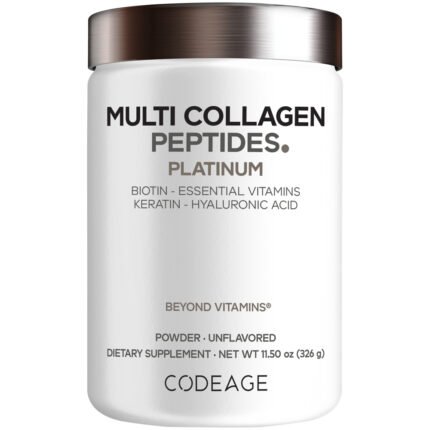
▼ Click here to read the full Protein Powders guide — comparison tables and FAQs
What kinds of products appear in the Protein Powders category?
The category examples include three products whose names explicitly identify collagen protein powder. They are Marine Collagen Protein Powder, Fish Collagen Peptides with Vitamins and Biotin, Multi Collagen Protein Powder with Biotin, Vitamin C, B, D3, Keratin and Hyaluronic Acid and Multi Collagen Protein Powder, Unflavored, 45 Servings. Their similar category placement does not mean their complete formulas are identical.
For a ready-to-drink alternative, the separate Protein Shakes & Meal Replacements category includes GNC AMP Wheybolic 40 Vanilla, 14oz, 4 Bottles and GNC AMP Wheybolic 40 Vanilla, 14oz, 12 Bottles. These titles describe bottles, not a tub of dry powder. That distinction should be made before comparing prices or planning preparation. A shopper who wants something to scoop into a recipe should choose a powder rather than assuming that a prepared bottle is the same format.
Start by selecting the format you need, then compare the protein source and full label. The category name is a browsing aid, while the individual product page defines the purchase. This approach helps you avoid comparing a collagen powder container with a multipack of prepared drinks as though they were simply two sizes of the same item.
| Powder example or separately listed bottled alternative | Format indicated by the title | Key question for comparison |
|---|---|---|
| Marine Collagen Protein Powder | Powder, with fish collagen named | Is the complete source and ingredient profile suitable? |
| Multi Collagen with added named ingredients | Powder with several additional components | Are the added ingredients specifically wanted? |
| Unflavored Multi Collagen, 45 servings | Powder with a stated serving count | What does the current label define as one serving? |
| Wheybolic 40 Vanilla, 4 bottles — bottled alternative in Protein Shakes & Meal Replacements | Bottled format, four-bottle description | What is included in the package being ordered? |
| Wheybolic 40 Vanilla, 12 bottles — bottled alternative in Protein Shakes & Meal Replacements | Bottled format, twelve-bottle description | How does the current unit cost compare with the smaller pack? |
How do you choose between protein powder and a bottled protein drink?
A powder and a prepared bottle solve different practical problems. Powder generally involves measuring and preparation according to its directions. A bottle has its own package and serving information to check. Your choice may depend on where you intend to use it, whether you want to add it to food and whether preparation is convenient. Those are practical format questions rather than evidence that one type is inherently better for every shopper.
Think through a real day instead of an idealized routine. If you want an ingredient for a home recipe, read the powder's mixing and use guidance. If you want a drink to carry to work, examine the bottle listing and its storage instructions. Do not assume a powder mixes well into every hot or cold food, or that every prepared drink can be stored in the same conditions. The exact manufacturer's instructions remain important.
Format also affects price comparisons. A container's net weight does not state the same thing as a bottle's fluid volume. To compare spending, establish what a labeled serving contains and how many servings are included. A useful calculation preserves those distinctions rather than reducing all products to price per package. It also recognizes that a prepared drink and a recipe ingredient may offer different convenience even when both contribute protein.
How should you compare collagen powder with other protein products?
Protein source matters because products with protein in the name can have different compositions and intended roles. The marine example explicitly names fish collagen peptides. The multi collagen examples use a broader source description that needs to be resolved from their complete labels. The bottled Wheybolic examples have a different identity again. These are not interchangeable just because they appear in one sports nutrition department.
A balanced comparison asks what you want the product to contribute to your overall eating pattern. Are you looking for a particular ingredient, a convenient snack, a recipe addition or a way to compare nutrition labels? Those goals require different information. Avoid judging a product solely by one number in a title. Total protein per serving, the source, the other ingredients and the rest of your diet all belong in the conversation.
The NIH Office of Dietary Supplements exercise and athletic performance fact sheet includes background on protein in sports nutrition. It provides general information rather than approval of the specific catalog products. This category guide does not prescribe a personal protein target or promise muscle growth from buying a powder. If you need an individualized plan, a qualified dietitian can evaluate food intake and product labels together.
| Comparison topic | Collagen powder examples | Bottled Wheybolic examples |
|---|---|---|
| Identity | Marine or multi collagen wording | Wheybolic 40 vanilla wording |
| Preparation | Check the powder's directions | Check the bottle's instructions |
| Package measure | Net contents or servings as labeled | Bottle volume and pack description |
| Extra ingredients | Some titles name vitamins and other components | Read the full beverage label for the selected version |
| Practical role | Consider whether a powder fits the intended use | Consider whether a prepared bottle fits the intended use |
| Fair comparison | Read source and amount per serving | Read source and amount per serving |
What does the marine collagen title tell you?
The marine collagen example names fish collagen peptides and an 11.50 ounce package. It also names vitamins and biotin. That establishes a more specific identity than simply protein powder, but the title is still a summary. Read the current label for the precise ingredients, their listed amounts and the serving definition. Do not infer that a named vitamin is present at the same amount as in a multivitamin you already use.
Source information is especially relevant when you have dietary restrictions or ingredient sensitivities. A product explicitly described as fish collagen should not be treated as a plant-based option. Any specific allergen question needs to be answered from the actual label and relevant manufacturer information. This guide cannot establish a complete allergen profile from the source phrase alone or promise suitability for every person who avoids a particular ingredient.
Also consider whether the added components are part of your goal. A shopper seeking only a collagen ingredient may compare differently from a shopper deliberately looking for a combined formula. More named ingredients do not automatically make a product a better fit. They create additional details to understand, especially if you already use other products containing the same vitamins or related ingredients.
How do the multi collagen powder examples differ?
One multi collagen title names biotin, vitamin C, B, D3, keratin and hyaluronic acid, while another identifies an unflavored version with 45 servings. Those titles present different comparison points. They do not prove that the formulas share the same sources, ingredient amounts or flavor profile. Open the exact pages and use their current labels before treating them as equivalent alternatives.
The word multi can invite assumptions. It should not be used to guess the number of collagen sources or the proportion of each source when those details are not supplied. A full ingredient list is more useful than an imagined formula built from the product name. Similarly, a vitamin letter in a title is a prompt to check the panel, not a complete description of the form and amount of every nutrient.
Unflavored is a practical version description, not a guarantee of no taste or no additional ingredients. If you want to add a powder to an existing food, consider whether the manufacturer's directions support that use and whether the texture and taste suit your preferences. A smaller, considered purchase can be more useful than choosing a larger quantity before understanding how the product fits your preparation habits.
How do you read protein and serving information accurately?
Start with the serving size printed on the product. A scoop, a measured amount of powder and a bottle are not automatically equivalent units. The label should tell you what its nutrition values refer to. If a bottle contains a different number of servings from what you expected, that changes the calculation. Do not rely on the package shape or a product name's number to create a serving definition.
Next, read protein alongside the rest of the panel. Depending on the product, calories, carbohydrate, fat and added nutrients may matter to your comparison. A high-level category description cannot fill in absent values for each version. The FDA explanation of the Nutrition Facts label is useful background for reading conventional food labels. Use the appropriate panel on the actual item rather than assuming every product in this category is labeled in the same way.
Finally, distinguish dry product values from a prepared recipe. Adding milk, a plant beverage, fruit or another ingredient changes the resulting drink or food. A powder's panel does not automatically describe the complete preparation you make at home. If you compare homemade preparations, record what you added instead of attributing the entire finished recipe's contents to the powder alone.
| Label question | Why it matters | A comparison error to avoid |
|---|---|---|
| What is one serving? | Defines the unit behind the panel | Treating every scoop or bottle as the same amount |
| How much protein is listed? | Establishes a product-specific amount | Guessing from a brand name or front-title number |
| What else is included? | Captures the full formula or food profile | Comparing only protein while ignoring wanted or unwanted additions |
| How many servings are supplied? | Supports a consistent package comparison | Dividing price by an assumed count |
| Are values for the product alone? | Separates the item from a prepared recipe | Counting added ingredients as part of the powder label |
| What is the source? | Helps evaluate dietary fit | Assuming all protein products use the same source |
How can you compare pack sizes and cost per serving?
For the two Wheybolic examples, the titles indicate four bottles and twelve bottles. Confirm those descriptions on the current listing, then compare the current price divided by the stated bottle count. That gives cost per bottle, which is useful only when the bottles themselves are comparable. Check the exact version and volume rather than assuming that a shared brand name means the contents are identical.
For a powder, cost per labeled serving can be calculated once the serving count is established. Net weight alone is not enough to compare two formulas fairly because serving sizes can differ. If the label supplies both serving size and servings per container, use that information consistently. Keep the result separate from questions about suitability, evidence or ingredient preferences. A lower cost per serving is a spending measure, not proof of a better product.
Consider how much product you realistically want to keep. A larger package can be convenient when you already know the product and can follow its storage and date guidance. It may be less attractive if you are trying a new flavor or format. The best quantity depends on the practical use you expect, rather than the assumption that the largest pack must always be the smartest purchase.
How do protein products fit into meals and snacks?
Begin with the food you already eat and the reason you are considering a product. A powder may be an ingredient in a snack or drink, while a bottle may be a convenient separate item. Neither role automatically makes the product a complete meal. Read the full nutrition profile and avoid assuming that a protein-focused name establishes everything you would want from a varied meal.
A useful planning exercise is to write down when the product would be used and what it would replace or accompany. This can reveal whether the purchase adds convenience or merely duplicates something already practical. It also helps you compare formats honestly. A prepared drink may suit a busy commute while a powder suits a home preparation, but those are different situations and need not produce the same shopping choice.
If your aim involves a medical condition, recovery plan or specialized nutrition need, use qualified individualized advice. A category guide cannot determine whether a collagen formula, whey-based product or any other protein item is suitable in that context. Bring the exact label to the conversation. Product-specific information is much more useful than asking whether protein powder in general is good for everyone.
| Intended use | Useful comparison | Question to resolve |
|---|---|---|
| Add to a home preparation | Powder directions and source | Does the label support the preparation you plan? |
| Carry a prepared drink | Bottle format and storage | Can the product be kept as instructed during the day? |
| Compare collagen formulas | Complete sources and added components | Which ingredients are specifically wanted? |
| Compare multipacks | Exact bottle identity and count | Are the packages comparable before calculating unit cost? |
| Plan a snack | Full nutrition profile | What else will be eaten with it? |
| Seek individualized nutrition | Exact product label | What does a qualified professional recommend for your situation? |
How should you store and prepare protein powders?
Use the instructions for the exact product rather than applying one rule to every powder. Keep the label readable and use the measuring method it describes. Avoid assuming that a scoop from another container provides the same amount. A scoop's size is a product detail, not a universal unit across brands and formulas. If the packaging information is unclear, resolve it before changing the intended measurement.
Storage and preparation are separate questions. A dry product's storage instructions do not necessarily describe how to keep a prepared drink. Likewise, a bottled product may have specific guidance before and after opening. Follow the current manufacturer's information for each stage. This category guide does not establish a universal temperature, shelf life or after-opening period for every item listed here.
Keep records if you compare products over time. Note the full name, version, serving definition and preparation you used. This can explain why one purchase seemed different from another without assuming that a brand has changed. Sometimes the selected formula, package or recipe is simply different. A precise record helps you reorder the product you intended and recognize when an apparent replacement is actually a different item.
What should you confirm before checkout?
Check that the basket contains the format you wanted. This is particularly important here because powder listings and bottle listings appear together. Review the complete title, selected version and quantity before ordering. If your goal was an unflavored dry ingredient, a vanilla bottle multipack is a different purchase even though both are grouped near protein products.
| Final check | What to verify | Why it deserves attention |
|---|---|---|
| Format | Powder or bottles as explicitly described | Prevents a preparation mismatch |
| Source | Fish collagen, multi collagen or other stated identity | Supports a more relevant dietary comparison |
| Added components | Complete formula, beyond title highlights | Helps identify duplication or unwanted additions |
| Quantity | Net contents, servings and pack count in context | Makes the order and price comparison clearer |
| Current label | Serving, directions and relevant cautions | Avoids relying on assumptions from another product |
| Order terms | Current delivery and return information | Clarifies the conditions for the actual purchase |
Protein powders frequently asked questions
Is everything in this category a dry powder?
The current products in this category are collagen powders. Bottled Wheybolic drinks are listed separately under Protein Shakes & Meal Replacements. Read the exact listing before ordering: a bottled drink is not a tub of powder, and a powder should not be assumed to arrive as a prepared beverage.
Are marine collagen and multi collagen identical?
Their names identify different comparison points. Marine collagen explicitly names a marine source in the current example, while multi collagen requires the complete label to establish its sources and formula. Do not assume the same composition, serving size or additional ingredients from their shared collagen wording. Compare the exact products individually.
Does unflavored mean a powder has no taste?
Unflavored identifies the named version. It does not guarantee the complete absence of taste, texture or other ingredients. Read the formula and consider the preparation you plan. A powder that suits one recipe may not suit every use, and the manufacturer's directions are the starting point for preparation.
Is a protein product automatically a meal replacement?
A protein-focused title does not establish a complete meal profile. Read the full label and consider the rest of the meal or snack. If you need a product for a structured nutrition plan, seek individualized guidance rather than assuming every powder or bottle fills the same role.
How do I compare the four-bottle and twelve-bottle listings?
Confirm the current pack descriptions, exact vanilla version and bottle volume, then divide the displayed price by the relevant bottle count. Keep shipping and current order terms in view. Cost per bottle is a useful calculation only after you establish that the individual bottles being compared are equivalent.
Where can I find related protein categories?
Browse Sports Nutrition for related formats, and use the specific product identity to narrow your comparison. Check the current Collagen category if collagen is the ingredient you intended to investigate. Related departments are browsing routes, while the exact product page remains the source for the purchase details.
What information should I bring to a protein comparison?
Write down the exact product name, the complete serving definition, protein source, amount per serving, added ingredients and package quantity. Then add your practical purpose, such as a home recipe or a prepared snack. This connects the numbers with a real decision. Without the purpose, a comparison can become a list of values that looks detailed but does not explain which product fits your routine. If individual nutrition advice is needed, bring the labels rather than only a brand name or a photograph of the front package.
Can a powder and a bottled drink have different roles in the same routine?
They can serve different practical purposes, but that does not mean everyone needs both. Consider where each would be used and what it would replace or accompany. If both purchases answer the same need, decide whether the added convenience justifies keeping both formats. If their roles are different, compare each against the alternatives relevant to that role. This is a way to organize shopping, not a recommendation to add more products to an already adequate eating pattern.
Should I compare only the protein number?
Protein is an important part of the product identity, but it is not the only detail. The source, serving size, complete formula, format and package quantity all affect the comparison. Added vitamins or other ingredients may be wanted by one shopper and unnecessary for another. A larger printed number should not distract from those differences. Read the full panel and compare like with like before deciding that one product offers better value or a more useful fit.
Why does the exact package matter when reordering?
A familiar brand can sell several formulas, flavors and package sizes. The product you enjoyed may not be identical to another listing with a similar image. Save the complete name and selected quantity, then check them when ordering again. If the packaging or panel differs, resolve that difference instead of assuming the contents must be unchanged. This is especially useful when moving between a single container, a bottle multipack and a different formulation within the same broad protein department.