





This Silver category guide explains the listed liquid products, bottle-size comparisons and the limits of health claims. Read the safety information before considering a purchase: oral colloidal silver has no established health benefit and can cause serious harm. Product names are reproduced for identification, including wording that this guide does not endorse as a proven benefit.

▼ Click here to read the full Silver guide — comparison tables and FAQs
What does the Silver category contain?
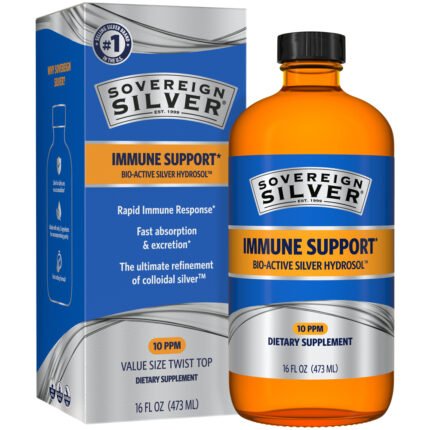
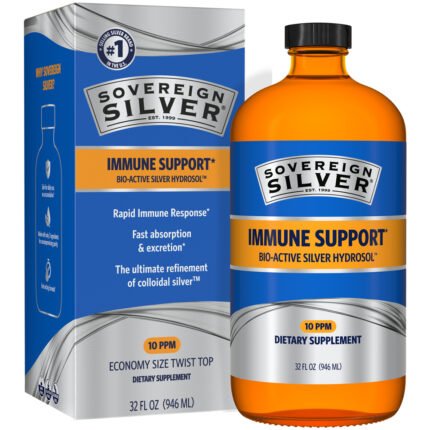
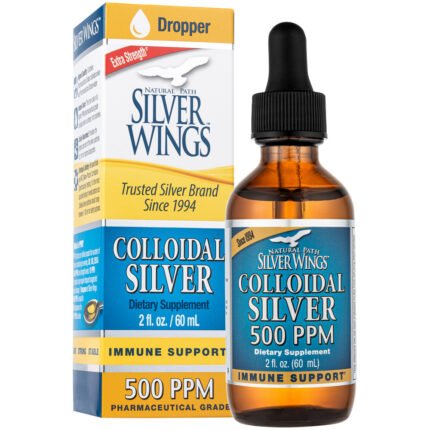
The reviewed catalog examples are liquid products with silver-related names. They include Colloidal Silver for Immune Support — 500 PPM, 2 Fluid Ounces and Bio-Active Silver Hydrosol Liquid in 8 fluid ounces, 16 fluid ounces and 32 fluid ounces. These are product identifiers, not a recommendation to ingest silver or an assurance that the products have demonstrated the benefits suggested by their names.
This distinction is central to the category. A store listing can identify a product, display its package and provide ordering information without establishing that its health claims are scientifically supported. The phrase “for Immune Support” appears in one reviewed title. It should not be read here as a verified outcome, a reason to replace medical care or a conclusion that the product is suitable for a particular person. The guide uses the complete name so shoppers can identify the listing accurately while keeping marketing wording separate from evidence.
What should you know about oral colloidal silver before comparing bottles?
The National Center for Complementary and Integrative Health fact sheet on colloidal silver states that silver is not an essential mineral and has no known function or benefit when taken by mouth. It reports that the FDA does not consider colloidal silver safe or effective for treating a disease or condition. Risks include argyria, usually permanent bluish-gray skin discoloration, and interference with absorption of certain medicines. NCCIH advises against using unproven products to postpone medical care. These points are reasons not to treat this category as a routine nutrition recommendation.
If your search began with an infection, persistent symptom or concern about immune function, the appropriate next step is a discussion with a qualified health professional about that concern. Choosing a larger bottle, a higher concentration number or a more technical sounding product name does not answer the underlying medical question. This guide does not supply ingestion directions, a dose, a dilution recipe or a treatment schedule. It does not rank the listed products as better or safer options for oral use.
| Question | Clear category answer | What the listing cannot establish |
|---|---|---|
| Is silver an essential dietary mineral? | NCCIH says it is not | A nutritional requirement to supplement it |
| Does an immune-support title prove a benefit? | No | A clinical result for the listed product |
| Does a larger bottle change the evidence? | No | Greater effectiveness or suitability |
| Is this a dosing guide? | No | A personal ingestion or treatment plan |
| Can shopping replace assessment of symptoms? | No | A diagnosis or appropriate medical care |
How are the reviewed product titles different?
One title explicitly uses the term colloidal silver and displays 500 PPM with a 2-fluid-ounce bottle. Three others use the wording Bio-Active Silver Hydrosol Liquid and differ in displayed bottle size. The reviewed titles do not establish the full composition, manufacturing details or intended route of use for every item. Those details require the actual product labeling. Do not assume that a family resemblance in the names makes every product equivalent in formulation or appropriate application.
The hydrosol listings provide a useful example of why bottle size and formulation must be kept separate. Eight, sixteen and thirty-two fluid ounces describe package volume. They do not establish concentration, particle characteristics or a health outcome. A shopper who sees the same family name in three sizes should still check the exact current label rather than assuming every detail is identical. This guide does not fill in missing concentration information for the hydrosol products.
Similarly, “Bio-Active” is part of a product name, not a complete technical explanation. It does not tell a reader which outcome was tested, in whom, by what method or with what result. A scientific sounding term may help distinguish a listing from another brand's product, but it cannot replace evidence. When a term is undefined on the page, the useful response is to ask what the manufacturer means, not to supply a favorable interpretation from the name alone.
| Reviewed listing | Displayed package wording | Information not established by the title alone |
|---|---|---|
| Colloidal Silver for Immune Support | 500 PPM, 2 fluid ounces | Complete formula, route and clinical evidence |
| Bio-Active Silver Hydrosol Liquid | 8 fluid ounces | Concentration and complete labeling |
| Bio-Active Silver Hydrosol Liquid | 16 fluid ounces | Whether every formula detail matches another size |
| Bio-Active Silver Hydrosol Liquid | 32 fluid ounces | Suitability or any health benefit |
What does PPM mean, and why is it not a quality score?
PPM is the abbreviation for parts per million, a concentration expression. In the reviewed colloidal silver title, 500 PPM is displayed as product wording. A concentration number is different from bottle volume and different again from evidence of safety or effectiveness. Do not interpret a larger number as a better product or as a reason to use the product. This guide does not convert the displayed number into an intake amount or provide a formula for diluting it.
A complete interpretation would require knowing exactly what the manufacturer measured, how the measurement was defined and which formulation it describes. The title alone does not answer those questions. It is easy to turn a concentration comparison into a misleading ranking if the underlying measurements or products differ. Even a clearly defined concentration would still not establish that oral use is beneficial. Technical detail and clinical usefulness are separate questions.
When you see a concentration claim, keep it attached to the exact listing. Do not carry 500 PPM from the 2-fluid-ounce product over to the hydrosol listings merely because they share the Silver category. Category placement is a navigation tool, not a statement that every product has the same specification. A missing number should remain unknown until the actual label or verified manufacturer information supplies it.
Does the word hydrosol establish a safer product?
The word hydrosol in a title does not, by itself, establish a safety conclusion. A product's name is not a substitute for reviewing its complete labeling and the evidence relevant to the proposed use. This guide does not assume that a different marketing term resolves the concerns associated with oral silver products. If the intended route or purpose is unclear, obtain professional advice rather than treating a gentler sounding term as proof of suitability.
The same principle applies to words such as natural, pure and advanced wherever they appear in silver advertising. Such terms may describe how a seller wants a product to be perceived, but they need definitions and support before they can carry technical meaning. A shopper should ask a concrete question: what verified fact does this word add to the product comparison? If it does not identify composition, packaging or a documented test relevant to the question, it may contribute little useful information.
This guide also avoids treating customer reviews as a substitute for a clinical assessment. Reviews can describe an ordering experience or a person's perception, but they typically do not establish a controlled comparison, a confirmed diagnosis or the reason a symptom changed. A product may have enthusiastic comments without those comments proving its health claims. Keeping different types of information separate makes the category easier to read critically.
How should you distinguish product identification from a health claim?
Product identification answers what item is being discussed: name, size, format and the exact page. A health claim asserts or implies an outcome in the body. A complete listing can contain both types of language, and the reader should not give them the same evidentiary weight. “Two fluid ounces” is a package statement. “Immune support” is outcome-oriented wording. Confirming the first does not validate the second.
A useful reading method is to underline measurable product facts and circle outcome language. You do not need to create a literal marked-up page; the exercise simply encourages separate questions. Is the bottle size clear? Is the ingredient list readable? What evidence is being offered for the claimed outcome? Does that evidence concern the exact finished product and proposed use? These questions prevent a clear package description from lending undeserved credibility to an unrelated benefit statement.
| Type of statement | Example from category reading | Appropriate question |
|---|---|---|
| Product identity | Colloidal silver or hydrosol title | Which exact listing is this? |
| Package fact | 8, 16 or 32 fluid ounces | What volume is supplied? |
| Concentration wording | 500 PPM on one listing | What exactly was measured? |
| Marketing language | Immune support or bio-active | What evidence supports the implied outcome? |
| Personal suitability | A proposed use by an individual | What does an appropriate professional advise? |
An absence of a dramatic promise is not proof of suitability either. A quiet label and a technical bottle design can still leave major questions unanswered. The category should be evaluated with the same care regardless of whether the marketing is enthusiastic or restrained. The central decision is not which product sounds most scientific; it is whether the proposed use has a sound basis and whether the product information is clear enough to assess.
Can evidence about a different silver application be transferred to these bottles?
Do not assume that evidence involving a different product, route or setting establishes a benefit for a retail liquid. When reading any study, identify the actual material, intended application and conditions being tested. A description involving a specialized medical product or a laboratory experiment is not automatically evidence for ingesting a bottle sold online. The product in the study and the product in a shopping cart may answer very different questions.
The same caution applies when a seller cites a general scientific concept. Demonstrating a property under specific experimental conditions is different from showing that a finished product improves a meaningful outcome for people. A claim should not skip those steps. This guide does not infer health benefits from the fact that silver is used or studied in other contexts, and it does not provide instructions for repurposing any listed liquid for another route.
If a source is offered, ask whether it directly supports the sentence beside it. A long bibliography can look impressive while containing studies on different formulations or applications. Read the actual study question, not only the ingredient name in its title. Where you cannot assess the relevance, take the exact claim and source to an appropriate professional instead of relying on the appearance of scientific documentation.
How can bottle volumes be compared without implying a recommendation?
Volume comparisons can clarify an order, but they do not establish that a product should be used. The reviewed hydrosol titles show 8, 16 and 32 fluid ounces. These sizes can be placed in order by package volume without assigning a health ranking. A 32-fluid-ounce bottle contains more liquid by its displayed volume than an 8-fluid-ounce bottle; that observation says nothing about clinical value, suitability or an appropriate use.
Price per fluid ounce is a purchasing calculation only. Divide the current price by the confirmed bottle volume if you need to understand how a price is presented. Keep the result clearly labeled and do not turn it into a recommendation to buy the largest bottle. This guide supplies no current prices and no consumption schedule. A lower unit price cannot resolve the evidence concerns discussed above.
Avoid estimating a bottle's duration from guessed amounts. A calculation about “days of use” would require directions and a personal plan that this guide does not provide. Likewise, do not estimate the number of drops in a bottle or invent a standard drop size. Different dispensing arrangements and labeling details may differ. The purpose of a package comparison is to identify what is listed, not to construct an unverified regimen.
| Package comparison | Permissible interpretation | Interpretation to avoid |
|---|---|---|
| 8 versus 16 fluid ounces | Different listed liquid volumes | A difference in effectiveness |
| 16 versus 32 fluid ounces | Different package quantities | A reason to increase use |
| Price divided by volume | Purchasing unit-price calculation | Proof that a product is worthwhile |
| Similar family names | Possible related listings to inspect | Assumed identical complete formulas |
| Unknown serving information | A question left unresolved | An invented number of days per bottle |
What should you ask if a product page is unclear?
Ask for the complete current label, exact ingredient list and intended route stated by the manufacturer. Keep the question specific to the listing rather than asking for a generic description of silver. A product page should be clear about what item is offered, while a healthcare question should be addressed by a qualified professional. Store clarification and medical assessment have different roles, and neither should be silently substituted for the other.
If a page uses an unexplained technical term, ask for its definition and the documentation behind it. If an image is unreadable, request a legible version. If the title and image appear inconsistent, ask which current product is supplied. These are basic information-quality checks, not reasons to presume the product is safe once the page becomes clearer. Clear identification enables assessment; it does not predetermine the assessment's outcome.
Keep any unresolved health claim unresolved rather than interpreting a lack of response as confirmation. A seller's inability to provide relevant evidence should not be filled by testimonials or by a study about something else. The useful next step may be to stop the purchase process and discuss the original concern with a professional. A category page should make that option visible instead of implying that every question must end with choosing a bottle.
What information is useful for a healthcare discussion?
Bring the exact product name, the complete label if available, the proposed purpose and an accurate list of medicines and other products you use. Explain why silver entered the conversation: a search result, a recommendation from someone else or concern about a symptom. That context helps distinguish a shopping question from a medical issue that requires a different kind of response. A vague phrase such as “a mineral supplement” would leave out important information about the actual proposal.
It is also useful to say whether the product has already been used and to describe any concerns without assuming what caused them. This guide cannot evaluate a reaction, diagnose a condition or decide what follow-up is appropriate. If there is an urgent medical concern, seek appropriate care rather than continuing to compare products. A product comparison should not become a distraction from the reason you began searching.
For reporting concerns about a product, retain the original container and purchase information so the item can be identified accurately. Manufacturer details, lot information and the received label may help explain which product is involved. This is an identification step rather than a statement that every listed item uses the same packaging system. Follow the applicable reporting or professional guidance for your circumstances.
Frequently asked questions about the Silver category
Does this guide recommend drinking colloidal silver?
No. It identifies the catalog products while making the evidence and safety limitations clear. It does not provide an oral dose, a dilution method or a routine for immune support. If you are considering silver because of a health concern, discuss that concern and the exact product with an appropriate professional rather than treating a store listing as a recommendation.
Does the phrase “immune support” prove the product works?
No. It is wording in one reviewed title and is reproduced to identify that listing accurately. A product name does not establish a clinical benefit. Ask what directly relevant evidence supports a claim and distinguish that question from basic package information. The guide does not turn marketing wording into a verified outcome.
Are the 8-, 16- and 32-ounce hydrosols the same concentration?
The reviewed titles do not establish that detail. They identify different bottle volumes under the same family wording. Check each actual label and do not transfer the 500 PPM number from the separate 2-fluid-ounce colloidal silver listing. Similar names can make browsing easier, but they do not replace a complete formulation comparison.
Is a larger silver bottle better value?
A larger bottle can have a different price per fluid ounce, but a unit-price calculation does not answer whether a proposed use is justified. This guide does not recommend a larger purchase, assign a supply duration or encourage consumption to use up a bottle. Evidence and personal health questions come before any discussion of package economics.
Can the products be used in the eyes, nose or another location?
This guide supplies no instructions for those uses and does not establish that the listed liquids are appropriate for them. Do not invent a route from a category name, a customer comment or a comparison with another product. Questions about a proposed application should be taken to an appropriate professional with the exact label available.
Is silver comparable to magnesium or other essential minerals?
The shared word mineral in casual conversation does not make silver a nutritional equivalent of essential mineral products. The NCCIH fact sheet linked above specifically addresses oral silver. Do not infer a dietary need from the location of the category inside a supplements department. Department organization is a browsing choice rather than evidence that every ingredient has the same nutritional role.
Where can I find the primary safety information?
Use the NCCIH colloidal silver fact sheet linked near the beginning of this guide. It is an appropriate starting point for understanding why the category should not be presented with unqualified health promises. Bring the exact listing and any questions to a qualified professional when the decision concerns your health. A product page and an independent health-information resource serve different purposes.
What is the most useful way to read this category?
Read the product grid as an index of exact names and package sizes, then keep every health claim separate from those identification facts. Do not assume that a technical term, concentration number or larger bottle resolves the concerns associated with the proposed use. A careful category description should make the limitations understandable rather than encourage an unsupported conclusion through confident wording.
| Final reading check | What to retain | What not to infer |
|---|---|---|
| Exact name | The listing you are assessing | A proven benefit from its wording |
| Bottle volume | The displayed package quantity | A personal use schedule |
| Concentration information | Only the details actually supplied | A higher-is-better ranking |
| Evidence question | Whether a claim has direct support | Support from unrelated applications |
| Personal concern | The reason you started searching | A diagnosis from a shopping page |
A useful outcome may be deciding that the unanswered question belongs in a healthcare discussion rather than a shopping cart. This guide supports that decision by identifying the reviewed products honestly, explaining the limits of package comparisons and avoiding treatment claims. Use the current pages for exact item information, and use appropriate independent guidance for the health questions that product marketing cannot settle.
If you return to compare a saved listing later, check that the same size and product name are still selected. Saved browser pages, cart entries and screenshots can refer to different variants. Keeping the exact link beside your notes helps avoid a package mix-up, while retaining the distinction between ordering accuracy and health evidence keeps the comparison focused on what the available information can actually establish.