




Blog
How do I compare omega-3 softgel bottle sizes?

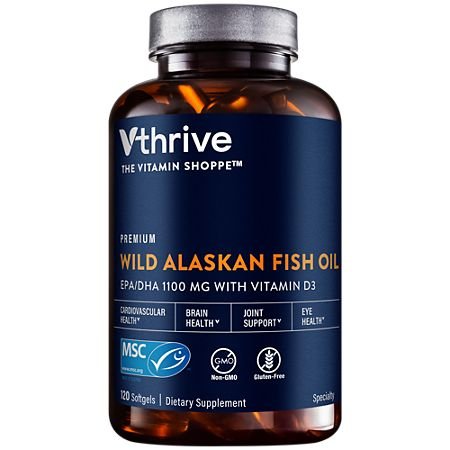
Compare omega-3 softgel bottle sizes by the exact formula, physical softgel count, labeled servings, and individually disclosed EPA and DHA. Keep those quantities separate before calculating price. A larger count on the front can describe more physical pieces without establishing an equivalent formula or a lower cost per comparable labeled serving.
This guide explains how to compare omega-3 packages using a practical purchasing record. It includes worked examples, delivery scenarios, bundle checks, storage questions, and FAQs. All numerical examples are hypothetical and are not current prices, product specifications, or instructions about supplement use.
Confirm whether the bottles are the same formula
Start with brand, full product line, source description, format, flavor where relevant, and selected size. Two bottles from one brand can look closely related while supplying different amounts or additional ingredients. Confirm the exact match before treating them as a simple small-versus-large choice.
Check the title against the front photograph and the Supplement Facts panel. A page can display several sizes or representative artwork. Use the selected option and confirmed information for the offered item rather than assuming that the largest pictured bottle is included.
If you are comparing different formulas, keep their differences visible. You can still compare package costs, but the result should not imply that every labeled serving supplies the same quantities or ingredients. Establish the actual comparison basis first.
Separate physical softgels from labeled servings
Record the number of physical softgels and the stated number of softgels in a labeled serving. Then record labeled servings per container. These fields are related, but they should not be merged into a single bottle-count column.
Where counts are clearly disclosed, dividing physical count by pieces per serving provides an arithmetic check. Compare the result with the label. Investigate disagreement rather than choosing whichever figure gives the lowest apparent unit cost.
Do not change directions to make a bottle appear to last longer. The worksheet describes supplied information. A price calculation does not establish an appropriate amount for an individual or replace a personal suitability assessment.
| Package field | What it answers | What it does not establish alone |
|---|---|---|
| Physical softgels | How many pieces are supplied? | Number of labeled servings |
| Pieces per serving | What portion does the panel use? | A universal personal amount |
| Labeled servings | How many stated portions are represented? | Equal nutrient quantities across formulas |
| EPA and DHA | What individual amounts are disclosed? | Complete source and ingredient information |
| Price | What does the selected package cost? | Delivered total or equivalent formula value |
Keep EPA and DHA quantities visible
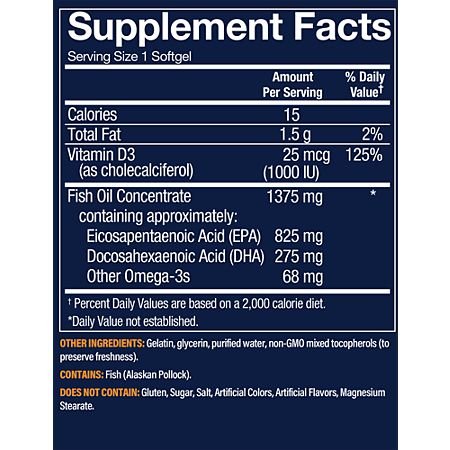
Read the individual EPA and DHA rows with their units and serving basis. If only a combined amount is disclosed, record that limit rather than assigning equal shares. Total oil is a separate quantity and should not replace an EPA-plus-DHA figure automatically.
A bottle-size comparison can use the same formula at different counts, or it can involve products with different compositions. Keep the individual quantities beside the serving count so that a large package does not hide a smaller disclosed amount per portion.
If you calculate a combined quantity or package total, retain the original inputs and label the result as arithmetic. It describes the disclosed information rather than independently measuring the contents or proving a health outcome.
Work through a count comparison
Imagine three invented bottles. Bottle A contains 60 softgels with two in a labeled serving. Bottle B contains 120 with four in a labeled serving. Bottle C contains 90 with three in a labeled serving. Each represents 30 labeled servings despite different physical counts.
This example demonstrates why the front count alone cannot settle a serving comparison. It does not establish the formulas or nutrient quantities of those invented products. Those details would still need their own label review.
The table retains the physical and serving fields separately so that the arithmetic remains visible. These are mathematical inputs, not suggested portions for a product or individual.
| Hypothetical bottle | Softgels | Softgels per labeled serving | Calculated labeled servings |
|---|---|---|---|
| A | 60 | 2 | 30 |
| B | 120 | 4 | 30 |
| C | 90 | 3 | 30 |
A bigger physical count can therefore be a different package arrangement rather than a straightforward increase in labeled servings. Use the actual selected labels before making the same calculation for a purchase.
Calculate cost per labeled serving
Divide the selected package price by confirmed labeled servings. Keep the original price and count alongside the result. This shows both the initial expense and the serving-cost metric without presenting either as a complete formula ranking.
The next table uses invented prices and serving counts. It is not a list of current offers or actual package specifications. Its purpose is to show how different initial prices can produce different unit costs.
| Hypothetical package | Item price | Labeled servings | Cost per labeled serving |
|---|---|---|---|
| Small A | $18 | 30 | $0.60 |
| Large B | $30 | 60 | $0.50 |
| Alternative C | $24 | 60 | $0.40 |
| Large B with $6 allocated delivery | $36 total | 60 | $0.60 |
Formula differences remain outside this simple arithmetic. A lower serving price does not establish the same source, EPA and DHA quantities, additional ingredients, or practical fit. Keep those fields beside the cost rather than allowing the number to answer every question.
If you also calculate cost per disclosed EPA-plus-DHA quantity, use the actual supported amount and compatible units. Do not substitute a total oil figure for missing ingredient quantities. Mark the metric unavailable where the necessary input is undisclosed.
Compare single-bottle and multi-bottle orders
For multiple bottles, confirm the exact count and size of every included package. A group photograph can be illustrative rather than a complete contents list. Use the actual bundle description and matching labels before adding their labeled servings together.
Keep the whole-order price visible. A bundle may lower a unit cost while increasing the money committed upfront. Compare the actual quantity you intend to buy rather than assuming that a multi-bottle promotion is automatically useful value.
If the bundle combines formulas, preserve separate ingredient and serving information for each component. A mixed bundle should not be described as one uniform product simply because its packages share a brand or theme.
Include delivery and other checkout charges
Compare item-only prices with item-only prices, or delivered totals with delivered totals. Mixing those bases can reverse the apparent ranking. State which basis you use and include applicable charges consistently.
For an invented example, Order A has a $20 item and $8 delivery, making $28 payable. Order B has a $24 item and $3 delivery, making $27 payable. The lower item price belongs to A, while the lower delivered total belongs to B.
If their labeled serving counts differ, calculate delivered serving cost separately. If several items share delivery, explain any allocation and retain the full order total. An allocated share is a budgeting assumption rather than a fixed property of one bottle.
Review promotions and recurring arrangements
Record eligibility and conditions for coupons, minimum-order offers, and multi-buy prices. A headline promotion should remain attached to its qualifying terms. It may describe a different order from the one you intend to place.
For subscriptions, distinguish the initial price from recurring pricing and relevant renewal conditions. A first-order reduction does not automatically describe the continuing cost. Keep one-time purchase comparisons separate when that is your intended arrangement.
Before checkout, review the selected size, quantity, and payable total again. Changing a variant or adding another bottle can alter the pricing basis. A previously correct worksheet should be updated rather than carried forward unchanged.
Consider familiarity and package commitment
A larger bottle may offer a lower unit cost while increasing the initial expense. If the exact formula, flavor, or physical format is unfamiliar, a smaller initial package can be a practical budgeting choice even when its serving cost is higher.
Keep that preference separate from claims about quality or effects. Familiarity can influence a purchase without establishing that a smaller or larger bottle has better ingredients. State the tradeoff clearly in your notes.
Consider where the package will be stored and handled. Review the actual product directions and storage information rather than assuming that every oil product uses the same requirements. The nutrient category does not supply a complete handling specification.
Check date and stock information for a larger purchase
Ask what date information can be confirmed for offered stock if it matters to the quantity you intend to buy. A date in an old customer photograph does not establish the date on a future order. Preserve uncertainty rather than borrowing a shelf-life assumption from another product.
Keep package date information separate from report or certificate dates. They can describe different events and answer different questions. A testing document does not replace the actual storage directions or product identification on the delivered bottle.
If a seller cannot identify the exact stock in advance, record that limitation. A useful comparison can remain incomplete while you investigate an essential requirement. Accuracy is more helpful than a complete-looking table built from guessed details.
Resolve unclear listings with focused questions
Include the product link, selected size, and the exact conflict or missing field. Ask whether the count refers to physical softgels or labeled servings, which panel applies to the option, or whether two sizes share the same formula.
If the title and image disagree, describe both statements and ask which applies to the offered item. Do not combine a larger count from one source with a lower price from another version. All inputs in a product column should describe one confirmed package.
Save the answer with the product identity and date checked. Revisit it if you change formulas or sizes. A response about one version should not automatically be applied to a related package without checking.
Review the delivered package against the order
Compare the exact product identity, physical count, panel, source wording, and package condition with your saved information. Read the actual directions and storage details before use. Keep relevant identifiers available while resolving a mismatch.
Describe any discrepancy precisely when contacting the seller. A different count, source, or nutrient panel can matter to the purchase and should not automatically be treated as a design change. Equally, a different layout alone does not establish a formula change without checking the content.
Retain original values and calculations in one record. This makes it easier to identify whether a question arose from the listing, the selected option, an arithmetic error, or the delivered item. A short accurate worksheet can be more useful than a long unverified ranking.
Frequently asked questions about omega-3 bottle sizes
Does a larger softgel count always mean more labeled servings?
Read the serving basis for each exact product. Different numbers of pieces per labeled serving can produce the same or different portion counts. Physical count alone cannot settle the comparison.
Can I compare two bottles by price per softgel?
That metric describes physical-unit cost. Keep it separate from labeled serving cost and disclosed nutrient quantities. Equal physical-unit prices do not establish equivalent formulas.
Does total oil establish EPA and DHA?
Read the individual or clearly stated combined disclosures. Keep total oil in a separate field and preserve any missing individual shares instead of inventing them.
Is a bundle always cheaper overall?
Confirm contents, formula information, labeled servings, and the actual payable total. A lower unit cost can coexist with a larger initial expense or an order quantity that does not fit your plans.
Should a testing report date be used as the package date?
Keep those dates separately identified. They can describe different events. Use the actual product information and relevant stock confirmation for the purchase question you are trying to resolve.
What is the most useful final check?
Confirm the exact formula, selected size, physical count, labeled servings, nutrient quantities, directions, price conditions, and payable total. Resolve essential unanswered questions before relying on the comparison and retain the record for delivery checks.