




Blog
How do I compare magnesium capsules by serving cost?

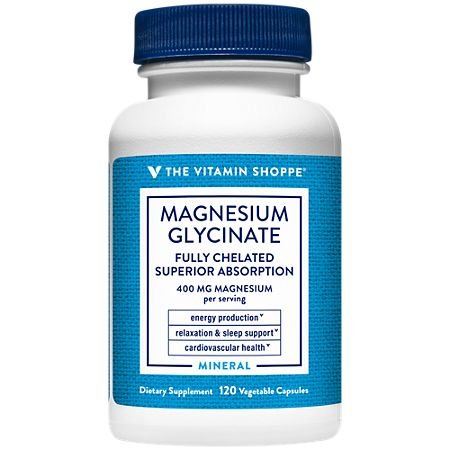
Compare magnesium capsule costs by identifying the exact formula, confirming labeled servings, and calculating the payable price on a clearly stated basis. Record elemental magnesium separately from capsule count. A low price per capsule can describe a different serving size or formula from another bottle, so it should not be treated as a complete value ranking.
This guide explains a practical purchasing worksheet for magnesium products. It covers item prices, serving costs, disclosed quantities, delivery, promotions, bundles, storage planning, and incomplete listings. All worked figures are hypothetical arithmetic examples rather than live prices or personal supplement instructions.
Establish what each bottle contains
Record the brand, full formula name, source wording, capsule count, and selected package size. A larger bottle from a familiar brand may look like a straightforward quantity increase, but the exact version and panel should still be checked before comparing it with another package.
Read the complete formula, including additional nutrients or other ingredients. A combination product can differ from a simpler capsule formula even if both titles emphasize magnesium. Keep those differences visible instead of letting one front-label number stand for the entire purchase.
Confirm that the selected option matches the title and panel photograph. If a page shows several sizes or related versions, identify which one the price applies to. A calculation is reliable only when all its inputs describe the same actual item.
Keep three quantities separate
Your worksheet needs physical capsule count, labeled serving count, and declared magnesium amount on the stated serving basis. These fields answer different questions. The first describes pieces, the second describes label portions, and the third describes a disclosed nutrient quantity.
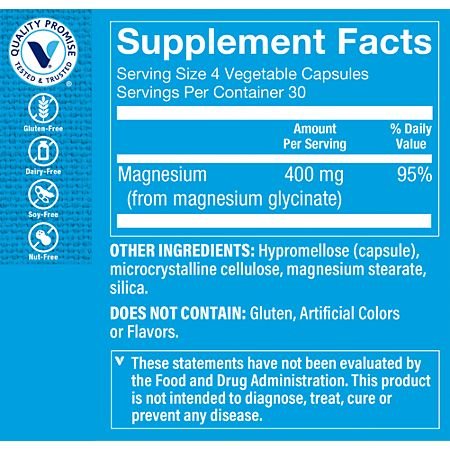
Read the serving-size line before copying any amount. A serving can include more than one capsule. A bottle with a larger physical count may therefore provide the same number of labeled servings as a smaller-count bottle using a different portion basis.
Use the magnesium amount declared on the panel for a nutrient-quantity comparison. Keep source-compound wording or another mass statement in a separate field. If the listing does not clearly distinguish them, request the current complete label before calculating a nutrient-specific cost.
| Quantity | What it answers | Useful cost metric |
|---|---|---|
| Capsules in bottle | How many physical pieces are supplied? | Cost per physical capsule |
| Labeled servings | How many stated portions does the package represent? | Cost per labeled serving |
| Declared magnesium | What nutrient amount is disclosed on the stated basis? | Cost per disclosed quantity when inputs are clear |
| Complete formula | What else is included? | Separate comparison of formula requirements |
| Payable order total | What does the intended order actually cost? | Delivered comparison on a stated basis |
Calculate cost per capsule accurately
Divide the bottle price by the confirmed physical capsule count. This gives a simple physical-unit price. Keep its label explicit so that a reader does not mistake it for cost per labeled serving or cost per equivalent nutrient quantity.
For example, an invented $18 bottle containing 90 capsules costs $0.20 per capsule. An invented $24 bottle containing 120 capsules also costs $0.20 per capsule. Equal physical-unit prices do not establish equal formulas or labeled servings.
This metric can help compare package options when the formula and other details are confirmed, but it should not be the only field in the decision. The next step is to check the serving basis and what each product actually discloses per serving.
Calculate cost per labeled serving
Divide the confirmed price by labeled servings per container. Keep the original serving count and source visible. If you calculate the count from pieces and pieces per serving, compare it with the label and investigate any mismatch before treating it as confirmed.
The table below uses invented counts and prices. The portions are mathematical inputs, not suggested amounts to use. The examples show why a lower physical-unit price does not automatically mean a lower serving price.
| Hypothetical bottle | Price | Capsules | Capsules per labeled serving | Labeled servings | Cost per labeled serving |
|---|---|---|---|---|---|
| A | $18 | 90 | 3 | 30 | $0.60 |
| B | $24 | 120 | 2 | 60 | $0.40 |
| C | $15 | 60 | 2 | 30 | $0.50 |
Bottle B has a lower serving price in this invented table, but the formulas and magnesium quantities are not specified. The arithmetic alone cannot establish that it is the best option for a particular requirement. Keep ingredient and quantity differences alongside the result.
Do not change product directions to make a bottle appear to last longer. A comparison should report the label accurately. Personal decisions about supplement use require separate context and should not be driven by a unit-price calculation.
When is a magnesium-quantity cost useful?
A quantity-based cost can answer a narrower pricing question when both products clearly disclose magnesium on a known serving basis. Keep the nutrient amount, unit, and labeled serving count attached to the calculation. Preserve differences in source forms and other ingredients.
For a hypothetical calculation, multiply declared magnesium per labeled serving by confirmed labeled servings to obtain an arithmetic package total. Then divide the relevant price by that total using a clearly named unit. Keep the original label values so the result can be checked.
Do not substitute an entire source-compound weight or a broader blend mass for a missing declared magnesium amount. A precise-looking ratio is not useful if its denominator means something different for each product. Mark the metric unavailable when the required disclosure is unclear.
Add delivery and checkout charges consistently
Compare the actual order you intend to place. For a single-bottle order, applicable delivery can change the effective cost substantially. State whether a comparison is item-only or delivered, and use the same treatment for every candidate.
Suppose an invented bottle costs $18 and represents 30 labeled servings. Its item-only cost is $0.60 per labeled serving. Adding $6 delivery to that single-item order produces a $24 total and a $0.80 delivered cost per labeled serving.
If several products share a delivery charge, explain how you allocate it. That share is a budgeting assumption rather than a fixed property of one bottle. Also compare the full order expense, since adding unwanted products to reach a delivery threshold can increase the total spent.
Compare promotions as purchasing arrangements
Record the conditions attached to every offer. A coupon may require eligibility or a minimum spend, while a multi-buy offer may apply only to selected sizes. An advertised price should remain attached to those conditions rather than being copied as universally available.
For a subscription, distinguish the initial charge from recurring pricing and relevant renewal conditions. A first-order discount is not automatically the permanent cost of a continuing arrangement. Keep one-time purchase comparisons separate if that is the order you intend to place.
For a bundle, verify the actual included products and quantities. A group photograph may be illustrative, and related bottles can use different serving bases. Calculate combined labeled servings only after the contents and individual labels are confirmed.
| Price condition | Information to record | Why it matters |
|---|---|---|
| Coupon | Eligibility and qualifying order | Determines whether the price applies |
| Multi-buy | Exact sizes and quantities included | Establishes the package denominator |
| Subscription | Initial and recurring conditions | Separates different purchasing commitments |
| Delivery | Applicable charge and allocation method | Makes totals comparable |
| Bundle | Confirmed component formulas and counts | Prevents counting unrelated pictured items |
Consider the initial commitment and storage
A larger bottle may reduce unit cost while increasing the money committed upfront. If the exact formula is unfamiliar, compare a smaller package as a budgeting option. That preference can be reasonable even when its serving cost is higher.
Read storage directions for the actual product and investigate available date information for the offered stock when it affects your purchase. An old package photograph or review does not establish the date on a future order. Keep unknown information visible rather than making a shelf-life assumption.
Think about the physical package and the handling setting. A bottle that fits your storage plans can be more practical than a larger one chosen solely for a lower ratio. Practical preference should remain separate from claims about ingredient quality or results.
What if the cheapest listing has unclear information?
Identify the exact missing input before deciding that the listing is cheapest. It might lack a readable serving count, describe another bottle size, or use an ambiguous quantity statement. Those gaps can prevent a fair comparison even when the item price is visible.
Ask a focused question with the product link and selected size. Request the matching current panel or confirmation of the offered count. If two sources disagree, describe the conflict directly rather than choosing whichever number produces the lowest unit cost.
A clearly specified alternative may be easier to evaluate than a cheaper listing whose essential inputs remain unconfirmed. Keep that uncertainty in the worksheet instead of hiding it behind a calculated result. Accuracy is more useful than filling every comparison cell.
Review the shortlist before ordering
Read across each row to compare the same type of information, then down each product column to verify that all entries belong to one version. This catches a common mistake in which individually plausible quantities actually describe different packages.
Keep the original inputs beside calculations and label any assumptions, including delivery allocation. Recheck the selected option and payable total immediately before ordering. A change of size or offer can make a previously correct unit-cost result no longer describe the order.
After delivery, compare the exact product, formula, count, panel, and package condition with the saved order details. If something differs, document the specific discrepancy and use the actual seller support process rather than assuming that a changed specification is cosmetic.
Use a complete-order budget example
Imagine two hypothetical one-time orders for packages that you have already checked against your requirements. Order A has a $20 item price and $8 delivery, making $28 payable. Order B has a $24 item price and $3 delivery, making $27 payable. The lower item price belongs to Order A, while the lower delivered total belongs to Order B.
If their labeled serving counts differ, calculate each delivered serving cost separately rather than stopping at the order total. Retain the formula differences as well. This example shows why the item price, delivered total, labeled servings, and ingredient comparison belong in separate fields: each answers a useful but different purchasing question.
Frequently asked questions about magnesium capsule costs
Is cost per capsule the same as cost per serving?
Only when the exact label’s serving basis establishes that relationship. Otherwise they are different metrics. Keep both clearly named and use confirmed counts rather than assuming every physical capsule represents a full labeled portion.
Does equal serving cost mean equal magnesium quantity?
No. Read the declared amount and unit for each labeled serving. Source forms, additional ingredients, and physical format may also differ. A price ratio answers a narrower question than a complete formula comparison.
Can I use a compound weight in a magnesium-specific cost calculation?
Keep compound mass separate from the declared nutrient amount. Use the clearly disclosed magnesium quantity for that specific metric and request clarification when the listing does not distinguish the figures.
Should I always buy the largest bottle?
Check the actual unit costs, formula match, initial expense, storage information, and package commitment. A larger physical count alone does not establish more labeled servings or a better purchase for every requirement.
How should a shared delivery fee be handled?
Explain the allocation method and retain the full order total. The allocated share is a budgeting assumption, not a fixed product charge. Apply the same approach consistently across the options you compare.
What should a reliable cost record contain?
Keep the exact product identity, physical count, serving basis, labeled servings, declared magnesium amount, full formula, price conditions, source link, and unresolved questions together. Preserve the original inputs alongside every calculation.