




Blog
How do I compare C4 energy drink versions by ingredients?

Compare C4 energy drink versions by matching the complete product line, flavor, can size, market, and current ingredient declaration. Do not use a pre-workout powder label to describe a canned drink, or assume that every version sold under the C4 name has the same formula. Keep declared caffeine and other relevant information attached to the exact product and serving basis.
This guide explains a version-by-version worksheet for energy drinks. It includes an official manufacturer example, label questions, and hypothetical cost arithmetic. It does not establish live C4 availability on Sprinkles Menu, recommend a caffeine amount, or certify the benefits or suitability of a particular version.
Begin with the full product line
Record the complete name rather than shortening the entry to C4. Names such as Performance Energy, Smart Energy, and other separately identified ranges should remain distinct in the record. A shared logo does not establish matching ingredients, amounts, or directions.
Also identify the format. A can, a non-carbonated liquid, a powder tub, and a packet product are different items to review. Even if a product description mentions a related range, that relationship does not authorize transferring the other product’s label into the selected row.
Keep the exact flavor, container size, and market with the name. A manufacturer page or retailer image can describe another version. If the title and image do not match, resolve the discrepancy before treating either as the confirmed formula being purchased.
Use the current manufacturer’s information as a direct source
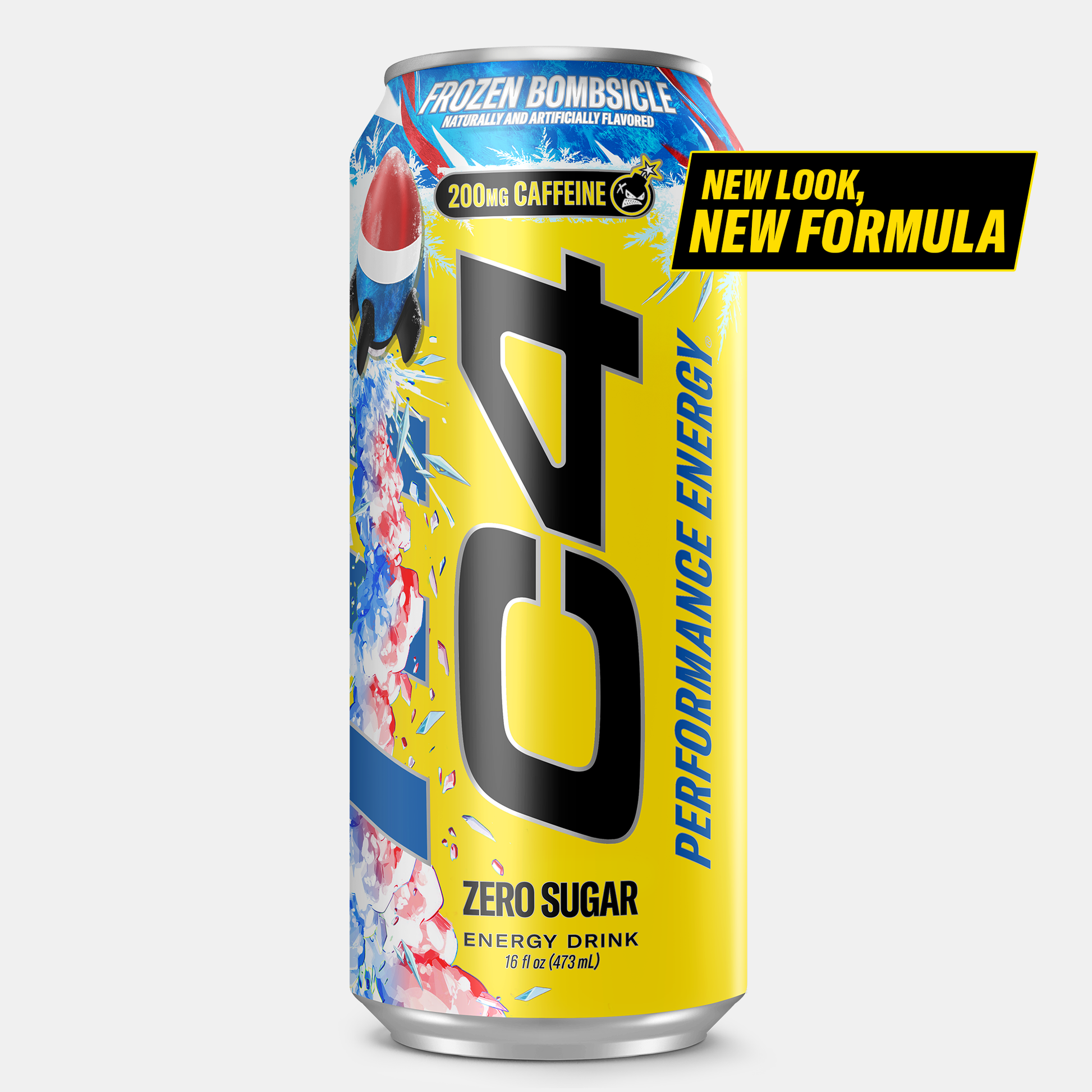
The manufacturer’s Performance Energy page reviewed for this guide identifies a selected Frozen Bombsicle offer as a 12-pack with 16-ounce cans and states 200 milligrams caffeine in its product information. This is a specific dated source example, not a universal declaration for every C4 product or market.
Use the page to identify the selected version and locate its current label information. Do not assume that an older retailer photograph or a related pre-workout article describes the same formula. A product-line name can remain familiar while other relevant details require a fresh check.
The official product images used below are examples of that named Performance Energy version. They do not establish store stock, included flavors in another assortment, or a certification match for every can. The purchasing comparison still needs the actual selected offer and current product declaration.
| Identification field | What to record | Why it matters |
|---|---|---|
| Full range | Exact product-line wording | Shared C4 branding is not a full formula match |
| Format | Can, bottle, powder, or packet | Different directions and serving bases |
| Flavor | Selected named version | One label may not cover another flavor |
| Size | Actual individual container or package | Different totals can use different quantities |
| Market | Version identified by the current source | Another country’s package may differ |
| Source date | When the current information was checked | Older descriptions need context |
Separate ready-to-drink products from pre-workout powders
A powder label describes its own measured product and directions. It should not be used as the ingredient declaration for a canned beverage merely because both share the brand. Keep powder servings, scoops, and preparation volume distinct from the ready-to-drink container’s stated amount.
If the comparison includes both formats intentionally, explain that difference. Record each original declaration and normalize only where the inputs support a meaningful shared basis. Do not invent a preparation or scale a powder formula into a can size to create an apparent match.
The format can also change practical purchasing needs. A powder requires its directed preparation, while a ready-to-drink container supplies a stated liquid quantity. Those are preparation and quantity considerations, not proof that one format is universally superior or appropriate for an individual.
Obtain the complete ingredient declaration
Look for the actual current list rather than a short set of featured ingredients. Marketing copy may emphasize caffeine, a named compound, or vitamins without reproducing the entire formula. A missing ingredient name in abbreviated text does not establish its absence from the product.
Copy exact names and preserve unfamiliar wording. If the meaning matters, ask the manufacturer about that term on the identified version. Do not replace specific ingredients with broad categories such as natural or performance blend in a way that loses the information needed for comparison.
If a readable label is unavailable, request it before claiming that two versions have matching or different complete formulas. A confident comparison based on incomplete lists can misrepresent both products. Keep missing information visible instead of filling it from another range’s page.
Read caffeine with its basis
Record the declared amount in milligrams and whether it describes a serving, the complete can, or a fixed volume. A number without its basis is incomplete for a comparison. If the statement is per serving, confirm the serving size and servings per container before deriving a complete-can amount.
If the declaration already describes the whole container, do not multiply it by a serving count again. Keep the original wording beside any calculation. That makes the result easier to check and prevents a complete-container figure from being counted twice.
Do not scale another version’s caffeine from can volume alone. Different formulas can have different concentrations. The exact declaration is the relevant source, and an undisclosed amount should remain unconfirmed rather than being replaced with zero or a guessed proportional figure.
Keep other featured ingredients distinct
If a description highlights beta-alanine, a named compound, vitamins, or another ingredient, identify which version the statement covers and whether a quantity is actually declared. A highlighted name is not the complete formula and does not establish that all other ranges include or exclude it.
Do not treat similar product goals or marketing themes as ingredient identity. A page can discuss focus, performance, or energy without supplying enough information to quantify every component. Preserve the actual words and source rather than turning broad language into a technical specification.
This guide does not infer an individual’s reaction or suitability from a featured ingredient. If the decision involves a medical circumstance, medication, or another personal concern, use the actual current label with appropriate professional guidance. A shopping worksheet should not invent a personal use recommendation.
Compare sweeteners and sugar information separately
Read the complete ingredient list for named sweetening ingredients and use the nutrition declaration for the corresponding nutrient amounts. A zero-sugar phrase does not identify every sweetener. Nor does a list of sweeteners provide enough information to reconstruct an unreadable nutrition panel.
Keep total sugars, added sugars where provided, calories, and serving basis in separate fields. Do not add an included component to the total again. If two versions use different label columns, establish a matching basis before describing a numerical difference.
Flavor names and perceived sweetness are not measuring tools. A fruit-themed name does not establish grams of sugar or the source of every ingredient. Use current product information and ask a specific question when a field remains unclear.
| Comparison field | Product A entry | Product B entry | Check before concluding |
|---|---|---|---|
| Exact line and flavor | Full current identity | Full current identity | Are these actually the intended alternatives? |
| Complete ingredients | Current declaration | Current declaration | Are both lists complete and matched? |
| Caffeine | Amount, unit, and basis | Amount, unit, and basis | Same serving or container comparison? |
| Featured compounds | Names and declared amounts if provided | Names and declared amounts if provided | Is the scope product-specific? |
| Sugars and calories | Original fields and basis | Original fields and basis | Avoid unlike columns |
| Missing information | Explicit unconfirmed fields | Explicit unconfirmed fields | Do not fill gaps from related products |
Handle reformulation and older packaging carefully
A familiar product name can appear on information from different dates. Save the source and version rather than assuming every apparent difference is a mistake. An older photograph can be genuine while still failing to establish the declaration on current stock.
If sources conflict, compare the full names, markets, sizes, and dates first. Then ask which information applies to the selected item. Do not combine ingredients from several versions into a formula that none of the sources actually declares.
The delivered package is another important check. If it differs from the version used for the comparison, revisit the relevant fields before relying on the earlier record. A manufacturer example should remain within its identified scope rather than becoming a permanent brand-wide assurance.
Variety packs need confirmed contents
If an offer is an assortment, obtain the included flavors and quantities. A picture of several cans does not establish equal allocation or identical formulas. Keep separate rows where ingredient declarations or container sizes differ.
A shared statement can be used only within the scope actually confirmed. If one panel is shown as an example, ask whether it applies to every included item. Do not transfer it automatically to another range or a custom mix that has not been explicitly offered.
This guide does not confirm a ready-made C4 assortment on Sprinkles Menu or promise custom packing. Check the actual selected listing and applicable contents statement. If availability is unresolved, preserve that limit rather than turning a general comparison article into a stock claim.

Add price only after identifying the products
Calculate current item cost per can using the selected pack price and confirmed count. If can sizes differ, add an equal-volume comparison. Keep formula differences visible rather than treating a lower numerical cost as proof of an equivalent product.
For an invented example, a twelve-can pack priced at 24 currency units costs 2 units per can before other charges. If the cans hold different volumes from another offer, the per-can result alone does not compare the same liquid quantity. Use the actual size and count for a volume calculation.
Save the currency, review date, and included costs. A manufacturer’s own price or promotion does not establish another store’s offer. This guide does not announce a current C4 price, delivery charge, recurring arrangement, or stock status on Sprinkles Menu.
Verify testing and certification claims within their scope
If a product presents a testing or certification statement, identify the exact program and product record. A claim about one formula should not automatically become verification of every version sold under the brand. Use the issuer’s current process where available and preserve relevant qualifications.
A quality-related record also answers a different question from personal benefits. Do not treat evidence about selected testing as a guarantee of an individual’s outcome or a recommendation to choose a higher caffeine amount. Keep the exact assertion and supporting scope together.
If the record does not match clearly, ask rather than forcing a conclusion. A similar name can help identify the question but is not itself a confirmed product match. Keep the field unconfirmed until an appropriate source resolves it.
Ask a focused question when a label is unclear
Provide the full range name, flavor, size, market, and source that needs clarification. Ask for the complete current ingredient declaration and the basis of any quantified caffeine statement. A general question about C4 may produce an answer about another format or version.
If the question concerns a specific ingredient, name it explicitly and preserve the original wording. If it concerns conflicting sources, include both and ask which applies to the selected item. Keep the response’s date and scope rather than summarizing it as a universal formula statement.
A useful record can contain confirmed fields and unresolved fields at the same time. There is no need to fill every cell with a guess. A precise limit is more informative than a confident comparison assembled from unrelated product pages.
A final version-comparison checklist
| Check | Save | What to avoid |
|---|---|---|
| Identity | Full range, flavor, format, size, market | Brand-only formula assumptions |
| Source | Current label or specific manufacturer statement | Old related-product pages used silently |
| Ingredients | Complete actual declaration | Featured ingredients treated as the full list |
| Quantities | Original amounts, units, and bases | Scaling from can size alone |
| Assortment | Confirmed contents and allocation | Equal flavor counts guessed from images |
| Cost | Actual selected price and quantity | Manufacturer price transferred to another seller |
| Claims | Exact statement and matched evidence scope | One version’s status extended to all |
| Delivery check | Actual product and current declaration | Earlier information assumed to cover a changed version |
Frequently asked questions
Can a C4 pre-workout powder label describe a canned drink?
Use the exact product’s own declaration. A shared brand does not establish matching ingredients, quantities, or directions across formats. If you intentionally compare both, keep their different preparation and serving bases visible instead of transferring one formula to the other.
Do all C4 versions have the same caffeine amount?
Do not assume a brand-wide amount. Read the current statement for the selected range, flavor, size, and market. Keep its serving or container basis and leave unclear values unconfirmed rather than scaling from a different version.
Can I identify every sweetener from a zero-sugar phrase?
Read the complete ingredient declaration for named sweeteners. A nutrient-related phrase and a formula list answer different questions. If the list is missing or unreadable, request it rather than inferring ingredients from taste, flavor naming, or another product’s page.
Does an official product example establish store availability?
No live stock or price follows from a manufacturer example alone. Check an actual current selected store offer and its contents. This guide explains how to compare product versions and does not promise that every range is currently listed or supplied.
What should I check after purchasing a version?
Match the delivered range, flavor, size, market, and declaration with the information used for the order. If they differ, preserve the details and revisit the comparison. Use the applicable support process for a specific mismatch rather than applying an earlier record to an unconfirmed version.