




Blog
What should I compare across vitamin D product formats?


Compare vitamin D formats by checking the exact form, amount per labeled serving, measuring or preparation requirements, complete ingredients, package quantity, and payable price. A liquid, spray, softgel, capsule, or tablet can differ in several of these fields. Physical format alone does not establish an equivalent formula or identify the option appropriate for an individual.
This guide explains how to organize a practical comparison of vitamin products. It covers label information, handling, source statements, combination formulas, storage, and price calculations. It helps with a purchasing decision while keeping personal questions about supplement use separate from retail specifications.
Identify the exact format and formula
Record the brand, full product name, vitamin D form as stated, selected version, and package size. Distinguish a liquid from a spray and a softgel from a capsule or tablet using the manufacturer’s description. Related branding does not establish that all formats share the same contents.
Check whether the item is a simpler vitamin D formula or a combination with other ingredients. A liquid containing additional nutrients is not automatically equivalent to a softgel containing a different formula, even if their vitamin D numbers look similar. Read the full panel before comparing the packages as alternatives.
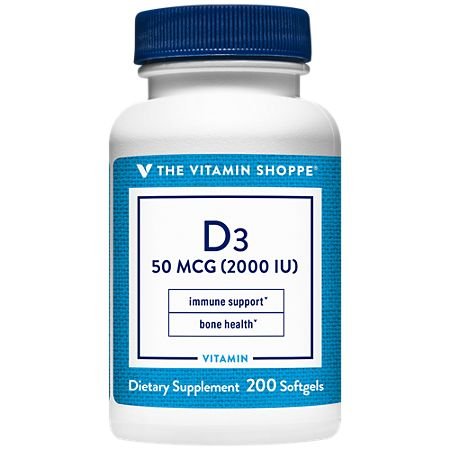
Keep the selected option matched to its photographs. A product page may show several strengths or formats together, and a representative image may not describe the exact variant. Resolve any disagreement before copying quantities into a comparison sheet.
Which amount belongs to the labeled serving?
Read the serving-size line and the amount per serving together. A softgel count, a liquid volume, and a spray count describe different physical quantities. Their meanings depend on the exact product, so none should be treated as a universal comparison portion.
Keep the amount’s unit attached to its number. If different labels use IU and micrograms, use an appropriate vitamin D conversion only after confirming that the quantities refer to the same ingredient and a clearly identified serving basis. Preserve the original values alongside any calculation.
Do not change directions or measuring methods to make two products appear equivalent. A purchasing comparison should accurately describe the supplied information. It should not become a personal instruction about using a different portion of a supplement.
| Field | Liquid or spray | Softgel, capsule, or tablet |
|---|---|---|
| Format identity | Exact liquid or spray description | Exact physical form |
| Serving basis | Stated measured portion or spray basis | Stated number of pieces |
| Vitamin D amount | Number and unit for that portion | Number and unit for that portion |
| Other ingredients | Full formula and base ingredients | Full formula and shell or coating information |
| Package quantity | Stated volume and labeled servings | Physical count and labeled servings |
| Handling | Product-specific measuring and storage directions | Product-specific handling and storage directions |
What should I check about measuring a liquid?
Read the manufacturer’s stated unit and the measuring instructions. Determine what device or marked portion the directions describe and whether the required equipment is supplied. A bottle photograph may not show enough detail to answer those questions.
Do not assume that every dropper holds the same amount or that a household spoon matches a specified measure. If the directions or device markings are unclear, request clarification for the exact product rather than transferring a measuring assumption from another liquid.
Check whether the panel describes a full stated portion, a particular volume, or another basis. Keep that basis visible when recording the vitamin D quantity. A bottle’s total volume does not establish its concentration or labeled serving count without the relevant product information.
What should I check about sprays?
Use the exact serving description and directions for the selected spray. Do not assume that one spray is a full labeled serving or that sprays from different bottles deliver equivalent quantities. The relevant basis must come from the product’s own information.
Review any preparation or handling steps stated by the manufacturer. If a listing does not show the complete directions, ask for them before choosing the format for convenience. A compact package may still involve steps that matter in your intended setting.
Keep spray quantity separate from bottle volume. Either can help describe the package, but neither should silently replace a confirmed labeled serving count. If the manufacturer provides an approximate count, retain that qualification in a price comparison.
How should I compare solid formats?
Record the physical count and the labeled serving size separately. A serving may involve more than one piece, so a larger count on the front does not automatically establish more labeled servings. Use the confirmed serving count when calculating a price per serving.
Review the full ingredients, including relevant shell or coating information where supplied. A source statement about the vitamin D ingredient is not necessarily a complete statement about every part of the finished product. Ask separately about any dietary requirement that the label does not resolve.
Consider the handling steps that matter to you, such as carrying the package and keeping the label available. Do not use size, color, or appearance to estimate nutrient quantity. A larger softgel or tablet does not establish a larger disclosed vitamin D amount.
What do flavor and other ingredients change?
A liquid or spray may have a named flavor or other formulation ingredients. Check the complete ingredient statement rather than assuming that a flavor name establishes every sweetening or base ingredient. The exact selected variant matters when these details affect your requirements.
For any format, record the full formula and identify additional ingredients separately. A combination product can differ from a simpler formula in ways that a front vitamin D number does not explain. Do not reduce the comparison to one quantity while overlooking the rest of the contents.
Reviews can identify practical questions about taste or handling, but they do not verify ingredient quantities. Check whether a review refers to the same version, and keep subjective preferences separate from the factual label record. A star rating is not a substitute for a readable panel.
Do source statements follow automatically from format?
Do not infer the ingredient source from a liquid bottle, a spray nozzle, or a capsule shape. Look for an explicit statement for the selected product. If a vegan, religious, or other dietary requirement matters, investigate the exact claim and its scope.
Keep claims about the main ingredient separate from claims about the finished formula. Additional ingredients and physical materials may require their own review. If a manufacturer explanation concerns only one component, preserve that limit rather than extending it to the entire product.
Country information is also a separate question. A manufacturing or packaging location does not automatically establish the source of the vitamin D ingredient. Ask what the statement actually describes and record any information that remains unavailable.
How do combination formulas affect a format comparison?
Compare the complete ingredient panels. Some products combine vitamin D with other nutrients or ingredients, and these additions may differ across formats. Similar vitamin D amounts should not be used to describe the products as identical.
Record each relevant ingredient with its own unit and serving basis. Avoid adding unrelated nutrient quantities into a combined strength score. That type of total can hide the actual differences you need to understand.
For a personal question about suitability alongside medicines, conditions, or other supplements, use the complete labels when seeking qualified advice. The shopping comparison can organize the information, but it cannot determine an individual regimen from packaging alone.
What does a fair price comparison include?
Start with the selected package price and confirmed labeled serving count. Divide the price by that count to calculate cost per labeled serving. Label the metric clearly because it does not establish equal quantities or equivalent formulas across products.
The following examples use invented prices and counts. They are not current offers, actual specifications, or suggested amounts to use. Their purpose is to show how package costs can be compared without treating format as a universal ranking.
| Hypothetical format | Item price | Labeled servings | Cost per labeled serving |
|---|---|---|---|
| Liquid A | $18 | 60 | $0.30 |
| Softgel B | $12 | 60 | $0.20 |
| Spray C | $15 | 50 | $0.30 |
| Softgel B with $6 allocated delivery | $18 total | 60 | $0.30 |
Include applicable order charges consistently. A subscription price and a one-time price describe different purchasing arrangements. Record coupon eligibility or multi-buy conditions rather than assuming that a promotional number applies to every order.
A lower serving price can be useful after the formula and format meet your requirements. It should not establish a personal amount or encourage choosing a different strength solely because its quantity-based price looks attractive. Keep the purchasing metric and the suitability question separate.
How should storage and package size enter the decision?
Read the exact product’s storage directions and any relevant after-opening information supplied by the manufacturer. Do not transfer storage assumptions from one format to another. The same nutrient name does not establish identical handling requirements.
Before buying a larger package, consider whether the format is familiar and whether the package fits your storage plans. Investigate date information for the stock being offered where it matters to your purchase. An old product photograph does not establish the date on a future order.
A smaller initial purchase may suit a budget or reduce commitment to an unfamiliar flavor or measuring method. A larger package may offer a lower unit cost. Compare those tradeoffs explicitly rather than treating the largest bottle as automatically the best value.
Which missing details should I resolve first?
Prioritize information essential to your decision: exact format, readable panel, serving basis, complete formula, measuring instructions, or a specific dietary statement. Include the selected product link and package size when asking for clarification.
If several strengths share one image, ask which panel applies to the selected option. If the title and panel disagree, describe the precise conflict. Do not combine the preferred quantity from one source with the price of another version.
| Missing detail | Useful request | What remains uncertain |
|---|---|---|
| Measuring basis | Complete current directions | How the disclosed portion is defined |
| Formula version | Matching panel for selected option | Ingredient quantities for that purchase |
| Package count | Confirmed labeled servings | Reliable serving-cost arithmetic |
| Source claim | Exact statement and scope | Whether a dietary requirement is met |
| Conflicting images | Confirmation of the offered item | Which specification applies |
Save the answer with the product identity and date checked. Review the selected option and payable total before checkout. When the order arrives, compare the actual format, label, quantity, and package condition with your order, and raise a specific mismatch with the seller.
Frequently asked questions about vitamin D formats
Is one drop equivalent to one softgel?
Do not assume that. Read the disclosed amount and serving basis for each exact product. A physical unit or measuring action does not provide a universal quantity across formats.
Does a liquid bottle’s volume show its vitamin D amount?
Volume describes the package contents by volume. You also need the concentration or amount information on the stated serving basis and the relevant directions. A large bottle alone does not establish a larger quantity per serving.
Are sprays always more convenient?
Convenience depends on the exact directions and your preparation setting. Review the handling steps, package size, and storage information before deciding. Practical preference is separate from the formula and personal suitability questions.
Does matching vitamin D quantity make two products identical?
No. Sources, additional ingredients, formats, and directions can still differ. Keep those fields in the comparison rather than treating a numerical match as a complete equivalence conclusion.
Can I choose only by cost per serving?
Establish that the product meets your essential requirements first. Then use cost alongside the actual formula, labeled portion, checkout charges, and package commitment. One metric does not capture every aspect of value.
What should I verify immediately before ordering?
Confirm the exact format and version, matching panel, serving basis, complete ingredients, package quantity, directions, and payable total. Keep unresolved essential questions visible until clarified rather than filling them with assumptions.