




Blog
How are IU and micrograms displayed on vitamin D labels?

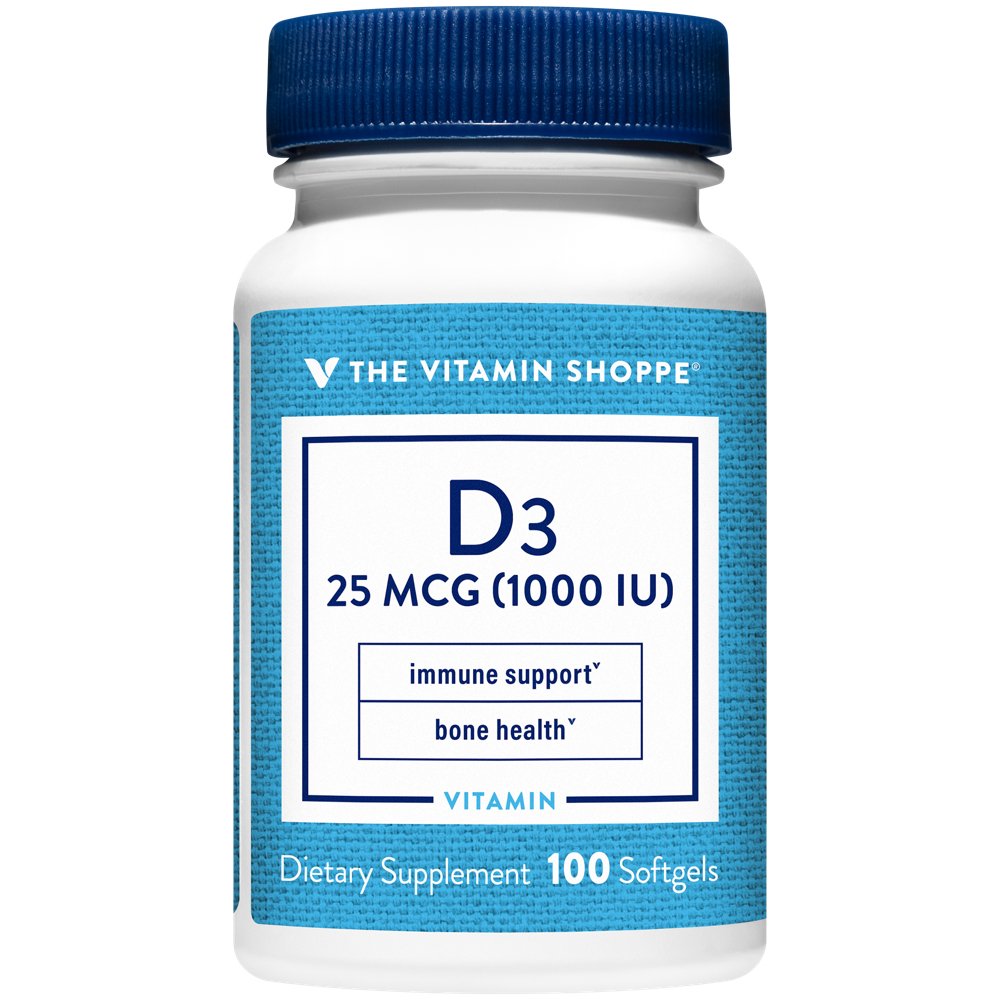
Vitamin D labels can express an amount in micrograms, abbreviated mcg or µg, and International Units, abbreviated IU. For vitamin D, one microgram corresponds to 40 IU. Multiply micrograms by 40 to obtain IU, or divide IU by 40 to obtain micrograms. Keep the serving basis attached to the converted quantity so that you compare the same portion.
This guide explains the arithmetic used when reading vitamin labels. It covers notation, worked conversions, package counts, liquid formats, common errors, and purchase comparisons. The examples are unit-conversion demonstrations rather than recommended amounts to take. Personal questions about vitamin D use require a separate assessment of individual circumstances.
What is the difference between micrograms and IU?
Micrograms are a unit of mass. IU is a unit used to express activity for certain substances. The relationship must be established for the particular substance rather than assumed to be universal. This article’s conversion applies to vitamin D and should not be reused automatically for another vitamin.
The MedlinePlus vitamin D reference states the relationship between a microgram of vitamin D3 and 40 IU. Use an authoritative substance-specific reference when a label conversion is needed, and preserve the original label wording in your comparison notes.
A larger printed number does not necessarily describe a larger amount when the units differ. Compare the quantity and unit together. A number in IU and a number in micrograms can describe the same vitamin D amount even though the numerals look very different.
How do I convert micrograms to IU?
Multiply the stated microgram amount by 40. Keep the original serving description unchanged. If the label amount is per labeled serving, the converted result remains per labeled serving. The conversion changes the expression of the quantity, not the number of capsules, sprays, drops, or other units in that serving.
For example, the arithmetic 12.5 multiplied by 40 gives 500. That means a hypothetical vitamin D amount of 12.5 micrograms corresponds to 500 IU on the same stated basis. This is a mathematical example, not a suggestion about what someone should use.
Write the calculation in your notes instead of recording only the result. Keeping the original amount, multiplier, and serving basis makes it easier to check an unexpected comparison later. It also helps prevent a correct unit conversion from being attached accidentally to the wrong product.
| Hypothetical vitamin D quantity | Calculation | Equivalent expression |
|---|---|---|
| 2.5 mcg | 2.5 × 40 | 100 IU |
| 12.5 mcg | 12.5 × 40 | 500 IU |
| 37.5 mcg | 37.5 × 40 | 1,500 IU |
| 75 mcg | 75 × 40 | 3,000 IU |
These examples demonstrate the conversion relationship only. They do not describe the pictured products, establish personal requirements, or rank strengths. A higher equivalent quantity is simply a different amount, not automatically a better purchase or an appropriate choice.
How do I convert IU to micrograms?
Divide the stated IU amount by 40. Use the original amount exactly, including any decimal or thousands separator. Then attach the resulting microgram value to the same serving basis shown by the product.
As an arithmetic check, reverse your calculation. Multiplying the converted microgram result by 40 should return the starting IU amount, allowing for any deliberate rounding. If the result does not match, check whether you multiplied instead of divided or copied a number incorrectly.
Avoid rounding away information too early. If your result includes a decimal, retain enough precision to show the relationship accurately. Do not rewrite a calculated result as an exact label specification when the original label used an approximate statement.
What do mcg, µg, and mg mean?
Mcg and µg are commonly used ways of writing micrograms. Milligrams, abbreviated mg, are a different unit: one milligram equals one thousand micrograms. Keeping those abbreviations visible is essential when copying quantities from a small panel image.
Do not treat a missing or blurry symbol as a minor detail. Confusing milligrams with micrograms creates a large error. If a photograph does not show the unit clearly, request a readable current panel instead of guessing from the size of the number.
In a comparison sheet, spell out the unit at least once in the heading and retain the abbreviation beside each original value. This is especially useful when several ingredients use different units. Avoid a column of bare numbers whose meaning depends on memory.
Why does serving size remain important after conversion?
A converted number still describes the original portion. If a panel reports vitamin D per serving containing several pieces, the conversion does not make it a per-piece quantity. If a liquid amount is per measured portion, it remains tied to that measured portion.
Read the serving line before performing arithmetic. Copy the physical unit or volume into your notes along with the nutrient quantity. Do not assume that one drop, one spray, one softgel, and one tablet represent equal amounts across different products.
A correct conversion can still support an incorrect comparison if the portions differ. Establish the basis for both items first. If necessary, show the original servings in separate columns rather than forcing every formula into an apparently identical physical unit.
Can I use the same conversion for vitamin K or another ingredient?
Do not transfer the vitamin D conversion to another substance automatically. A combination product may list different nutrients using different units. Read each ingredient line separately and use the relevant reference when investigating a particular conversion.
For example, a product can display vitamin D in IU and another ingredient in micrograms. Those numbers should not be added together into a combined strength. They describe different ingredients and can have different meanings even when the same abbreviation appears.
Keep the ingredient name, amount, unit, and serving basis together. A table that preserves these four fields is easier to check than one that normalizes every nutrient into a single unexplained score. Unit conversion should clarify information rather than hide its identity.
What mistakes should I check for?
Start with the direction of the operation. Moving from micrograms to IU for vitamin D uses multiplication by 40; moving from IU to micrograms uses division by 40. Reversing those operations creates a misleading result even if the arithmetic itself is executed correctly.
Next, check the copied unit and serving basis. A cropped image may omit the heading, and a product page may show several strengths together. Make sure the number belongs to the selected variant and the column you intend to compare.
Finally, check decimal placement and formatting. A thousands separator, decimal point, or small unit symbol can be difficult to read in a thumbnail. Request a clear image when uncertainty remains instead of presenting a precise-looking calculation built on an uncertain input.
| Potential error | Useful check | Correct comparison habit |
|---|---|---|
| Multiplying in the wrong direction | Reverse the calculation | Keep the formula visible |
| Confusing mg and mcg | Read the complete unit | Preserve the original value and unit |
| Losing the serving basis | Read the serving line | Attach the portion to every quantity |
| Using another strength’s panel | Match selected variant and image | Record the full product identity |
| Converting an unrelated nutrient | Check a substance-specific reference | Apply the vitamin D relationship only where appropriate |
What if two units on a label seem inconsistent?
First confirm that both values describe vitamin D on the same portion basis. A different column, a separate ingredient, or an incomplete crop can create an apparent mismatch. Check the full current panel rather than relying on a promotional image alone.
If the inconsistency remains, ask the seller or manufacturer for clarification. Include the exact product link, selected size, and the two values you are trying to reconcile. Do not choose the figure that creates a more attractive price comparison or a more familiar strength.
Keep the amount marked unconfirmed until the issue is resolved. A clear alternative may be easier to evaluate than an unclear listing. Accuracy matters more than completing every cell of a comparison sheet with a guessed number.

How does unit conversion help with a purchase comparison?
It can show when two disclosed vitamin D quantities use different expressions for the same amount. That makes the label comparison clearer, but it does not establish identical sources, physical formats, additional ingredients, or directions.
Compare those remaining fields separately. A softgel and a liquid formula may have the same stated vitamin D amount on their respective serving bases while differing in practical handling and other ingredients. Matching the quantity is one observation, not a complete equivalence conclusion.
Price should also remain a separate field. A lower cost per disclosed quantity does not establish what amount an individual should use. Avoid letting a unit-price calculation become a reason to select a different strength without considering the relevant personal question.
How should I record package and price information?
Keep the package price and confirmed labeled serving count alongside the amount information. Divide price by labeled servings for a basic purchasing metric. Label delivery as included or excluded, and apply the same treatment to each candidate.
The following invented figures illustrate cost arithmetic only. They do not specify vitamin D quantities or suggest equivalent formulas. They show why two bottles can have the same cost per labeled serving despite different initial prices.
| Hypothetical package | Item price | Labeled servings | Cost per labeled serving |
|---|---|---|---|
| A | $10 | 50 | $0.20 |
| B | $18 | 90 | $0.20 |
| C | $15 | 60 | $0.25 |
| A with $5 allocated delivery | $15 total | 50 | $0.30 |
Record subscription, coupon, and multi-buy conditions when relevant. A promotional number can describe a different purchasing arrangement from a one-time price. Review the actual selected option and payable total before treating the comparison as the basis for an order.
What should a reliable conversion record include?
Use a row containing the exact product identity, source link, date checked, original vitamin D amount, original unit, serving basis, and calculated equivalent. Add the formula used so that the result can be traced to its inputs.
Include a field for uncertainty. If the image is unreadable or the selected strength is unclear, leave the conversion pending. A note explaining the missing input is more useful than an apparently complete table that hides an assumption.
When the package arrives, compare its label with the information you recorded. If the amount, unit, or serving basis differs, document the discrepancy and ask the seller for clarification. Do not assume that a changed quantity is merely a packaging redesign.
Frequently asked questions about vitamin D units
How do I convert micrograms to IU for vitamin D?
Multiply the microgram quantity by 40 and keep the original serving basis. Record the starting amount and unit alongside the result so that the calculation remains easy to check.
How do I convert IU to micrograms?
Divide the vitamin D IU quantity by 40. Check the result by multiplying it back by 40. This confirms the arithmetic but does not establish personal suitability or resolve missing label information.
Are mcg and mg the same?
No. They are different mass units. Read the complete abbreviation and keep it attached to the quantity. A blurry unit should be clarified before performing or publishing a comparison calculation.
Can I apply the same relationship to every vitamin?
No universal conversion should be assumed. This relationship concerns vitamin D. Investigate another substance using its own authoritative reference rather than transferring the multiplier automatically.
Does conversion change a per-serving amount into a per-capsule amount?
No. It changes the unit expression while preserving the original quantity basis. A separate calculation would require a clear physical count in the stated serving and should be labeled accordingly.
Does a larger IU number mean a better product?
It describes a different amount when the basis is comparable, not a complete quality or suitability ranking. Check the full formula, format, supporting information, and the personal question separately from the conversion.