


Blog
How can I find an unflavored plant-based protein powder?

To find an unflavored plant-based protein powder, check three things separately: that the product is a protein powder, that its declared protein sources meet your plant-based requirement, and that the exact variant is unflavored. If you also want no sweetening ingredients, add that as a fourth check. A search result containing one of these words does not establish all of the others.
At the time of this review, I have not verified a Sprinkles Menu listing that meets every part of that exact request. The catalog includes flavored plant-protein options and other products described as unflavored, but those are not automatically substitutes. This guide explains how to search accurately, avoid misleading matches, and ask for the specific information needed before purchasing.
Define what you mean by unflavored
Begin with the use you have in mind. You might want a powder for a savory recipe, a smoothie whose other ingredients supply the flavor, or a shake without a named vanilla or chocolate flavor. Those preferences overlap, but they do not describe exactly the same buying requirement.
Write a short description such as “a plant-protein powder with no added flavoring and no sweetening ingredients.” If that is your requirement, keep both parts visible while reviewing labels. A product described as unflavored still needs an ingredient check rather than an assumption about everything else in the recipe.
Also distinguish an absence of added flavoring from an absence of taste. A label description cannot guarantee that you will perceive a powder as neutral in every recipe. The practical question is whether the exact product fits the preparation you intend to make, not whether its name promises an experience it cannot establish.
Check that the item is actually a protein powder
Search results can include several kinds of powdered products. An unflavored creatine product, a greens blend, a mineral powder, and a protein powder answer different shopping questions. The shared format or the word unflavored does not make them interchangeable.
Read the product description, ingredient statement, and nutrition or supplement panel. Identify the declared protein amount and its serving basis if protein is the product feature you are seeking. Do not infer it from a sports-nutrition category, a large tub, or a brand name that contains the word protein.
If the listing is unclear, ask what exact product is offered and request its current panel. Keep uncertain items outside your confirmed shortlist. It is better to record “product type not confirmed” than to carry a mistaken item through a detailed price comparison.
| Search result type | Why it may appear | What to check before including it |
|---|---|---|
| Unflavored protein powder | Matches the intended format and flavor term | Protein source and complete ingredients |
| Flavored plant-protein powder | Matches the plant-protein requirement | It does not meet an unflavored requirement |
| Unflavored creatine | Shares a flavor term and powder format | It is not established as the requested protein product |
| Greens or other powdered blend | May use plant-related wording | Product purpose and declared composition |
| A product mentioning another variant | Search can match descriptive text | The exact variant actually being sold |
Identify the declared protein sources
Look for the protein ingredients in the exact product’s list. Names such as pea protein or rice protein can help identify the declared sources, but a plant ingredient appearing somewhere in a blend does not establish that every protein source is plant-derived. Read the complete statement rather than stopping at the first familiar word.
Your requirement may also extend beyond the protein itself. If you want the whole product to meet a vegan preference, review the complete formulation and any relevant manufacturer information. A plant-protein description and a whole-product certification are different types of information and should be checked on their own terms.
Do not use a familiar brand as a shortcut. A company can sell different formulas, flavors, and combination products. Match the ingredient information to the selected item and current version, especially when the label photograph or product title resembles another variant.
Why flavored plant-protein examples are not exact matches
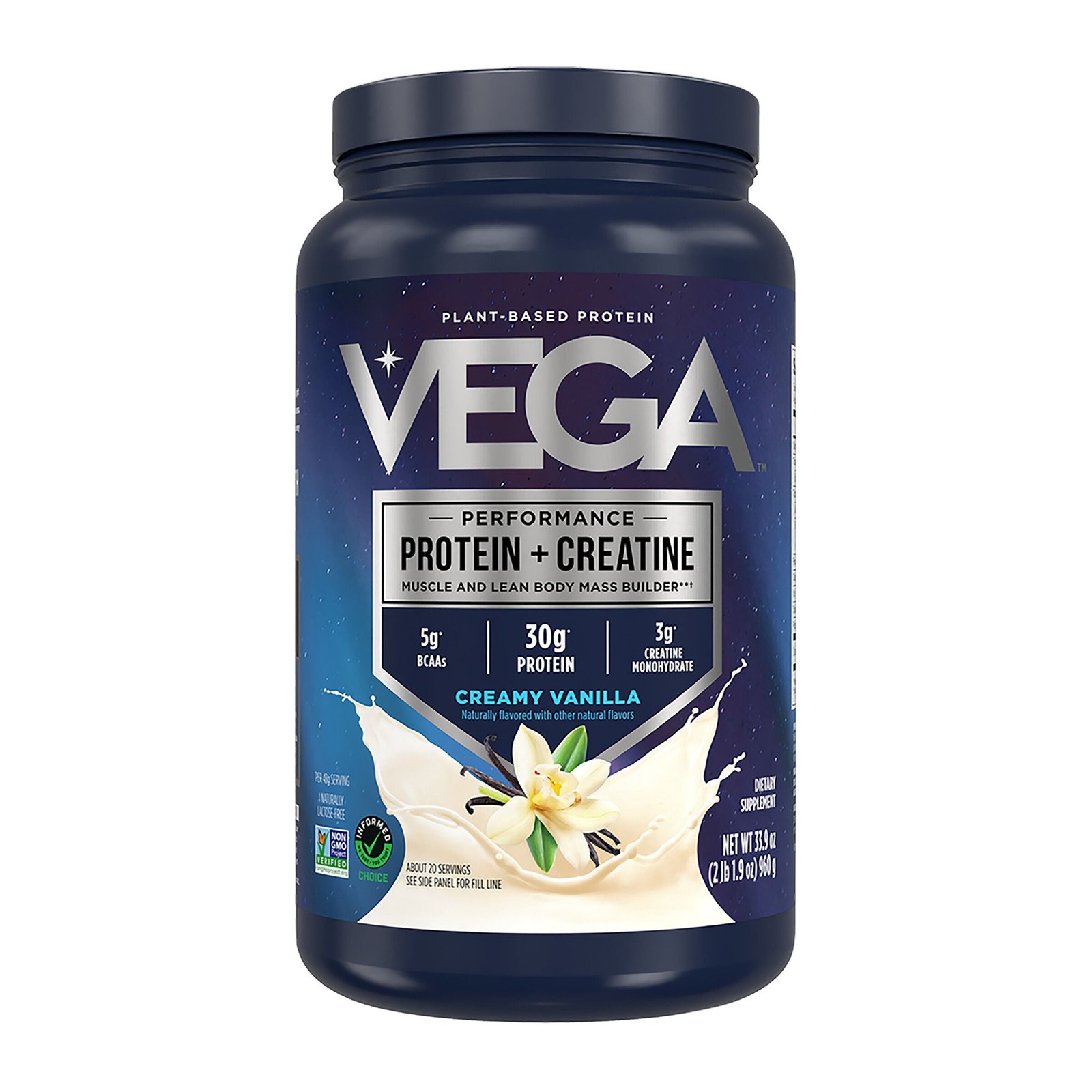
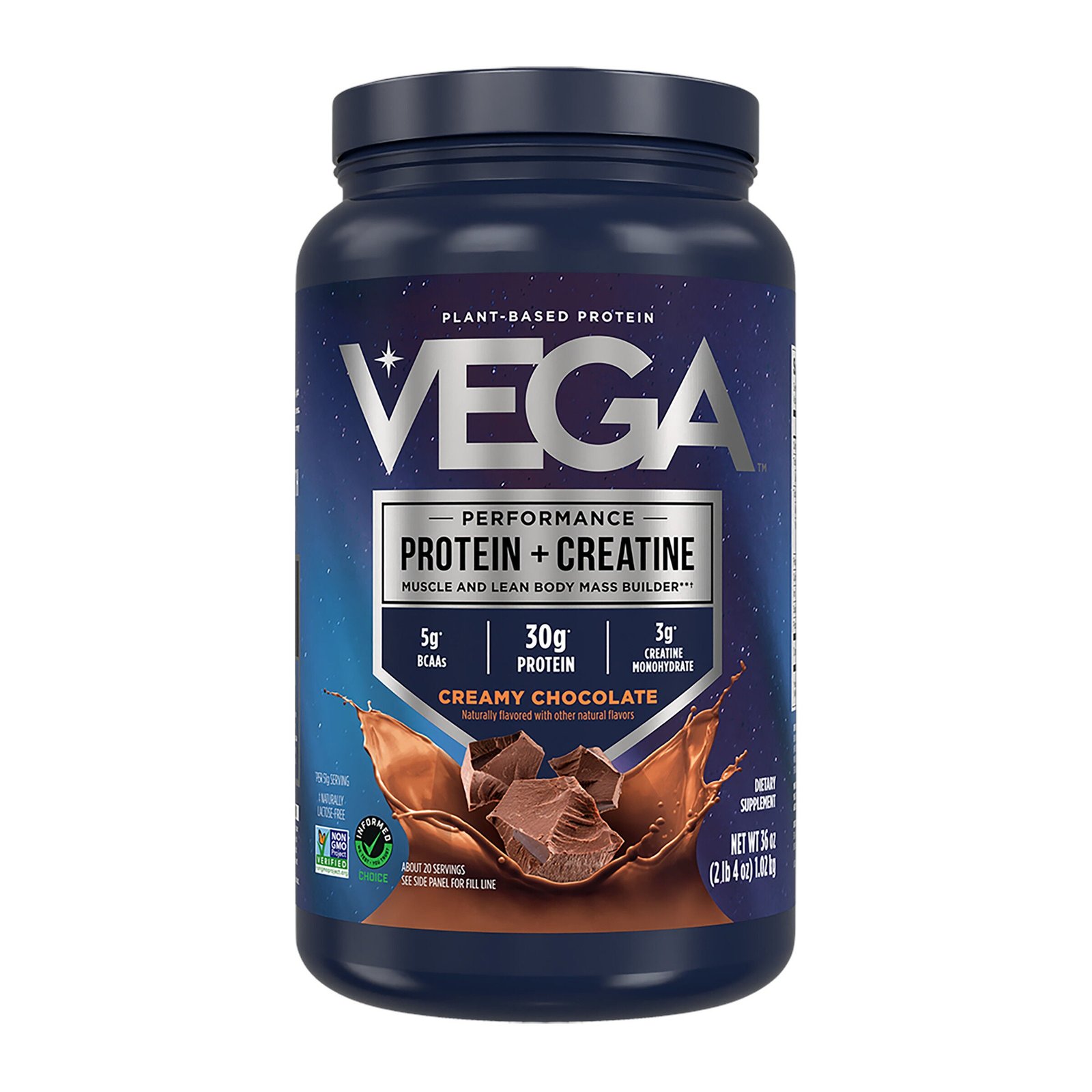
The Sprinkles Menu catalog includes Vega Protein + Creatine in Creamy Vanilla and Creamy Chocolate. The manufacturer’s Protein + Creatine product information identifies plant protein in that range and lists named flavors. These are useful examples of why plant-based and unflavored must be checked independently.
A Creamy Vanilla option should not be labeled unflavored simply because it meets a plant-protein criterion. It is also a combination product, so a shopper seeking a straightforward protein powder should review the additional declared ingredients rather than assuming the name describes only protein.
The images on this page illustrate those search distinctions. They do not represent verified unflavored options, a promise of stock availability, or a recommendation to substitute a flavored product for your request. Check the selected listing and current package before deciding whether an alternative fits your preferences.
Unflavored, unsweetened, and zero added sugars are separate questions
If you want to avoid sweetening ingredients, inspect the ingredients directly. Do not use an added-sugars figure as a complete answer to that preference. Likewise, a product without a named flavor should not automatically be assumed to contain no sweetening ingredients or no other additions.
Make separate columns in your notes for the flavor description, sweetening ingredients, and sugar declarations. This prevents a broad word such as plain from replacing three different checks. Where the manufacturer does not clearly answer a question, mark it as unconfirmed and request clarification.
The FDA nutrition-label guide explains the distinction between total and added sugars. That distinction is useful when reading a panel, but neither row establishes the entire ingredient list or predicts your perception of sweetness.
| Your requirement | Evidence to review | What does not settle it alone |
|---|---|---|
| Unflavored variant | Exact variant wording and flavoring ingredients | A plant-based category |
| No sweetening ingredients | Complete current ingredient list | Zero added sugars |
| Plant-derived protein sources | Declared protein ingredients | One plant ingredient in a mixed formula |
| Whole-product vegan preference | Full formulation and relevant verification | Brand reputation alone |
| Suitable for your recipe | Directions, ingredients, and practical experience | A neutral-looking package |
Search with a sequence rather than one broad phrase
Start with the intended product type, then narrow by flavor and ingredient requirements. On a store search, try a relevant product phrase and inspect the actual results. A broad search can match descriptive text about alternatives rather than the item currently offered, so read the selected variant carefully.
If the store provides category filters, use them to reduce unrelated results, then check the product page itself. Filters can help navigation, but they are not substitutes for the current label. An item placed in an appropriate category still needs all of your essential checks.
Save a small shortlist with the exact title and source link. Remove confirmed mismatches as you go instead of retaining every product that contains a useful keyword. This makes the remaining questions more manageable and prevents a flavored or unrelated powder from appearing to be a verified match later.
Compare the nutrition panel after the product meets your basic requirements
Once an item passes the product-type, source, and flavor checks, record the serving weight and protein amount separately. A serving containing 30 grams of powder does not necessarily provide 30 grams of protein. Clear headings keep those quantities from being mixed up in a comparison.
Check whether the panel describes dry powder or another stated preparation. If you intend to add a beverage, fruit, or another ingredient, your finished recipe is a separate calculation. Keep the powder’s own figures visible rather than replacing them with a recipe total.
Do not use a protein number to infer that the product is appropriate for an individual medical or dietary need. This guide helps organize purchasing information. Personal suitability, allergies, medication questions, and health-related requirements need appropriate guidance using the exact current product information.
Consider the recipe you actually plan to make
An unflavored powder may appeal because you want flexibility, but assess that flexibility in a concrete setting. Write the recipe or preparation you expect to repeat. A drink, soup, baked recipe, and cold mixture may present different practical questions, and you should not assume a powder works identically in every application.
Follow the manufacturer’s directions and avoid inventing cooking or preparation claims. If a particular application is essential, look for suitable instructions for that product or ask the manufacturer. A generic protein-powder guide cannot guarantee a result for an untested recipe.
If a verified smaller package is available, it may offer a lower-commitment way to assess the taste and preparation before buying a large quantity. This page does not promise that samples or small sizes exist for every product. Confirm the actual options and purchase terms before relying on that strategy.
Calculate value only for products that qualify
A cheap product that does not meet the unflavored or ingredient requirement is not an equivalent alternative. First establish which items belong on the shortlist, then compare their current prices on the same basis. This prevents a low price from obscuring a mismatch in the product itself.
For a hypothetical example, a 20-serving package priced at 30 currency units costs 1.50 per labeled serving. A 30-serving package priced at 42 costs 1.40. These are arithmetic examples, not current offers, and the calculation does not show that either item meets your ingredient requirements.
Include purchase conditions and any mixing costs relevant to your routine. A discounted subscription, a multibuy offer, and a one-time purchase can involve different commitments. Keep the actual quantity and terms visible instead of comparing isolated headline prices.
What should you ask when the exact option is not confirmed?
Ask whether the seller currently offers a protein powder with your stated requirements, and request the exact product name and readable current ingredient panel. A specific question is more useful than asking for anything plant-based because it prevents a flavored product from being offered as an exact answer.
You can write: “I am looking for an unflavored plant-protein powder with no sweetening ingredients. Please confirm whether you stock an exact match and provide the current label for the available size.” Adjust the wording if your requirement is different; do not add restrictions you do not actually need.
If only partial matches are available, decide which criteria are flexible before considering them. Record any compromise explicitly. A flavored option can be an alternative if you choose it knowingly, but it should not be presented as though the original unflavored request had been fulfilled.
| Information to request | Why it helps | Useful answer |
|---|---|---|
| Exact product and variant | Prevents vague recommendations | Full title and size |
| Current ingredient image | Supports source and sweetener checks | Readable matching panel |
| Flavor description | Confirms the offered option | Explicit variant wording |
| Available package size | Establishes purchase commitment | Current size and count |
| Preparation information | Relates the item to your intended use | Applicable product directions |
Frequently asked questions about unflavored plant-protein powder
Is every unflavored powder a plant-protein product?
No. Powder format and flavor wording do not establish the product type or protein source. Check the actual description, ingredients, and panel. Creatine, greens, mineral powders, and other products can appear in searches containing unflavored without meeting a protein-powder request.
Does plant-based automatically mean unflavored?
No. Plant-protein products can come in named flavors. The vanilla and chocolate examples pictured here illustrate that distinction. Check both the source requirement and exact flavor rather than treating either one as proof of the other.
Does unflavored mean it will have no taste?
A label description cannot guarantee your sensory experience. Consider the ingredients and intended preparation, and use a verified smaller purchase if that option suits your needs and is available. Keep personal taste expectations separate from the product’s flavor designation.
Is zero added sugars the same as unsweetened?
Do not use that number alone to answer an ingredient question. Read the complete list for sweetening ingredients and keep the separate sugar rows clearly labeled. A single nutrient declaration cannot describe the entire formula.
Can I use a flavored option instead?
Only if it fits your own preferences and intended recipe. Treat it as a deliberate alternative, with the difference clearly understood. A named vanilla or chocolate variant should not be described as an exact unflavored match.
Has an exact Sprinkles Menu match been confirmed here?
No exact match meeting every stated criterion has been verified for this guide. Ask for current availability and a matching label before ordering. The examples illustrate how to evaluate results rather than claim that the requested product is currently stocked.
What should I compare once I find a qualifying item?
Review serving weight, protein amount, current price, package quantity, directions, and storage information. For the next calculation, see protein powder cost per serving and keep your comparison tied to verified exact variants.