





Explore Supplements through a practical comparison of the reviewed bergamot, lutein, macular-support and nattokinase-with-rutin listings. This guide explains how to compare ingredients, capsule formats, package counts and evidence without treating unlike formulas as substitutes. Use the exact current label for product details and seek appropriate advice when a health condition, medicine or treatment is involved.


▼ Click here to read the full Supplements guide — comparison tables and FAQs
What does the Supplements category include?
Supplements is a broad category name, so the useful starting point is the actual product family you are looking for. The reviewed examples here fall into several distinct groups: bergamot formulas, lutein and eye-oriented formulas, and a nattokinase-with-rutin formula. These products should not be treated as one interchangeable set merely because they share a category page. Their ingredient identities and comparison questions differ, and a decision about one does not establish a reason to use the others.
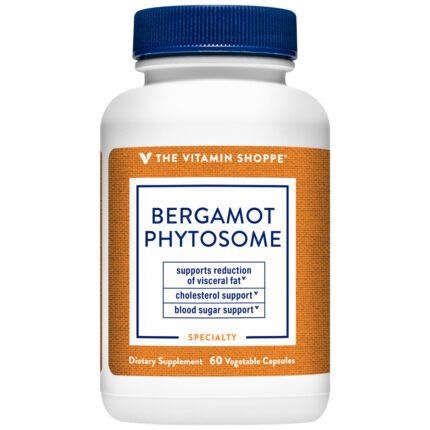
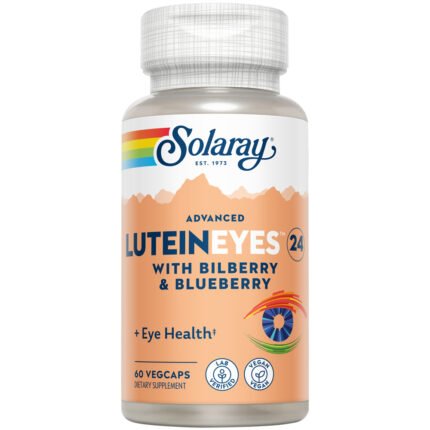
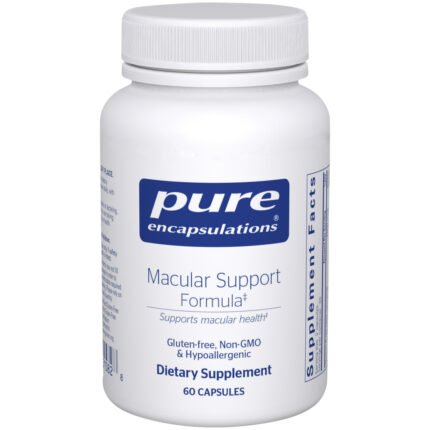
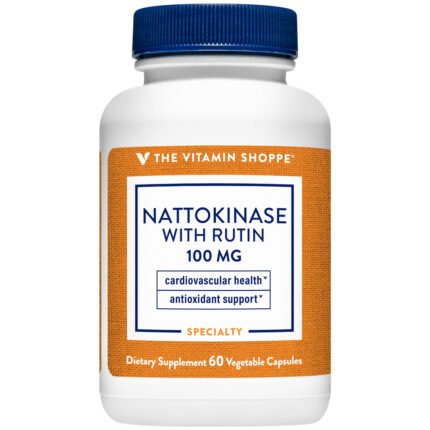
The reviewed bergamot listings are Bergamot Phytosome, 60 Vegetable Capsules and Citrus Bergamot — 500 MG, 60 Capsules. The eye-oriented examples are Lutein Eyes Advanced — 24 MG, 60 Capsules, Lutein — 20 MG, 120 Softgels and Macular Support Formula for Eye Health, 60 Capsules. A further example is Nattokinase with Rutin — 100 MG, 60 Vegetarian Capsules.
These are reviewed examples, not a promise that the list is exhaustive or that any item is currently in stock. They provide enough variety to show why ingredient-specific comparison matters. Someone searching for lutein softgels has a different task from someone matching a bergamot label. The broad category is useful for navigation, while the individual product page should settle the item-level questions needed before a purchase.
How should you choose where to begin in a broad supplement category?
Start with the exact ingredient or formula you intended to investigate. If you have a written recommendation, compare its full wording rather than choosing the closest sounding title. If you are browsing without a specific reason, do not assume that an unfamiliar ingredient represents something missing from your routine. A category page can introduce a product family without establishing a need to use it. The first useful outcome may simply be understanding what question you want to ask.
Separate the shopping task from the health question. Shopping questions include package count, format, price and whether the selected variant matches the intended item. Health questions include whether a product is appropriate, whether evidence supports the proposed use and whether the full formula fits alongside medicines or other supplements. A clear product page can help with identification, but it cannot diagnose a condition or replace an individualized assessment.
| Product family | Reviewed examples | First comparison question |
|---|---|---|
| Bergamot | Phytosome and 500 MG capsule listings | Are the complete formulations directly comparable? |
| Lutein | 24 MG capsules and 20 MG softgels | What amount and serving basis does each label use? |
| Macular-support formula | 60-capsule listing | What are all ingredients and amounts? |
| Nattokinase with rutin | 100 MG, 60 vegetarian capsules | What does the full formula and label specify? |
| Broad supplements department | Mixed ingredient families | Which precise product question are you trying to answer? |
A focused comparison is easier to review and less likely to produce an accidental substitution. If your note says only “eye supplement,” it leaves too much room for a different formula. If it says the exact product, ingredients and serving information, the comparison becomes concrete. That precision is useful even when the eventual decision is not to buy a product.
How are the two bergamot listings different?
The titles identify different formulation wording. One says Bergamot Phytosome and the other says Citrus Bergamot with a displayed 500 MG amount. Both titles show 60 capsules, but equal capsule counts do not establish equal servings, equal ingredient content or equivalent formulations. The phytosome wording should be investigated through the actual formula information rather than interpreted as an automatic quality ranking. This guide does not claim a particular absorption advantage or assign a milligram equivalence between the two products.
A fair comparison would record the complete ingredient declaration, amount per serving, serving size, other ingredients and directions for each. If the formulas use different ingredient preparations, the comparison may not reduce to a single number. A larger milligram figure is not necessarily a larger amount of the same thing. Botanical and formulated ingredients can have details that require more context than the front-panel name supplies.
If your interest in bergamot concerns a medical measurement or a diagnosed condition, bring that reason and the exact label to an appropriate professional. The category description does not establish that either product should replace prescribed treatment or that a particular result will follow. Product names and online interest can help identify a discussion topic, but they should not be converted into a personal treatment plan by the shopping page.
Does 60 capsules mean the two bottles last the same time?
Only if the relevant use information supports that conclusion. Package count identifies pieces, while serving size determines how many label-defined servings the bottle contains. Two 60-capsule products could use different serving sizes. This guide does not assign one capsule per day or estimate a duration for either bergamot listing. Read each actual label and keep any individualized professional advice separate from a generic package calculation.
The same principle applies to price. If you compare bottle prices without confirming servings and formulation, you may be comparing different units and different products. A low price per capsule can be a useful purchasing fact, but it cannot establish clinical equivalence or suitability. Choose the comparison question first, then use the relevant calculation rather than allowing the cheapest visible number to decide the meaning of value.
How should you compare lutein capsules with lutein softgels?
The reviewed titles show Lutein Eyes Advanced at 24 MG with 60 capsules and Lutein at 20 MG with 120 softgels. Those are useful identification details. They do not establish whether the displayed amounts are per piece or per serving, nor do they establish that the complete formulas contain only lutein. The word Advanced in one name is product wording; it is not enough to conclude that the product is more effective or appropriate for a particular person.
Capsules and softgels are different formats, and preference can matter to a shopper. However, a format preference should be considered alongside ingredient information rather than replacing it. Read the other-ingredients section if capsule materials, oils or other recipe components matter to you. This guide does not infer allergen absence, a vegan claim or a particular oil base from the word softgel. The actual package should answer those questions.
| Title detail | Lutein Eyes Advanced example | Lutein example |
|---|---|---|
| Displayed amount wording | 24 MG | 20 MG |
| Format | Capsules | Softgels |
| Package count | 60 | 120 |
| Serving information | Confirm on current label | Confirm on current label |
| Complete formula | Do not infer from title alone | Do not infer from title alone |
The comparison is not simply 24 versus 20. The serving basis and complete formula must be known before those figures can be interpreted meaningfully. Even after they are confirmed, a larger amount is not a universal reason to prefer one product. If an eye-care professional has recommended a particular formulation, compare the actual ingredients and amounts with that recommendation rather than choosing whichever product has the largest lutein number.
Is every eye-oriented supplement an AREDS2 formula?
No. An eye-health name or the presence of lutein does not establish that a product matches a specific studied combination. The National Eye Institute information on AREDS2 supplements describes a defined formula used for particular circumstances involving age-related macular degeneration. It advises checking the full ingredients and amounts. The reviewed Macular Support Formula title alone does not establish that it matches that formulation, and this guide does not label it an AREDS2 product.
This is an important comparison boundary. A shopper may see the words macular, lutein or eye health and assume they all refer to the same formula. They do not provide enough information to make that conclusion. A single-ingredient listing, a product with additional ingredients and a named combination formula should each be assessed as the actual product offered. Do not transfer evidence about one defined combination to every item marketed in the same general area.
If you have an eye diagnosis or have been advised to consider a particular supplement, use the exact professional recommendation as the comparison point. Take the full product label to that discussion if there is any uncertainty. This category page does not determine disease stage, recommend a formula for everyone or suggest that supplements replace eye examinations and prescribed care. Its role is to make the product distinctions clear enough to ask the right question.
What does the Macular Support Formula title tell you?
It tells you that the listing is a 60-capsule formula marketed in relation to eye health. It does not disclose every ingredient or amount in the title. The appropriate next step is the complete Supplement Facts panel. Write down each relevant ingredient and amount, the serving size and the other ingredients. If a label cannot be read on the page, request a clear version instead of assuming that a familiar product name implies a standard recipe.
Combination formulas need particular care because a shopper may focus on the headline ingredient and miss the rest. A product can contain several nutrients or other ingredients that overlap with an existing routine. The question is not only whether one named component looks familiar, but how the entire formula compares with what is already being used. Keep all ingredient panels together when preparing a review with a pharmacist or clinician.
A formula name can also change the way price comparisons should be interpreted. Comparing a combination product with a single ingredient on the basis of capsule count alone may obscure their different compositions. That does not make either product better; it means the comparison needs a defined purpose. If your task is to match a specific recommendation, formulation match matters before package economics.
How should you read the nattokinase-with-rutin listing?
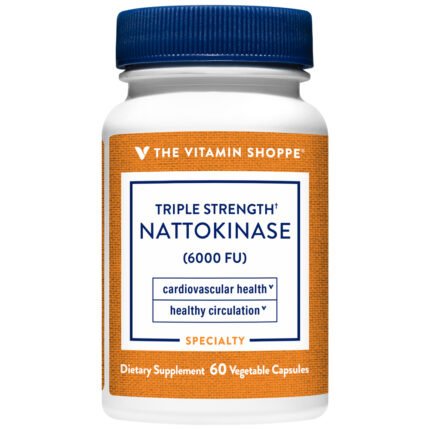
The reviewed title identifies nattokinase with rutin, displays 100 MG and describes a package of 60 vegetarian capsules. It also contains antioxidant-support and cardiovascular-health wording. Those phrases are part of the listing's marketing description, not a verified treatment result established by this guide. Do not interpret the product as a substitute for prescribed cardiovascular care or as a reason to adjust medicines on your own.
A combination name means you should check both the named ingredients and the full panel. The title alone does not establish which ingredient the displayed 100 MG refers to, what the serving size is or whether additional activity or standardization information appears on the label. Keep those details unknown until the current package supplies them. This guide does not invent an activity-unit value or convert a milligram amount into another measure.
If medicines, a planned procedure or a diagnosed condition are relevant, have the exact product reviewed before adding it to your routine. The NCCIH guide to using supplements wisely explains that supplements can interact with medicines and raise concerns around surgery or some medical conditions. That general principle is a reason to provide the actual label rather than assuming a vegetarian capsule format answers compatibility questions.
| Nattokinase listing element | What is established by the title | What needs the actual label or review |
|---|---|---|
| Named combination | Nattokinase with rutin | Full ingredient amounts and any additional components |
| 100 MG wording | A displayed amount appears | Its precise serving and ingredient basis |
| 60 vegetarian capsules | Package and format wording | Complete recipe and any required certification |
| Cardiovascular-health wording | The marketing theme | Evidence and individual suitability |
| Proposed use with medicines | Not established by title | Professional review of the complete routine |
How do you read Supplement Facts across these different formulas?
Use the same reading sequence even though the ingredients differ. Identify serving size first, then the declared ingredient amounts, then other ingredients, directions and warnings. The sequence prevents a bold front-label number from dominating the entire decision. It also makes it easier to compare products over time because your notes use the same fields rather than copying whichever detail happens to be most prominent on each bottle.
Keep units intact. Milligrams, package counts and any other declared measures are not interchangeable. A count of 120 softgels is not a strength, and a 500 MG title is not a supply duration. If an ingredient uses a specialized declaration, do not convert it from memory. Record what the label says and seek clarification if you do not understand how it applies to the comparison. An honest unknown is more useful than a confident but incorrect conversion.
Read all formula components before deciding whether products are substitutes. Two products can share one ingredient but differ in several others. That difference may matter for restrictions, compatibility and the purpose of the comparison. The broad Supplements category is designed for browsing; it should not erase those distinctions. The item with the nearest sounding name is not automatically the item you intended to order.
How can you calculate price per serving correctly?
Start with the current product price and confirmed serving count. Divide the bottle price by the labeled servings to obtain price per serving. If you divide by capsules or softgels instead, label the result price per piece. Both calculations can be useful, but they answer different questions. This guide does not reproduce current prices, assign a universal daily serving or claim that a larger bottle is always more economical.
For illustration only, a hypothetical bottle of 60 capsules with a two-capsule serving would contain 30 labeled servings. That is not a statement about the serving size of any reviewed product. It shows why capsule count alone is insufficient. The same method applies to the 120-softgel listing after its actual serving size is confirmed. Avoid calling a bottle a two-month or four-month supply unless the appropriate use information supports that description.
| Comparison measure | Required information | Main limitation |
|---|---|---|
| Price per bottle | Current selected-item price | Does not account for serving count |
| Price per piece | Price and capsule or softgel count | Pieces may not equal servings |
| Price per labeled serving | Price and confirmed servings | Different formulas may still be unlike products |
| Formulation match | Complete ingredients and amounts | Cannot be inferred from the category name |
| Personal value | Suitability and actual need | Not determined by the lowest visible price |
Value should be assessed after suitability. A product you cannot use, do not need or cannot identify clearly is not improved by a low unit price. Likewise, a more expensive name is not proof of better evidence. A sound comparison uses both accurate product information and a clear reason for considering the ingredient. Price is one part of that process rather than the answer to every question.
How can you avoid overlapping supplement ingredients?
Collect labels from the products you already use before adding another formula. List ingredients and amounts per serving rather than relying on broad names such as daily wellness or eye support. A multivitamin, a combination formula and a single-ingredient supplement may overlap in ways that are not obvious from the front labels. The purpose of the list is to make the routine understandable, not to create a larger stack.
Keep medicines on the same discussion list when reviewing compatibility with a qualified professional. Include occasional products as well as those used every day if they are relevant to the question. A product purchased from a different department is still part of the routine. The distinction between prescription medicines, over-the-counter medicines and dietary supplements matters, but separating them into different shopping categories does not mean they can be assessed independently of one another.
If a concern or symptom led you to browse, describe that concern directly. Do not assume that a category with a matching marketing phrase establishes the cause or the right response. Someone searching for cardiovascular support, eye health or antioxidant supplements may need a very different next step depending on the underlying circumstances. A shopping guide can organize information but should not make a diagnosis through product selection.
What should you check when the order arrives?
Match the received product with the exact order: ingredient family, product name, displayed strength wording, format and count. Read the actual label even if you reviewed an image beforehand. Keep the original container so manufacturer information, warnings and identifying details remain available. A clear received-item check helps distinguish an ordering error from a formula question before the product is added to a routine.
Follow the storage directions printed on each package. This guide does not assign a universal shelf life, temperature or refrigeration rule across capsules and softgels. Different formulas can have different requirements, so avoid transferring instructions from one bottle to every product in the category. If a label differs materially from the listing or packaging raises a concern, contact the store with the specific details rather than guessing how to resolve it yourself.
Frequently asked questions about the Supplements category
Are bergamot phytosome and citrus bergamot the same product?
They are separate reviewed listings with different formulation wording. Equal capsule counts do not establish identical formulas or amounts. Compare the complete ingredient panels and serving information before treating them as alternatives. This guide does not assign an equivalence ratio or claim an absorption advantage based on the title alone.
Is 24 MG lutein automatically better than 20 MG lutein?
No universal preference is established by those numbers. Confirm the serving basis, full formula and reason for considering the product. The reviewed listings also differ in format and package count. A larger displayed amount does not by itself establish that the item is the right match for a particular professional recommendation or personal circumstance.
Does Macular Support Formula mean AREDS2?
The reviewed title does not establish that. AREDS2 refers to a defined formula and specific clinical context described by the National Eye Institute. Check every ingredient and amount and discuss the actual label with an eye-care professional when relevant. Do not assume that an eye-oriented name or the presence of lutein proves a match.
Do vegetarian capsules establish every dietary requirement?
The wording identifies a capsule-format claim in the title, but the full recipe still matters. Read other ingredients and any verified declarations needed for your restrictions. This guide does not infer every allergen, certification or manufacturing claim from the words vegetarian or vegetable capsules. Ask for clarification when a specific requirement determines whether a product is suitable.
Should I choose a product just because it is in Supplements?
Category placement helps you find a listing; it does not establish a personal need. Begin with the exact question or ingredient you intended to investigate, then confirm formula and suitability before comparing package value. The broader Vitamins & Supplements department is useful for navigation, but a complete routine should not be assembled by selecting an item from every heading.
What information should I take to a professional review?
Bring the exact product label, the reason you are considering it, and accurate lists of medicines and other supplements. Include serving sizes and ingredient amounts where available. That makes the discussion more useful than a general question about whether supplements are good or bad. The right answer depends on the actual product and circumstances rather than the category name alone.
A clear comparison makes a broad category more useful
| Final question | Information to retain | Useful outcome |
|---|---|---|
| Which ingredient family am I comparing? | Exact product name and link | A focused starting point |
| What does the formula contain? | Readable full label | Fewer assumptions about equivalence |
| What quantity am I buying? | Serving and package counts | Correct purchase arithmetic |
| Does it fit my circumstances? | Relevant routine and professional advice | An informed suitability decision |
| Is the order accurate? | Selected item and received label | Clear identification after delivery |
The useful result is a precise understanding of the item, not the largest collection of supplement bottles. Keep bergamot, lutein, combination eye formulas and nattokinase-with-rutin comparisons distinct, read complete labels and leave unsupported claims unresolved. Those steps make this category easier to browse while preserving the important difference between a product description and an individualized health recommendation.