





Explore the Joint Health category at Sprinkles Menu with clear distinctions between dietary supplements and products labeled as homeopathic medicines. Compare glucosamine, chondroitin and MSM combinations, a boswellia extract, capsule and tablet formats, and topical versus oral products. This guide explains the catalog without promising pain relief, cartilage repair or treatment of arthritis. Use product information and appropriate professional advice to decide whether any item belongs in your care plan.
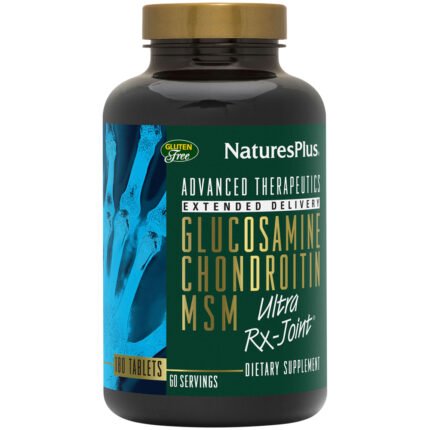
Advanced Therapeutics Glucosamine Chondroitin MSM Ultra Rx-Joint (180 Tablets)
Original price was: $79.97.$59.97Current price is: $59.97.▼ Click here to read the full Joint Health guide — comparison tables and FAQs
What does the Joint Health category include?
Joint Health is a shopping department rather than a diagnosis or a treatment recommendation. The products grouped here differ in ingredients, route of use, regulatory category and the information needed to compare them. Recognizing those differences is the first useful step. A capsule supplement and a topical homeopathic gel should not be treated as interchangeable merely because they appear on the same page.
Current examples include Advanced Therapeutics Glucosamine Chondroitin MSM Ultra Rx-Joint, 180 tablets, Glucosamine, Chondroitin, & MSM, 120 capsules and its 360-capsule listing. These titles identify combination products and package counts. They do not establish identical ingredient forms, matching serving sizes or equal amounts per serving.
Another example is Boswellia Serrata Standardized Extract, 250 MG, 20% B-Boswellic Acid, 60 tablets. The archive also includes Arnicare products explicitly described as homeopathic medicines. The full product pages and current labels should be used to establish the exact product type, directions, warnings and package details before purchase.
How do the current product groups differ?
| Catalog group | Examples in this category | Main distinction |
|---|---|---|
| Combination supplements | Glucosamine, chondroitin and MSM products | Several named ingredients in one formula |
| Botanical supplement | Boswellia serrata standardized extract | Plant extract with stated title specifications |
| Oral homeopathic medicine | Arnicare Bruise meltaway tablets | Homeopathic labeling and oral format |
| Topical homeopathic medicine | Arnicare Gel, 4.1 oz. | External-use product, not a capsule supplement |
| Package alternatives | 120 and 360 capsule listings | Counts differ; formula equivalence needs confirmation |
What are glucosamine and chondroitin products?
Glucosamine and chondroitin are commonly sold as dietary supplement ingredients, sometimes separately and sometimes together. In this category, the titles also include MSM. The presence of several names on a bottle makes it especially important to distinguish the total formula from the amount of any individual component. A large number on the front of a package may refer to a serving or a combined amount rather than to each ingredient separately.
The NCCIH overview of glucosamine and chondroitin for osteoarthritis explains that research findings and clinical recommendations are not uniform. These ingredients should not be presented as a guaranteed way to relieve joint pain or rebuild cartilage. A category name cannot resolve uncertainty in research or determine whether a particular formula is suitable for an individual.
For a useful product comparison, look for the stated chemical form of glucosamine, the amount of chondroitin, the amount of MSM and the serving size attached to those values. Do not fill in missing details from a different brand's label. Products with similar names can differ in their ingredient sources, tablet sizes, excipients or suggested use, even when their front labels mention the same three ingredients.
Package quantity is a separate question from ingredient quantity. A bottle with 360 capsules contains three times as many capsules as a bottle with 120, but it is not automatically three times as concentrated. Whether it represents three times as many servings depends on the confirmed serving directions. Keep those calculations separate so a larger package does not become an assumed higher dose.
What is MSM doing in a combination product name?
MSM is an ingredient name that often appears beside glucosamine and chondroitin in this department. Its inclusion tells you that the formula is more than a single-ingredient glucosamine product. It does not tell you how much MSM is present, whether every serving contains the same proportions as another listing, or what an individual should take. Those details belong to the exact Supplement Facts and directions.
When reading a combination label, write down each active ingredient on its own line. This helps avoid comparing a total blend number with a single ingredient amount. If one product lists individual quantities and another uses a blend description, acknowledge the difference in available information rather than assuming the hidden proportions are identical. A transparent comparison can end with an unanswered question that needs clarification.
Combination products can be convenient for someone who has already decided, with appropriate guidance, to use those particular ingredients. Convenience is different from proof that the combination works better than each component or another approach. The number of ingredients is not a quality score, and adding another overlapping product does not necessarily improve the decision.
If you already use another joint formula, compare the ingredient lists together before considering an additional bottle. Two differently named products can contain several of the same components. Bring the actual labels to a pharmacist or clinician when asking about combined use. A shopping guide can help organize those details, but it cannot create a personalized supplement schedule.
Which facts make combination supplements easier to compare?
| Label detail | Question to ask | Avoid assuming |
|---|---|---|
| Serving size | How many tablets or capsules define one serving? | One capsule always equals one serving |
| Glucosamine listing | What form and amount are identified? | Every glucosamine formula matches |
| Chondroitin listing | Is its amount stated separately? | A blend total is the amount of each ingredient |
| MSM listing | How much is present in a serving? | The ingredient name establishes potency |
| Other ingredients | Are there relevant sources, allergens or excipients? | Similar titles mean identical composition |
How should you understand the boswellia extract listing?
Boswellia is a botanical ingredient, so a useful comparison needs more than a general herb name. The title in this category identifies Boswellia serrata, a stated 250 MG amount and 20% B-Boswellic Acid wording. Those are specifications to verify on the current label. They should not be converted into a claim that the product treats inflammation, replaces prescribed medicine or is equivalent to every boswellia preparation used in research.
The word standardized indicates that a product is described in relation to a specified constituent or marker. It does not, by itself, prove clinical effectiveness or superior quality. Likewise, a percentage and a milligram figure need context: what material is being measured, what serving is used and how the label describes the extract. Do not calculate a treatment dose from title shorthand.
The NCCIH boswellia overview discusses research limitations and safety considerations. The concise shopping implication is that an extract should not inherit broad treatment promises from the name of the plant. Evidence about a particular preparation, route of use and study population does not automatically apply to every product carrying the same botanical name.
Botanical and combination formulas are different comparison groups. A person choosing between them should first understand why each is being considered, what information is available and whether professional advice is needed. Buying both simply because they share a category does not establish that their combined use is appropriate. The category provides navigation, while a specific decision requires the actual products and the individual's circumstances.
Why must homeopathic products be distinguished from dietary supplements?
Two current examples are Arnicare Bruise, 60 meltaway tablets and Arnicare Gel, 4.1 oz.. Their listing titles use homeopathic medicine wording. This guide identifies the products without adopting the symptom claims in those titles as established outcomes.
A homeopathic product is not simply another name for a vitamin, mineral or ordinary botanical supplement. Its labeling and ingredient descriptions can use conventions that differ from Supplement Facts panels. Readers should therefore establish the product type before trying to compare amounts. A homeopathic dilution notation should not be treated as an ordinary milligram strength or compared numerically with the boswellia extract title.
The FDA homeopathic products information page states that no homeopathic product is FDA-approved. The NCCIH homeopathy overview explains that reliable evidence supporting homeopathy for specific conditions is lacking. Their inclusion in this shopping archive is not a clinical endorsement, and they should not delay appropriate evaluation or replace effective prescribed care.
Route of use is another essential distinction. A topical gel is not meant to be swallowed, and directions for a meltaway tablet should not be applied to a gel. Check the exact package warnings, age directions and use instructions. If the product page does not make those details clear, seek clarification rather than borrowing directions from another Arnicare item.
How do route and product type change the comparison?
| Product example | Type identified in title | Information to verify |
|---|---|---|
| Arnicare Bruise, 60 meltaway tablets | Oral homeopathic medicine | Exact label directions, ingredients and warnings |
| Arnicare Gel, 4.1 oz. | Topical homeopathic medicine | External-use instructions and application warnings |
| Glucosamine combination capsules | Dietary supplement category | Supplement Facts and serving directions |
| Boswellia extract tablets | Botanical supplement category | Extract specification and complete label |
| Ultra Rx-Joint tablets | Combination supplement category | Full formulation rather than name alone |
How do tablets, capsules, meltaways and gels affect everyday use?
Format is a practical feature, not evidence that a product works better. A tablet, capsule or meltaway may differ in size, texture and how the package directs it to be used. A gel requires a different handling routine altogether. If swallowing difficulty, dexterity or travel organization matters, consider the actual container and instructions rather than treating all oral products as equally convenient.
Do not crush tablets, open capsules or mix contents into food merely because that seems easier. The correct handling depends on the specific product. Ask a pharmacist or the manufacturer if the label does not address your needs. Similarly, a meltaway format does not make an item suitable for every age group, and a flavored product is not automatically appropriate for children.
For topical products, think about where the item will be stored and used, whether the closure can be kept clean and whether its warnings match the intended situation. These are questions about following the label, not assumptions about what the gel can achieve. Keep oral and topical products clearly separated so their very different instructions are not confused.
A larger capsule count can be convenient for an established, appropriate routine, while a smaller package may reduce the commitment involved in an initial purchase. Neither choice should be based solely on the expectation of a quick result. Start with product suitability and clear directions, then compare package size and price as separate purchasing details.
How can you compare package value fairly?
Begin with the exact product rather than the broad phrase joint supplement. The 120-capsule and 360-capsule listings offer an obvious package-count comparison, but the complete labels must still confirm whether the formulas and serving sizes match. If they differ, a simple price-per-capsule calculation can hide an important difference in what each serving contains.
For products confirmed to have the same formulation, price per labeled serving is often more useful than price per bottle. Divide the current bottle price by the confirmed number of servings. Do not assume that 180 tablets means 180 days or that 60 tablets means a two-month supply. The label's serving directions and the appropriate use plan determine whether any duration estimate makes sense.
Avoid assigning a monetary value to unproven outcomes. A product that costs more is not therefore more effective, and a larger number of listed ingredients does not automatically justify a higher price. Useful comparisons include the clarity of the information, the quantity purchased, the format and the actual checkout total.
Consider storage and the amount you reasonably intend to use before buying the largest package. If a product has not yet been assessed as suitable, the apparent economy of a large bottle should not become the main reason to start it. A careful purchase can be a decision to obtain more information first.
What belongs in a fair price comparison?
| Comparison point | Useful method | Limit of the comparison |
|---|---|---|
| Capsule count | Compare 120 with 360 capsules | Count alone does not confirm matching formulas |
| Tablet count | Read the stated bottle quantity | Tablets are not automatically daily servings |
| Price per serving | Divide price by confirmed servings | Does not measure effectiveness |
| Formula content | Compare individual ingredient amounts | Different blends may not be directly comparable |
| Checkout total | Review actual charges and terms | Do not infer shipping or availability guarantees |
What information should you bring to a professional discussion?
A useful discussion begins with the reason you are considering a product and the symptoms or diagnosis, if any, that prompted the search. Joint discomfort can have different causes. A category page cannot determine the cause, identify an injury or decide whether a supplement is appropriate. Persistent, severe or changing symptoms deserve an assessment suited to the situation.
Bring photographs or copies of the complete labels, including Supplement Facts or other relevant panels, warnings and directions. Also bring a list of current medicines and supplements. Exact product information is more helpful than saying you take something for joints, because that phrase could refer to several entirely different products in this category alone.
Ask specific questions: Is this ingredient combination appropriate with my medicines? Is the product type relevant to my concern? Is there a reason to avoid this source or ingredient? What information would change the recommendation? These questions help turn a general shopping interest into a more informed decision without presuming that the answer must be to purchase a product.
Keep any existing care plan in view. A supplement purchase should not become an unreviewed change to prescribed treatment, physical therapy or other care. The guide's purpose is to make catalog distinctions clearer so that your questions are more precise. It does not supply a diagnosis, a treatment plan or a personalized dose.
Frequently asked questions about the Joint Health category
Does a joint supplement repair cartilage or cure arthritis?
No such outcome should be assumed from this category or its product titles. Research on commonly marketed ingredients does not justify a universal repair or cure promise. If arthritis, an injury or another condition is the reason you are shopping, use an appropriate clinical assessment and care plan. Product selection should not replace understanding what is causing the problem.
Are the 120-capsule and 360-capsule products identical?
Their names share the same three headline ingredients, but the count alone cannot confirm identical formulas. Compare the current labels, serving sizes, ingredient forms and amounts. If those details are not available, treat equivalence as an unanswered question. A larger bottle should not inherit the smaller bottle's directions or ingredient information without verification.
Is the Arnicare gel an oral joint supplement?
No. The listing identifies a topical homeopathic medicine. It should not be swallowed or compared as though it were a capsule supplement. Read its own directions and warnings, and remember that the presence of a symptom claim in a product name is not proof that the claimed outcome will occur.
Does standardized boswellia mean clinically proven?
Standardization wording describes a product specification; it does not by itself establish a clinical result. Check exactly what the percentage refers to and how the label states the serving. Do not equate an extract title with proof of pain relief, a replacement for medical treatment or an assurance that it matches a preparation used in a particular study.
Can I combine several products from this category?
Being listed together does not establish that products should be used together. Formulas can overlap, and different product types require different considerations. Review the complete labels with a pharmacist or clinician when combined use is being considered, especially alongside medicines. Do not build a multi-product routine simply by selecting one item from each table in this guide.
Which product is best for a beginner?
There is no universal beginner product. The appropriate first step is to clarify the reason for shopping and the kind of product being considered. Once suitability is established, compare the actual formula, format, directions and package size. A smaller or simpler purchase may be easier to evaluate, but simplicity does not make an unsuitable ingredient appropriate.
What should I confirm before checkout?
| Final question | Detail to confirm | Purpose |
|---|---|---|
| What kind of product is it? | Supplement or homeopathic medicine | Avoid treating different categories as equivalent |
| How is it used? | Oral or topical directions | Prevent route-of-use confusion |
| What is in it? | Complete current label | Compare actual ingredients and warnings |
| How much am I buying? | Count, volume and serving information | Understand quantity without assuming duration |
| Is it appropriate for me? | Relevant professional advice | Keep the purchase connected to individual circumstances |
Explore Vitamins & Supplements for the wider department, but keep product types distinct as you browse. Clear ingredient information, realistic expectations and an understanding of oral versus topical and supplement versus homeopathic labeling make this category more useful than a list of promising names alone.
How can you separate a general wellness goal from a specific joint problem?
A shopper may arrive here because they want to learn about ingredient names, because they have used a familiar formula before, or because a new symptom has appeared. Those starting points call for different kinds of information. Learning what MSM means in a combination title is a catalog question. Determining why a knee is swollen is a clinical question. Keeping the two separate helps prevent a purchase from becoming an assumed diagnosis.
If you are gathering information before an appointment, make a short record of the question you want answered. For example, you might ask whether a particular combination has any relevance to your situation, whether it duplicates something already being used, or whether the current treatment plan makes supplements unnecessary. This is more focused than asking for the strongest joint product, a phrase that has no consistent meaning across capsules, extracts and gels.
For someone repeating an established purchase, the task is different. Confirm that the product is the same version, then check whether the package or label has changed. A familiar brand name does not guarantee that every formula sold under that brand shares the same ingredients. Keep the previous order information if it helps identify the exact item, but let the current label establish the details of the new purchase.
The word support also deserves careful reading. It is often used broadly in supplement marketing, while shoppers may interpret it as a promise about a particular symptom. Ask what concrete information stands behind the wording: an identified ingredient, an amount, a product format or an actual study relevant to the exact question. Where the connection is uncertain, uncertainty should remain visible rather than being replaced with an enthusiastic claim.
How should you read a product name that contains Rx or pain wording?
A brand or product name can include language that sounds medical. In this category, Ultra Rx-Joint is part of a listing name, while Arnicare titles contain symptom-oriented wording. The name alone does not establish prescription status, approval, or a guaranteed result. Determine the actual product type from its current package and reliable product information instead of interpreting a familiar syllable as a regulatory designation.
The same principle applies to comparisons between homeopathic and conventional products. Similar symptom words on two packages do not make their evidence, ingredients, directions or regulatory status the same. Begin with the classification and route of use, then evaluate the particular product on its own terms. This prevents an appealing phrase from erasing the most important distinctions in the department.
A useful browsing session can therefore end with a clear shortlist, a question for the store, or a decision to seek professional advice before buying. All three are reasonable outcomes. The value of this guide is a more accurate understanding of the options, rather than pressure to choose an item simply because a category contains it.